

The Connection Between Joy and Leadership – An Interview with Sheryl Raphael Whitaker
Sheryl Raphael Whitaker, MBA is a thought leader, leadership transformation expert, bestselling author, and Founder & CEO of EdenAnthony Elite Talent Solutions LLC. With over 35 years of Fortune 500 leadership experience, including senior roles at USAA, AIG, and State Farm, she helps leaders and organizations put joy at the center of their work and unleash the potential they already have. Her bestselling book, It Starts with Joy: The Inner Shift That Changes Everything, became a #1 Amazon Best Seller and introduced her signature JoyShift™ Method. Here, she shares the philosophy and practice behind her work.
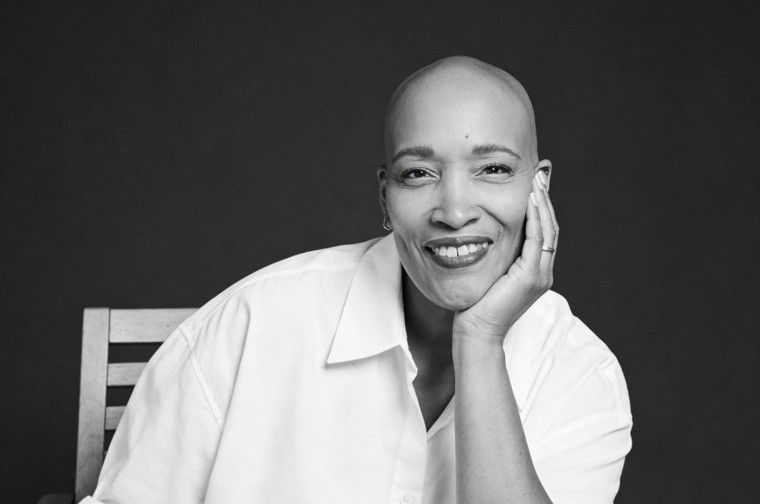
Sheryl Raphael Whitaker, Founder & CEO
Your book opens with a story from when you were six years old. What does a broken purple crayon have to do with leadership transformation?
My class had earned a reward for walking in a perfect straight line that week, and if you have ever been six years old, you know what kind of collective triumph that is. When we got back to the classroom, our teacher pointed to a broken purple crayon on the floor and told everyone that I had stepped on it. I had not, and my classmates said so, but it did not matter. She called me lazy and careless, took the reward from the whole class, and moved on as if the truth were beside the point.
I still remember the heat in my face and the confusion in my chest, and I remember something else too. I was the only child in that room who looked like me. I had been bused into that district with my sister, and what happened that day was not just a false accusation. It was being marked as less than by someone whose position gave her the authority to rewrite the story, regardless of what really happened.
Over the course of my corporate career, I went on to advise senior leaders, build leadership institutes from the ground up, and support the development of tens of thousands of employees across some of the most recognized companies in the world. I had earned that room many times over. And then, decades later, I found myself in a season under a leader whose style was controlling and psychologically unsafe, and I felt it again, that same dynamic where someone in power had decided that their version of events mattered more than what was real. My body registered it before my mind would admit it, and I started losing parts of myself I had worked very hard to protect.
What that kind of environment does to a person runs deeper than performance. It reaches identity. A leader stops trusting their own instincts and starts performing strength instead of embodying it, and they get very good at looking fine while something essential is quietly draining away. I watched that pattern in myself, and then I kept watching it in leaders and organizations everywhere, this quiet erosion dressed up as drive. Joy became non-negotiable for me after that, not the performative kind but the steady, grounded, I-know-who-I-am version of it, and once I found my way back to it, I could not unsee what it cost people not to have it. That is where this work comes from.
Your signature belief is, “If joy isn’t your COO, you’ll lose the right to call what you do leadership.” What does that mean?
Start with what a COO actually does. That role exists to make sure the organization operates the way leadership intends it to, closing the gap between vision and reality and deciding what gets resources, what earns attention, and what the culture rewards day to day. Now ask yourself honestly what is doing that job in your organization right now, because in most organizations it is not joy. It is fear, urgency, and the pressure not to fall short, and those forces are making the real operational decisions about what gets said in meetings, what gets left unsaid, and who eventually leaves for somewhere that costs less of them.
When I say joy is my COO, I mean grounded alignment is running operations. Joy, the way I define it, is the steady experience of leading in a way that is consistent with who you are, what you value, and why you are doing this work. It is the thing that decides what earns your energy, what deserves your time, and how you stay human while leading through hard things. When that becomes the operating standard, for the individual leader and for the organization, everything shifts. Decisions get cleaner, trust builds faster, and people stop leaving for jobs that pay less but feel better. The potential the organization already has finally has room to show up.
That is the foundation of the JoyShift™ Method, and it is what my book It Starts with Joy walks leaders through in four stages, Joy Aware, Joy Embraced, Joy Committed, and Joy in Motion. Each stage builds on the last, and each one asks something real of the leader willing to do the work. Joy is not a perk or a Friday feeling or the thing you get to after everything else is done. It is the infrastructure, and leaders who build on it lead differently, and more durably. The book exists because I needed people to stop waiting for joy and start building toward it.
“If joy isn’t holding the center, something else will. Most of the time, that something else is fear.”
What does misalignment look like in a leader or an organization, and how do you recognize it when you see it?
The signal I listen for sounds deceptively simple, a leader who says, quietly, “I don’t feel like myself anymore.” That sentence carries more information than any performance review ever will, because it tells me that somewhere between the climb and the achievement, the person and the position got disconnected from each other. And once that happens, everything downstream drifts with it, the decisions, the culture, the people they lead. The organization feels it even when no one can name it yet.
Most of the leaders and organizations I work with are genuinely accomplished, and they have built real things. But success has a way of demanding more than it returns over time, and leaders start performing leadership instead of living it, while organizations start optimizing for optics over actual outcomes. The gap between who a leader is and who the environment requires them to be grows quietly until it becomes impossible to ignore.
My job is to close that gap. For the individual leader, it means getting honest about who they are when they are at their best and then building the conditions that allow them to lead from that place consistently. For the organization, it means constructing the human foundation that makes the strategy land, because when joy is the operating standard, alignment is not a soft idea. It is the competitive advantage.
High-performing organizations are often the ones most at risk of burning out their best people. How do you address that contradiction?
Most of them are running on borrowed energy, and what makes it complicated is that they know it. They just do not say it out loud. The results look good, and the metrics hold, and underneath all of it, people are exhausted in ways they have learned not to name because naming it feels like a failure of commitment. Leaders have normalized urgency as a style, confused depletion with dedication, and quietly stopped asking whether any of this is sustainable because asking started to feel like ingratitude.
When joy is the infrastructure, that equation changes in a fundamental way. Excellence stops being something you extract from people and starts being something your culture produces, and the difference is in where it comes from. Pressure-driven performance has a ceiling, but joy-driven performance compounds, and I have watched it happen enough times in enough organizations to say with confidence that this is not theory.
The JoyShift™ Method gives leaders a practical framework for auditing what is fueling their results. Are you and your people operating from overflow or from overload? Are the decisions being made from clarity or from fear? Those are not soft questions. They are the most strategically important questions a leadership team can sit with, and the organizations willing to answer them honestly are the ones that keep their best people and sustain their growth.
How do you help leaders and organizations stop chasing the wrong things and start building toward the right ones?
The question I ask every leader early in our work together is this, who are you when you are leading at your best? Not your title, not your credentials, not the version of you that shows up when everything is on fire and you are just trying to hold it together, but who you are when you are fully present and engaged, and the work genuinely feels like it belongs to you. Most leaders have to sit with that for a moment, because somewhere in the drive to achieve, that answer got blurry.
For organizations, I ask a version of the same question. What does this culture produce in people? Not what the values wall says, but what the culture rewards quietly when no one is watching, because the gap between the culture an organization believes it has and the one it is living is almost always where the real work begins.
When those answers come into focus, the right direction becomes clear on its own. The right move for a leader is the one that requires the version of them they are at their best, and the right strategy for an organization is the one built on what it genuinely does well rather than what looks impressive from the outside. When joy is the operating standard, that kind of clarity arrives with it, and you stop defaulting to urgency and start making decisions from intention. Leaders and organizations that do this work do not just find better opportunities. They become the kind of place those opportunities seek out.
Joy as an operating standard is not a destination. It is a daily practice, and it is one every leader and every organization can build toward. If this conversation has sparked something in you, that is exactly where the work begins. You can find me at sherylraphaelwhitaker.com, and my book It Starts with Joy is available on Amazon. The conversation is just getting started.
Read more from Sheryl Raphael Whitaker







