

The Beige Era and Made to Be Replaced
Written by Monserrat Menendez, Interior Designer
Monserrat is an entrepreneur, interior architect, and sustainability advocate, as well as the founder of Senom Design, a firm dedicated to merging innovative design with sustainable solutions. With over a decade of experience across residential, commercial, and international projects, she specializes in bringing clients’ visions to life through thoughtful, high-impact interiors.

Late one night, I was scrolling, the way we all do when we should be asleep, and came across a comment under a home post: “She thinks because everything is beige, it means it’s minimal.” I read it three times because that sentence explains so much about our industry right now. We’ve confused a color with a value. Somehow, oatmeal, bone, greige, and sand have become synonymous with calm, thoughtful, and responsible design. But after years of working across the United States, Europe, and Mexico, I’ve learned that the color was never the problem. The problem is how quickly we’re buying things and how quickly we’re throwing them away.

The room we’ve all seen
You know the room. An oatmeal sofa. A bouclé chair. A travertine side table. White oak everywhere. A ceramic vase with one dried branch. There’s nothing inherently wrong with any of it. I’ve specified that bouclé chair myself. But look beyond the photograph.
Many of these interiors aren’t designed around the people who inhabit them. They’re assembled around products that photograph beautifully, ship quickly, and follow an aesthetic that algorithms have made universally desirable. When the trend changes, so does the room. And that’s where design becomes consumption.
Made to be replaced
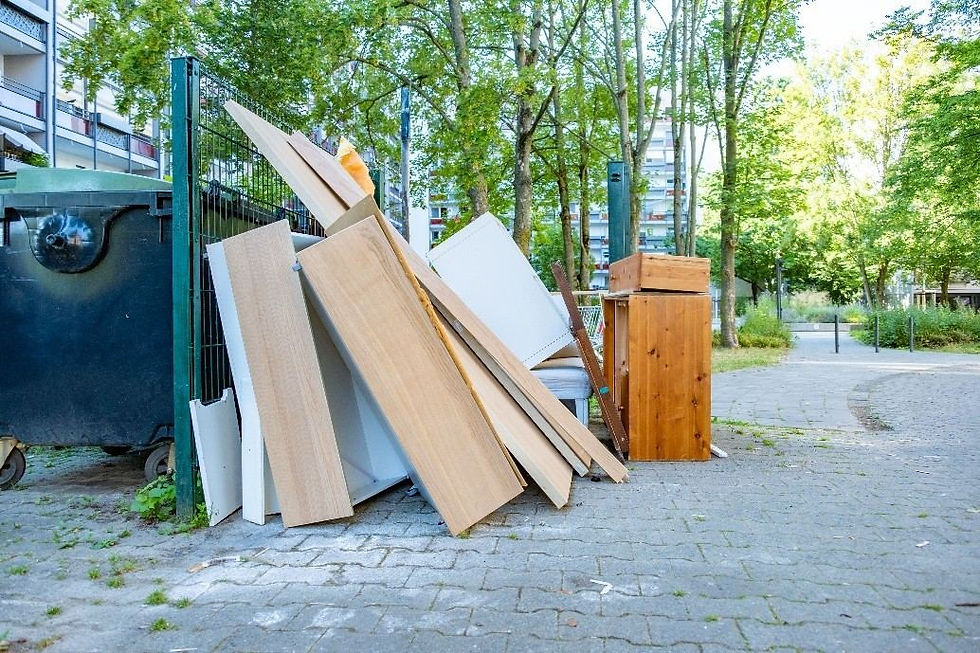
According to the U.S. Environmental Protection Agency, Americans discarded approximately 12.1 million tons of furniture and furnishings in 2018, compared with 2.2 million tons in 1960. Approximately 80% of that waste ended up in landfills.
Not every discarded piece was poorly manufactured, but much of today’s inexpensive furniture is difficult to repair or restore. Particleboard frames, low-density foam, synthetic fabrics, and inexpensive finishes can make replacement more practical than repair.
Some materials and finishes may also contribute to indoor chemical exposure, depending on their composition. Yet these considerations rarely appear in the marketing photographs.
I once watched a show unit being restyled for a new season. Nothing was damaged. Nothing was worn. But the palette was changing from warm sand to cool stone. Out went the pillows, decorative objects, and even a faux olive tree. In came new versions in a slightly different shade of beige. The whole market, in one hallway. That plastic olive tree will probably outlive me, and it served one season.
The real cost of cheap furniture
A $500 sofa may seem like a better decision than a $3,000 one. And when budgets are tight, affordability matters. I’m not interested in shaming anyone for making financially necessary choices. But price and value aren’t always the same. Imagine replacing a $500 sofa every three years. Over twenty-five years, you could spend more than $4,000. Now imagine investing in a well-constructed sofa that lasts twenty-five years, even with occasional maintenance or reupholstery. The financial difference may be smaller than expected, while the amount of waste generated can be significantly different. These are illustrative numbers, not universal product lifespans. And buying better doesn’t always mean buying new or expensive. Estate sales, vintage shops, local craftspeople, and furniture restoration offer alternatives.
I’m the designer who gets on her knees in the showroom to inspect the underside of a sofa. Because what you can’t see often matters more than what photographs beautifully.
When everything starts looking the same
Think about the last trendy coffee shop or hotel lobby you visited. Pale stone. Light wood. Neutral upholstery. One carefully placed plant. Remove the signage, and you might struggle to distinguish Brooklyn from Austin, Lisbon, or Mexico City.
I once walked into a café while traveling and immediately recognized the furniture, lighting, and overall composition. I’d seen that room before. Probably specified some of those pieces myself. Later, I returned to my rental to find the familiar oatmeal sofa, round mirror, and single dried branch. It was me and the branch. It’s amusing, but there’s a larger problem.
When interiors are designed primarily for social media, their relevance becomes tied to trends rather than actual use. A perfectly functional room can suddenly feel outdated simply because the algorithm has moved on. Design should accommodate life, not just the photograph.
What we lose along the way
Disposable design affects more than landfills. It also affects the people who know how to make and repair things. The upholsterer. The woodworker. The ceramicist. The furniture restorer. These trades preserve skills and knowledge that cannot always be replicated through mass production. I grew up in Mexico, where craftsmanship is deeply connected to cultural identity and everyday life.
At a flea market in Mexico City, I once found a small hand-carved wooden chair. Its paint had worn away where countless hands had rested. It matched nothing I owned. I brought it home anyway. It still doesn’t match my sofa. But it has character, history, and a durability that many decorative objects purchased today simply don’t offer. Not everything meaningful needs to match. And not everything valuable needs to be new.
Beige isn’t minimal
I’ve become increasingly interested in what people already own before discussing what they should purchase. The inherited dining table. The chair sitting in storage. The piece that doesn’t match but carries decades of family history. Sometimes the most responsible design decision is to keep what is already there. Minimalism isn’t a color palette. It’s a way of thinking about what we actually need.
A beige room filled with disposable furniture isn’t necessarily more sustainable than a colorful room assembled over generations. Sustainability is not an aesthetic. It’s a practice.
I’m not suggesting we stop buying beautiful things. Beautiful objects are part of what makes our homes meaningful. I’m suggesting we become more intentional about what deserves a place in them. Before your next purchase, whether it’s a sofa or a decorative object, ask yourself: Will I still want this in ten years? If the answer is no, perhaps it’s worth waiting. And finding something that will stay.
Read more from Monserrat Menendez
Monserrat Menendez, Interior Designer
Monserrat is an entrepreneur, interior architect, and sustainability advocate, as well as the founder of Senom Design, a firm dedicated to merging innovative design with sustainable solutions. With over a decade of experience across residential, commercial, and international projects, she specializes in bringing clients’ visions to life through thoughtful, high-impact interiors. She is the U.S. Brand Ambassador for U Green, an organization that helps companies become more profitable while empowering people and brands to follow a consistent path toward sustainability through transformative education and specialized consulting. As an Executive Contributor to Brainz Magazine, she shares her expertise in design, sustainability, and innovation. Her mission is to create spaces that are not only beautiful but also responsible and forward-thinking.
Reference:
U.S. Environmental Protection Agency, Durable Goods: Product-Specific Data (2018). Furniture and furnishings waste statistics.







