Stella Vidal Interview on Healing Trauma Through Self-Love and Holistic Mental Health
Stella Vidal is an internationally recognized trailblazing Latina who overcame homelessness as a teenager and became a founder and active mentor to Latina women. Stella's humanistic style allows for the therapeutic relationship to be the transformative essence of each interaction.
While traditional psychotherapy helps many, Stella's approach is deep-rooted in culture and holistic techniques that allow for immediate relief and visible progress in the lives of many.
In this interview, Stella takes us into her personal space and candidly discusses what motivates her to get up every day and help humans see life from a healed lens.

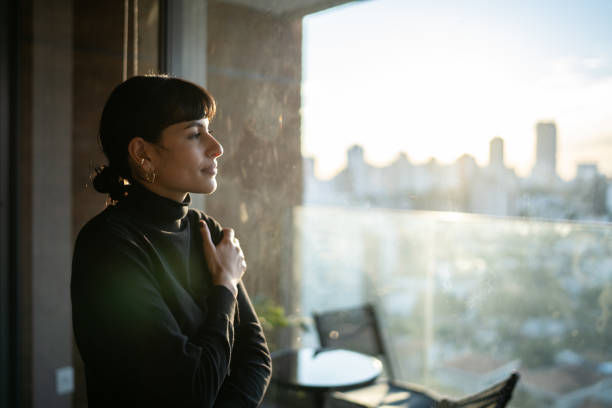
Stella Vidal, Holistic Psychotherapist
What inspired you to create Self Love Harbor, and what did you want it to represent from the very beginning?
Self Love Harbor, an award-winning holistic mental health practice, was created in the middle of the 2020 Pandemic. I was practicing mental health part-time, while also enjoying a successful commercial real estate career in Miami. When the pandemic hit, real estate was halted. Interestingly enough I had a record breaking year in March 2020, and thanks to this I was able to pivot into mental health full time. Today, I see it as a redirection from the universe. Starting April 2020, I became fully immersed in helping people overcome challenges surrounding isolation. Isolation, or being alone, is something that many people run away from, but the pandemic forced people to sit with themselves. I saw the need for support and compassionate care because the sense of trauma was so great that people needed connection.
By the end of 2020, I told my partner that I was going to open a physical brick-and-mortar mental health practice. He looked at me with a strange look on his face, indicating that most people were isolating and were “playing it safe.” That's when I said “exactly.” Self Love Harbor opened its doors in April of 2021, and it was one of the best decisions of my life.
You combine psychotherapy with Reiki, breathwork, somatic practices, and inner child healing. How do you decide what each client needs most?
That's a really good question. I am by nature very clinically sound and practice cognitive behavioral therapy as a baseline. Psychology is evidence-based, and without this clinical factor, we end up with too many abstract interventions that may leave the client even more confused than when they got to my office. With this being said, I pride myself in being able to assess people's needs during the initial session, considering multiple factors, science-based and intuition-based. I have a holistic eye and am able to pick up even the most subtle signs. I thank my own trauma for this :) Within the next couple of sessions, we will create a treatment plan moving forward. Some of these treatment tools may be somatic, such as breathwork or even forest bathing. I understand that human beings are all very unique, travel unique paths, and are multidimensional beings.
At my practice, we approach the individual based on their current state of functioning and their needs, but also take into great consideration where they come from, their culture, and their past and current environments. I love poetry and art as well, depending on what helps my clients express themselves or hear the message better. This type of attunement with my clients helps establish a unique sense of trust which serves as its own healing factor within the therapeutic relationship.
How has your work with PTSD and complex trauma shaped the way you think about lasting emotional healing?
Working with PTSD requires a lot of patience as well as clinical expertise. It is never a cookie-cutter approach to healing, especially healing from trauma. You have to meet people where they are and let go of any preconceived notions that may interfere with the client’s progress. I also educate people on how to understand that healing is a journey and that compassion is required. Many people who suffered from trauma don't really know how to be compassionate with themselves. PTSD brings a devastating sense of shame and guilt. You can work for years just to see relief from the shackles of shame.
What is beautiful to see, though, is the healing unfolding in front of your eyes and watching people transform not only emotionally but also physically. I am blessed to work with trauma survivors, and it is one of my best successes.
Why do you believe holistic approaches are becoming more accepted within the mental health profession today?
I believe that social media gives us access to tools that we did not know existed before. I also believe that after the pandemic people realized that they needed to look at different aspects of their lives and change them in order to be happy. Part of this holistic approach has to do with mind, body, spirit, and environment. Post-pandemic, especially, we understood how our environment can truly affect our mental and physical well-being.
Talk therapy takes us so far. Approaching the human being as a product of an environment, while exploring how their mind, body, and spirit react to each other and to the environment, helps to maximize the benefits of the holistic approach.
You also bring mental wellness organizations beginning to recognize about employee wellbeing?
This is tied to my last answer. We understand now that Wellness is the pursuit of health. Health that encompasses our minds, our bodies, our spirit, and our environment. All of these aspects of who we are require attention in order for us to be fully present and productive at work and at home. Corporate Wellness allows for higher productivity through the nurturing of employees by recognizing their humanness. Looking at the individual as someone who needs support and tools to thrive. This, in turn, creates loyalty and motivates people to commit further to their place of employment.
For someone carrying unresolved emotional wounds, what is the first step toward healing that you believe is often overlooked?
Many of us have been taught that happiness is something that we reach out and achieve. People who carry deep emotional wounds tend to feel like they are alone in their experience. This shame tends to make people not want to look within too often, but instead they learn to look outside themselves for the answers. This inevitably ends up increasing their suffering and sense of isolation. I teach people to connect to themselves before they try to connect with others or place the responsibility of their success on others. Through breathwork, people with emotional wounds begin to tune into their body. Somatic techniques such as breathwork and meditation help people reconnect to themselves while quieting their mind. When we quiet our mind we're able to hear the voice of our spirit who knows our true potential and our true purpose in life.
People who suffer greatly, tend to struggle to accept their current situation. Acceptance is also important. Accepting things as they are while working on the things that we can change allows for less resistance when achieving our goals. Finally, focus. Focus is essential when we are looking to heal. Where are we putting our energy and focus?
Replacing old narratives and focusing on more supportive ones helps to reduce struggle and improve our sense of success.
Self-love is central to your work. How can someone tell the difference between practicing genuine self-love and simply trying to feel positive?
Self-love is not a concept but a lifestyle. Self-love requires daily attention to the signs that our bodies give us. Self-love is a relearning process, shifting from attention outside of ourselves to attention within ourselves. Self-love requires accepting ourselves as we are and looking deeper into what motivates us to get up and live fulfilling lives. Being positive or feeling positive is a temporary situation that has not gathered any momentum. In order to feel true self-love, one has to dedicate oneself to practicing daily routines that allow us to feel connected to our own needs and emotions. Doing these actions consistently and throughout time allows us to gain self-respect. Self-respect is the building block of self-love. Without self-respect, it will be really difficult to love yourself.
You have turned personal adversity into a life dedicated to helping others heal. What perspective has that journey given you about resilience and purpose?
Absolutely, I am the queen of personal adversity. Thinking back to my early years in the United States at the age of 17, when my dad had refused to support me going to college.
Looking back today, I believe that after enduring the traumatic journey of migrating into a new country and culture, at 17, my body was a bit dissociated. This is one of the defense mechanisms during trauma. I also knew that I had a goal to achieve. I dreamed of becoming a mental health advocate for young women like myself, who were misunderstood and who lacked support from the same people that brought them into this world. Imagine if your own parents had their back on you. Imagine that your only option is to embark on a brand new journey in a new world. Imagine being without guidance or direction, merely with the aspiration of making a difference one day.
In those women who come to see me, I recognize myself.
I know that there's one thing that I had then, which still is a big part of who I am today. That is my spirit. The light within me which guided me even when I didn't know where to go. That is the same light that I recognize in so many young women who have endured unspeakable trauma and are now sitting in front of me asking for help. That was the same light that my dad was afraid of and felt like if he didn't suppress it or control it he couldn't predict the outcome of my life.
Thank God that I didn't let my light be fully dimmed by judgement. I am happy that I allowed my spirit to guide me through adversity. I remember while a freshman in college, journaling and writing to my angels. That was me connecting to my spirit. I think back at my younger 17-year-old self and wonder with awe at how resilient I was to navigate such complicated terrains, always being guided by my spirit. So today and every day that I have a chance to, I tell people to spend time reconnecting to their spirit, their inner light. That ever-present energy helps us get up and continue going even when others would understand if we gave up.
I am witness through my mental health practice to how, when my clients understand the concept of reconnection, they start to believe in themselves despite what their outward circumstances may be. They catastrophize less and tap into their inner resources to better cope with challenges. This is the importance of finding the right therapeutic partner. Because sometimes our ego mind wants us to regress to old patterns of fear and anxiety. When you have the right person guiding you through your healing process, they can remind you of your inner divinity and light.
You asked about resilience, and resilience is simply a result of our ability to consistently tap into our inner knowing regardless of internal or external circumstances. Knowing that the answer always lies within us is a freeing concept.
In regard to purpose, I would urge everyone reading to spend plenty of quiet introspective time asking what their purpose is. Asking our heart with our full attention on it, where we must go or what we must do, is part of reconnecting to our inner knowing. Our heart is incredibly intelligent and many times better than our mind. Asking our heart what our purpose should be should be a daily ritual. Connection to the heart and asking and quiet introspection about what our purpose is will bring about miracles in your life that you never anticipated would happen. I see it in my own life, and I'm able to witness it with my clients every day.
If every reader could adopt one mindset that would improve their mental wellbeing, what would you hope it would be?
I would suggest to the reader to be honest about how much their self-talk is supporting them and their purpose. Self-talk is the voice of our subconscious mind, which carries much of our fears and anxieties. Make sure that you identify what you're telling yourself when all is quiet. If there is any self-talk that is still creating doubt in your capabilities, gently and with compassion change it to positive affirmations which help you believe in yourself. The mindset of “I can do hard things” is crucial for anyone who would like to step outside their comfort zone and seek greatness.
Follow me on Instagram for more info!
Read more from Stella Vidal