

Sergey Macheret – Building Big Ideas Into Lasting Impact
Sergey Macheret’s career spans decades of advanced plasma science, aerospace innovation, and applied research. From leading institutions to cutting-edge engineering programs, he has focused on turning complex scientific ideas into practical solutions with real-world impact.
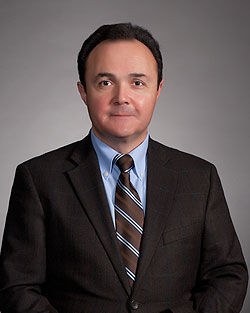
A career shaped by curiosity and execution
Some careers are planned step by step. Others grow from a single question that never goes away. For Sergey Macheret, that question was simple: How do molecules, atoms, and electrons behave in extreme physical conditions, and how can we control them in practical application?
That curiosity became the foundation of a career that spans continents, institutions, and industries. Over more than four decades, Macheret has moved between research labs, classrooms, and advanced aerospace programs. Along the way, he has helped turn complex plasma science into tools that engineers can actually use.
“I never thought in terms of titles,” he says. “I thought in terms of problems. If a problem mattered, I wanted to work on it.”
Early training in high-stakes science
Macheret was born in Kiev, Ukraine, when it was still part of the Soviet Union. He finished high school there before heading to college in Moscow. He earned his master’s degree in physics from the Moscow Institute of Physics and Technology in 1980, graduating with distinction.
He then completed his Ph.D. in Plasma Physics and Plasma Chemistry at the Kurchatov Institute of Atomic Energy in 1985. His early research focused on plasma chemical reactions—fields where small errors can lead to big consequences.
“At Kurchatov, you learned discipline fast,” he recalls. “You couldn’t hide behind theory. Your work had to match reality.”
Those years shaped his practical mindset. Plasma was not just something to model on paper. It was something that had to behave predictably in extreme conditions.
A move to the United States
In 1991, Macheret moved to the United States and joined Ohio State University as a lecturer and research associate. Three years later, he moved to Princeton University, where he spent more than a decade in roles ranging from research scholar to senior research scientist and lecturer.
At Princeton, he focused on bridging theory and application. He worked on models that explained how plasmas behave in fast-moving flows, with direct relevance to aerospace systems.
“Teaching helped sharpen my thinking,” he says. “If you can’t explain a concept clearly, you don’t really understand it.”
His work began drawing interest beyond academia. The ideas were solid. But more importantly, they were usable.
From academia to skunk works
In 2006, Macheret made a major shift. He left academia to join Lockheed Martin’s Advanced Development Programs, better known as the Skunk Works.
The move placed him inside one of the most demanding engineering environments in the world. Projects were classified. Timelines were tight. Expectations were high.
“At Skunk Works, you didn’t have the luxury of endless refinement,” he says. “You had to get results that worked, and get them quickly.”
As a Senior Staff Engineer, he worked on advanced plasma concepts tied to aerospace performance and control. His contributions earned him multiple service recognition awards and the Aero Star Award in 2012.
The experience reinforced a lesson he still shares with students. “A good idea isn’t enough. It has to survive testing, schedules, and real constraints.”
Returning to purdue with industry perspective
In 2014, Macheret returned to academia as a professor at Purdue University, joining the School of Aeronautics and Astronautics. From 2022 to 2024, he also held a concurrent role in Electrical and Computer Engineering.
At Purdue, he applied lessons learned in industry to research and teaching. His work focused on efficient plasma generation, control of nonequilibrium plasmas, and magnetohydrodynamics. He published more than 170 journal and conference papers, contributed to books and chapters, and filed 12 patents and patent applications.
He also became known for a direct teaching style. When a student once brought him a failed experiment, he didn’t dismiss it. “This is good data,” he said. “Now we know what doesn’t work.”
That mindset helped shape a generation of engineers who learned to treat failure as information, not defeat.
Recognition from the aerospace community
Macheret’s influence did not go unnoticed. He was elected a Fellow of the American Institute of Aeronautics and Astronautics (AIAA), one of the highest honors in the field. In 2022, he received the AIAA Plasmadynamics and Lasers Award for pioneering work in plasma generation and aerospace applications.
“These awards reflect teamwork,” he says. “No meaningful work happens in isolation.”
Beyond awards, he chaired conferences, edited journal issues, and delivered nearly 60 invited lectures worldwide. Each role expanded his impact beyond his own research.
Founding US plasma engineering
In 2023, Macheret founded US Plasma Engineering LLC, marking another shift—from teaching and research to focused execution. The goal was not to chase trends, but to apply decades of plasma expertise to real engineering problems.
“After years in universities and large organizations, I wanted something agile,” he explains. “A place where ideas could move quickly from concept to testing.”
The company reflects his career-long pattern. Identify a hard problem. Apply deep science. Build something that works.
A leader focused on what comes next
Today, Macheret remains focused on progress, not legacy. He sees plasma technology as an underused tool with wide applications, from aerospace to energy systems.
“We are still at an early stage,” he says. “Plasma is powerful, but control is everything. That’s where the real work is.”
His career shows what happens when curiosity meets discipline and persistence. From Soviet research institutes to American universities and advanced aerospace programs, Sergey Macheret has spent a lifetime turning complex ideas into practical impact.
And he is not finished yet.







