Rediscovering and Embracing the Child Within
Reena helps people move beyond symptoms, grief, and limiting patterns to reconnect with their true selves. Inspired by her own journey of loss, healing, and spiritual awakening, she has created the 6R Ascension™ Process, a structured pathway for deep transformation, self-discovery, and conscious growth.

Today, 14 November, is Children's Day in India, a day dedicated to celebrating children, their innocence, curiosity, laughter, and the joy they bring into our lives. It also made me think about the child within each of us. We may have grown older, taken on responsibilities, and moved through so many experiences in life, but what about the little child we once were? How often do we remember or spend time with that part of ourselves?
I sometimes think about how much of that child is still part of who we are today. The things that made us laugh, the excitement over something small, our curiosity, the way we played and enjoyed life without thinking too much about it. We may have grown older, but those parts of us haven't necessarily disappeared. Perhaps, somewhere along the way, we have simply become too busy to notice them.
Through my own experiences with inner child work, I have come to appreciate that reconnecting with our younger selves is also about getting to know ourselves again, remembering parts of us we may have forgotten, and enjoying the company of the child we once were. Of course, it can also help us revisit difficult memories and emotions from our past when they come up. I have been working with inner child healing for many years, both personally and with others. Through my own connection with my inner child, I continue to learn more about myself, sometimes discovering parts of me I hadn't fully understood before.
Although difficult memories and emotions are part of inner child work, something I have come to appreciate is that our inner child doesn't always come to us with something that needs fixing. Most of the time, all our inner child wants is our attention, to be acknowledged, and to enjoy our company.
We may have worked through a particular memory, allowed ourselves to feel the emotions around it, and genuinely felt that we had made peace with what happened. Then, months or even years later, we hear somebody sharing their story, and something inside us responds. It might be a familiar sadness, a feeling of rejection, or an emotion we thought we had already dealt with. I don't think this necessarily means the earlier healing didn't happen. It may simply mean that we are experiencing another aspect, another layer of something we have met before. Rather than wondering why it has come back, we can take a moment to notice what we are feeling, how it is showing up, and where in our body we feel it.
When something like this happens, it is important to give ourselves a little time to sit with ourselves and our inner child. That younger part of us needs some reassurance again, to feel safe, loved, and accepted. We may have offered that reassurance before, but it doesn't mean we won't need to offer it again. We can remind her, “You are loved. You are safe. You are not alone. You are okay, and I'm here with you.” Spend a little time with her, allowing yourself to breathe into the area of your body where you noticed that feeling, while reminding her that she is loved, safe, and not alone.
I think of it a little like building trust in any relationship. Just because we have reassured someone once doesn't necessarily mean they will never need to hear it again. Sometimes it takes time, consistency, and repeated experiences of feeling supported for that trust to grow. Our relationship with our inner child is no different. We can keep showing up, listening, and reminding that younger part of ourselves that they don't have to face those feelings alone.
A conversation that stayed with me
I want to share a beautiful experience from a client's inner child session, with her permission. It was a very personal conversation between her and her younger self, and something about it has stayed with me.
During the conversation, the little girl appeared and said something very simple.
"I'm lonely."
The adult's response came almost immediately.
"So am I."
I find those few words quite moving. We can have families, friends, people we love, and people who love us. We can be sociable, busy, and surrounded by others, and yet there may still be moments when we feel alone.
Each of us experiences life in our own unique way. There are parts of our inner world that even the people closest to us may never completely understand. What happened next in this conversation was especially lovely.
The little girl looked at the adult and asked:
"Should we be friends?"
The answer was yes, and then came another question:
"Would I be enough for you?"
I have thought about that question quite a lot:
"Would I be enough for you?"
We spend so much of our lives thinking about our relationships with other people. We want to be good partners, parents, children, and friends. We make time for people we care about. We try to understand their needs, support them, and be there when they need us.
But what about our relationship with ourselves? Do we give ourselves the same attention? Do we enjoy our own company? When we meet the younger part of ourselves, do we see her only as someone who needs healing, or can we also see her as someone we might actually enjoy spending time with?
When healing becomes a relationship
What I found particularly touching about this conversation was that there wasn't an immediate answer to everything. There was no sudden understanding of why the loneliness existed or what needed to happen to make it disappear.
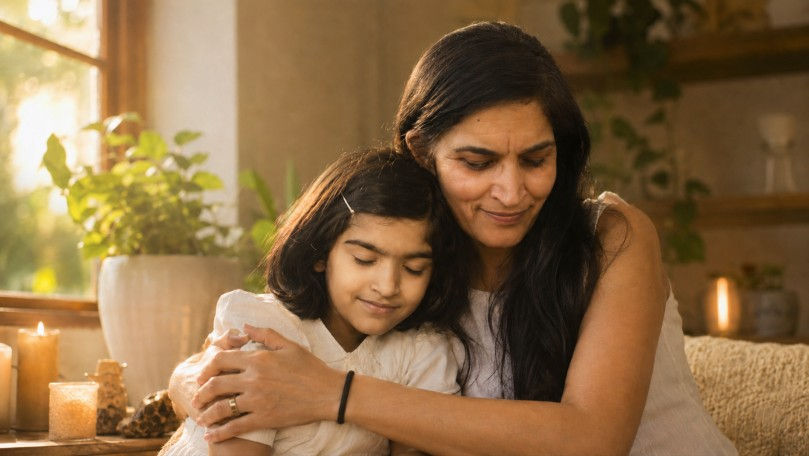
Instead, there was a hug and acceptance. The adult held the little girl, and the little girl hugged her back. There were tears, but they were tears of joy. It felt like a reunion. Then came the words, "I love you." "I love you too." Later, an apology.
"I'm sorry I lose touch with you from time to time."
The little girl's response was unexpected.
"No, you don't. You connect with me every day."
I love that answer because it reminds me that connection doesn't always have to mean doing something special. We may already be connecting with ourselves in small ways without even recognising it. Yet, there was still that feeling of loneliness. So the question wasn't simply how to reconnect, but how to be together differently.
The word that came during the experience was integration. Not just visiting the inner child during meditation or healing sessions, but allowing her to become part of everyday life.
What might that look like?
When we think about connecting with our inner child, we often imagine sitting quietly, closing our eyes, and visualising ourselves as a child. That can be a lovely experience, but I don't think that connection needs to end when the meditation finishes. We can also include our younger selves in the ordinary things we do every day.
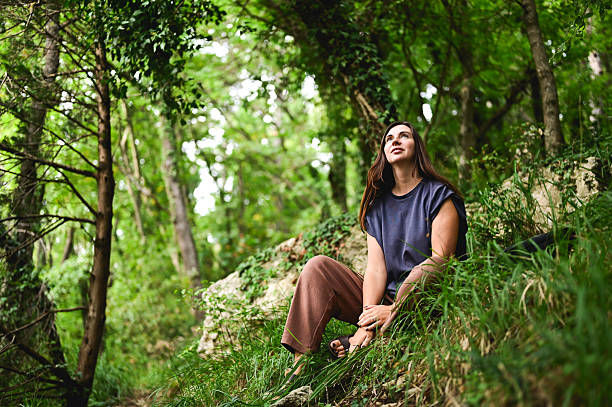
For example, think about going for a walk. As adults, we are often so caught up in our thoughts that we barely notice what's happening around us. But remember how we were as children? We would notice a butterfly, stop to look at a flower, get excited about seeing a dog, or find something amusing in the simplest things. What if, while walking, we occasionally connected with that younger part of ourselves and allowed ourselves to see things through her eyes? We might notice something we would otherwise have walked straight past, or simply enjoy the walk a little more.
We could try this with other everyday activities too. It isn't about pretending to be a child or having to imagine her beside us all the time. It's about remembering that the child we once were is still part of us and allowing some of her curiosity, playfulness, and enjoyment into our lives today.
I think it would be lovely to experiment with this, starting with just a few moments during something we already enjoy doing. There is no particular way to get it right. Like any relationship, we get to know one another by spending time together, paying attention, and sharing experiences. As we continue doing that, we may find ourselves becoming more comfortable with this part of who we are.
The conversations we have with ourselves
There is another part of inner child healing that I feel is particularly important, and that is paying attention to how we speak to ourselves. The conversations we have with ourselves in everyday life can tell us quite a lot about the relationship we have with ourselves.
Think about something as ordinary as missing a bus because you were running late, or perhaps somebody delayed you. What is your first reaction? Do you become frustrated and start criticising yourself for not leaving earlier? Or imagine you didn't do as well as you had hoped in an examination, made a mistake at work, or handled something in a way you later regretted. What do you say to yourself in those moments?
It isn't only about what happens when things go wrong. When you do something well, do you appreciate yourself? Do you allow yourself to feel proud, even of the small things, or do you simply move on without giving yourself any credit?
These conversations matter, both to us and to the child within us. We can be quite harsh with ourselves, sometimes speaking in ways we would never speak to a little child standing in front of us. If that child made a mistake, we would probably try to understand what happened, encourage her, and help her learn from it. Yet when we make a similar mistake, we don't always offer ourselves that same understanding.
Of course, we still need to take responsibility when we get something wrong, and we won't always be happy with ourselves. But we can take responsibility without being unkind to ourselves. Let's start by noticing how we respond, whether something goes wrong or goes well. We don't have to change the way we speak to ourselves overnight. We can simply ask ourselves, “Would I speak to my younger self in the same way?”
There doesn't always have to be a lesson
Towards the end of this conversation, something else happened that stayed with me. The adult began to feel tired and in need of comfort. As she embraced her inner child, the little girl expressed that she wanted her mother back. The adult also felt a longing to regain her own energy, her own spark. These feelings came up naturally during the experience, without any immediate explanation of why they were there.
As she continued holding her inner child, she noticed her shoulders beginning to relax and her whole body softening. There was a wonderful feeling of relief, almost as though a weight had been lifted. She also became aware of a sense of letting go of some of the expectations she had been placing on herself.
I find that interesting because we can bring so many expectations into our healing work without realising it. We expect ourselves to understand what comes up, to know why we feel a certain way, and what we should do about it. Sometimes we even expect ourselves to heal in a particular way. I have certainly found that not every experience gives me an immediate insight. Sometimes I understand something much later, and sometimes I don't understand it at all. I am becoming more comfortable with that. There are times when understanding is helpful, but I don't think every experience needs to become another lesson or something we have to work through.
Learning to enjoy the child within us
Through my inner child work, I have also rediscovered some lovely memories from my childhood. I remember learning to ride a bicycle, losing my balance and falling straight into a puddle, and how much we all laughed about it. I also remember coming home and always starting my stories with, “Do you know what happened today?” It became so predictable that one day my sister said it before I could, and we all burst out laughing. Apparently, I've always enjoyed telling stories!
I also remember the time my father openly expressed how proud he was of me. That moment meant so much to me, and it remains a very precious memory. I love that these happy memories have come back alongside some of the more difficult ones. They remind me that my childhood wasn't only about the things that may have hurt or upset me. There was so much love, laughter, and happiness in those ordinary moments too.
Reconnecting with our younger selves can also remind us of the curiosity, laughter, and playfulness we had as children. It's not about wanting to become children again, but remembering that those parts of us are still there. We may have grown older, with responsibilities, relationships, and everything else that comes with adult life, but that doesn't mean we have to leave all the fun behind. I think we can still make room for the things that make us smile, laugh, and enjoy life, just as we did when we were little.
Let's begin with friendship
When I think back to that little girl's question, "Should we be friends?", I find myself smiling. It was such a simple question, yet it made me think about how we approach our relationship with ourselves. On this Children's Day, let's remember and celebrate the child within us too. Let's take a little time to reconnect with our younger selves, to make them feel loved, accepted, and appreciated, and to enjoy their company. After all, growing older doesn't mean we have to leave the child within us behind.
If this article has encouraged you to reconnect with the child within you, and you would like some support along the way, you're welcome to get in touch with me. Through my work at 6R Ascension™, I offer a supportive space to explore your inner child connection, at your own pace and in a way that feels right for you.
You can learn more about my approach, explore the services I offer, or get in touch with me through my website.
Read more from Reena Pathak
Reena Pathak, Creator of the 6R Ascension™ Process
Reena is the creator of the 6R Ascension™ Process and a passionate advocate for healing beyond symptoms and transformation beyond awareness. Drawing on her personal journey of grief, spiritual awakening, and conscious growth, she combines intuitive insight, spiritual and energy healing, ancestral healing, inner child healing, egression therapy, and Qi Gong to support meaningful, lasting change. Through her work, Reena helps individuals reconnect with who they truly are and step into lives of greater clarity, purpose, and alignment.