

Playfulness as Protection Against Burnout and a Pathway Through Trauma
Written by Anele Griessel, Occupational Therapist
Anele Griessel is an expert occupational therapist, well known for sensory preferences, overwhelm, and how simple adjustments in daily activities can nurture the sensory system, reduce overwhelm, and build resilience. She is the author of the Sensory Journal, published in 2020.

When did you last do something just because it was fun? Not productive, not good for you, not on a list. Just fun. If you had to think about it, you are not alone. In more than 28 years as an occupational therapist, I have watched a lot of children, parents, and professionals lose their playfulness, usually without noticing. It goes quietly. The jokes stop, the curiosity flattens, and life turns into a sequence of tasks to get through.
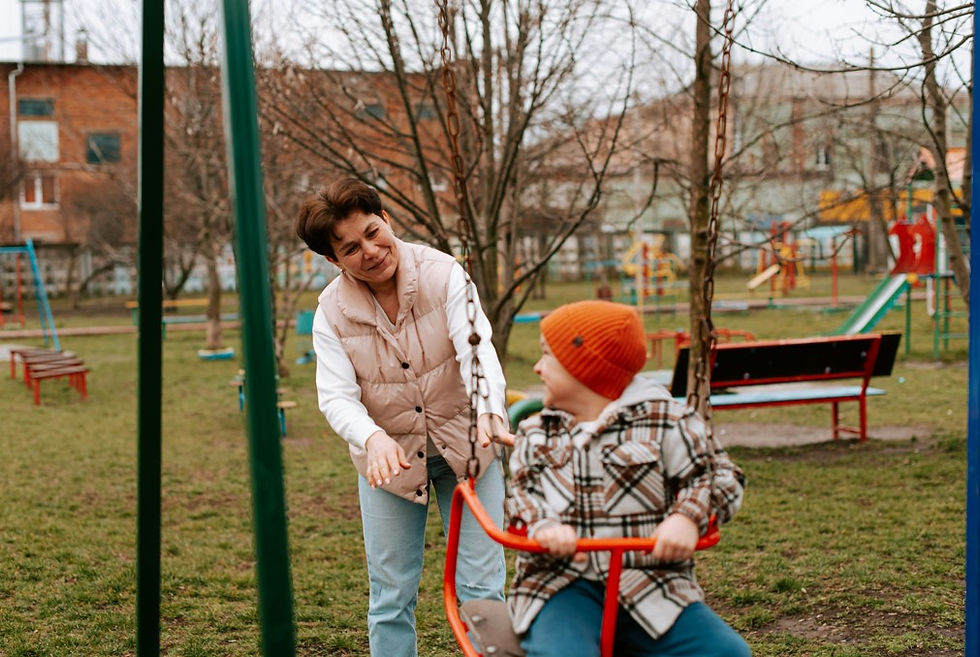
We tend to treat play as a reward for when the work is done. I want to make a different case. Playfulness is one of the nervous system's own tools for staying well. It helps protect us from burnout, and it can offer a gentle way back for people living with the effects of stress. Play is not a luxury. It is part of how we regulate, connect, and heal.
What playfulness really is
Play is something you do. Playfulness is the way you meet the world. It is a disposition, and it shows up as much in how you approach the washing-up or a difficult meeting as in a game.
Anita Bundy, a playfulness guru, picks out four elements that define playfulness:
Intrinsic motivation, doing something for its own sake, not for a reward or an outcome.
Internal control, feeling in charge of your actions and at least part of what happens next.
Freedom from the constraints of reality, pretending, joking, using an object in a way it was never meant for.
Framing, giving and reading the cues that say, "This is play, not for real."
Look at that list again with a tired adult in mind. Burnout and stress attack each of these. Motivation becomes external ("I have to"). Control feels lost. Reality presses in too hard to suspend. Cues of safety get missed or misread. That is exactly why restoring playfulness matters.
Playfulness also grows in stages. Children move from solitary exploration, through watching and playing alongside others, to shared, cooperative play (Parten's well-known stages of play). Adults under strain often slide back down this ladder. They withdraw, observe rather than join in, and lose the back-and-forth of shared fun.
Play begins in the nervous system
Your nervous system is always asking one quiet question: "Am I safe?" Stephen Porges calls this neuroception. The answer shapes everything else. When we sense safety, the ventral vagal system comes online, and we can connect, think clearly, and be curious. When we sense threat, we shift into fight or flight, or, if the threat feels inescapable, into shutdown.
Play sits in an interesting place on this map. It uses the energy of mobilisation, with chasing, wrestling, laughing, and racing heartbeats, while staying anchored in safety and connection. In polyvagal terms, play is a kind of neural exercise. It lets the body practise rising into arousal and coming back down again, with someone else alongside.
This is why the playful ingredients I use in therapy are so physical. Rhythm, breath, movement, laughter, deep pressure, and warm faces and voices all feed the vagal pathways that support regulation (Porges, 2011, Dana, 2018). Blowing bubbles lengthens the out-breath. Rough-and-tumble play, catching, and throwing give the body proprioceptive input that organises and calms it. A shared giggle is co-regulation in action.
Stress can be described as a teacup. We each have a different-sized cup, and different things fill it. When the cup overflows, we may try to keep going, but eventually, we collapse. The antidote to stress is connection, and play is one of the most natural forms of connection we have.
Playfulness as a buffer against burnout
Burnout is not just being tired. The World Health Organization describes it as exhaustion, growing distance or cynicism about your work, and a falling sense that you are effective. It builds slowly, from daily pressures that never quite let up.
That detail matters. Research on stress consistently finds that the steady drip of small daily stressors is more closely linked to our well-being than occasional major events. Playfulness works at exactly that daily level.
The research so far is encouraging:
Playful people perceive less stress. In a study of college-aged adults, Magnuson (2012) found that more playful participants reported lower stress. They were more likely to tackle stressors directly and less likely to use avoidant or escape-based coping.
Playfulness changes which stress gets in. Staempfli (2007) studied 290 adolescents aged 12 to 19. Playful teens felt significantly less stress about themselves and their peer relationships. Their well-being benefited indirectly through richer, more satisfying leisure.
Pressure shuts down the thinking we need. Pressure to perform interferes with new learning, and pressure to be creative interferes with creativity. A playful mood, by contrast, improves creativity and insightful problem-solving.
The last point is the one I see most often in burnout. The more pressured we feel, the more rigid our thinking becomes, and the fewer options we can see. Playfulness loosens that grip. It brings back flexibility, perspective, and the sense that we have some choice.
It also brings back connection. Playfulness is social glue. It eases tension, releases endorphins, helps us solve problems together, and repair after conflict. Burnout isolates people. Play draws them back towards each other.
How play helps the body heal from trauma
Trauma teaches the nervous system that the world is not safe. After repeated threat, the body can learn to stay on guard or shut down, and it reaches for social connection less and less. Many people who have lived through trauma have also missed out on the early co-regulation and play that build these pathways in the first place.
Here is the paradox. Play needs safety, yet it is also one of the ways safety is rebuilt. That is why we can never force someone to play. We create the conditions and invite it.
When play does arrive, it offers some things that talking alone cannot:
A safe rehearsal of arousal. The "not for real" frame of play lets the body feel a racing heart, a chase, or a surprise, and then return to calm. Each time, it learns that activation does not have to end in danger.
Control returned. Trauma is, at its core, an experience of powerlessness. Choosing, leading, changing the rules, and saying "Again!" all rebuild a felt sense of agency.
Rhythm and repetition. Clinicians working with trauma, including Bruce Perry and Bessel van der Kolk, highlight patterned, rhythmic, repetitive experiences such as drumming and movement as ways to reach the body where words do not.
Presence without pressure. Kan (2011) described a state of playful mindfulness in adolescents: absorbed, curious attention that brought a new sense of equilibrium. Playfulness can be a gentler doorway into presence than sitting still with difficult sensations.
Play does not replace trauma-informed therapy. It sits alongside it. In therapy, when the first real laugh bubbles or the first spontaneous "Let's pretend" situation emerges, it is one of the clearest signs that a nervous system is beginning to feel safe again.
6 ways to invite playfulness back
You do not need a free afternoon or a games cupboard. Playfulness is an attitude you can practise in small moments.
Start with your senses. Notice what your own nervous system enjoys. Some of us need movement and heavy work, while others need calm, rhythm, or quiet. Your playful "power tools" might be blowing bubbles with your child, a kitchen dance, a ball game on the beach, or a playful wrestle.
Lengthen the out-breath, playfully. Blow feathers across a table, hum, or sing badly in the car. These are vagal exercises in disguise.
Lower the stakes. Choose something with no end product and no one to impress. Doodle, build, or potter in the garden. The point is the process, not the result.
Bend reality a little. Use an object the wrong way. Make up a silly voice. Tell a story that goes off the rails. Mischief and nonsense are healthy signs of a flexible mind.
Play with someone. Shared laughter is co-regulation. Follow another person's lead, read their cues, and let them lead you in return.
For leaders, teachers, and parents, the same principle applies. A playful environment is a regulating environment. When people feel safe enough to laugh, they also feel safe enough to learn, try, and recover.
Joy as strength
We often wait until we feel better before we let ourselves play. The nervous system works the other way round. Small, safe moments of playfulness are part of how we come to feel better.
So, this week, give yourself permission. Be a little silly. Follow your curiosity. Laugh with someone you love. Your nervous system will know what to do with it.
Read more from Anele Griessel
Anele Griessel, Occupational Therapist
Anele Griessel is a leading occupational therapist specialising in sensory integration and overwhelm. As the author of the Sensory Journal, Anele distills more than two decades of knowledge and experience into actionable steps to help reduce overwhelm, build resilience, and enable individuals to thrive personally, with others, at work, and at home. She is the owner of Estemoa-OT. Her mission: Joy is a choice.
References:
Bundy, A., Nelson, L., Metzger, M., and Bingaman, K. (2001). Validity and reliability of a test of playfulness. Occupational Therapy Journal of Research, 21, 276-284.
Dana, D. (2018). The Polyvagal Theory in Therapy, Engaging the Rhythm of Regulation. Norton.
Kan, K. H. (2011). Playful mindfulness: How Singapore adolescent students embody meaning with school art. Studies in Art Education, 52(2), 155 to 170.
Magnuson, C. (2012). The playful advantage: How playfulness enhances coping with stress. Master's thesis, University of Illinois at Urbana-Champaign.
Parten, M. (1932). Social participation among preschool children. Journal of Abnormal and Social Psychology, 27(3), 243 to 269. See also Pathways.org, 6 stages of play.
Perry, B. D., and Szalavitz, M. (2017). The Boy Who Was Raised as a Dog (revised edition). Basic Books.
Porges, S. W. (2011). The Polyvagal Theory: Neurophysiological Foundations of Emotions, Attachment, Communication, and Self-Regulation. Norton.
Staempfli, M. B. (2007). Adolescent playfulness, stress perception, coping, and well-being. Journal of Leisure Research, 39(3), 393 to 412.
van der Kolk, B. (2014). The Body Keeps the Score. Viking.
World Health Organization (2019). Burn-out, an "occupational phenomenon", International Classification of Diseases.







