

Lena Esmail: Building QuickMed From the Ground Up
Updated: Jul 10, 2025
Lena Esmail didn’t plan on leaving her hometown behind. In fact, her story is one of coming back—on purpose.
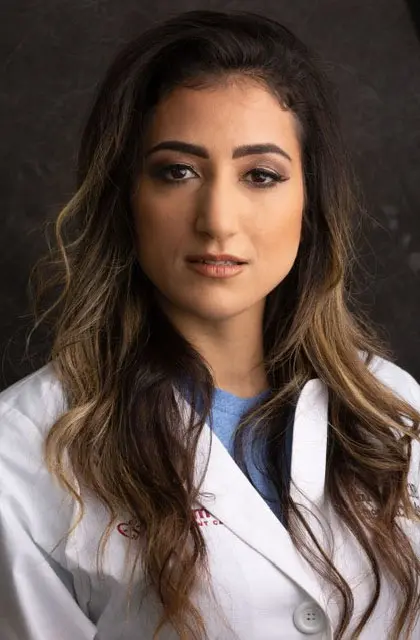
“I grew up on the North Side,” she says. “I worked at almost every place on Belmont Avenue you can imagine.”
Today, she’s the CEO of QuickMed, a growing network of urgent care, primary care, and in-school clinics across Ohio. But Esmail’s journey to that role started in places a lot of people overlook—local jobs, local schools, and local needs.
She believes in starting where you are. “If you can’t make a change where you start, you can’t make a change anywhere,” she says.
Early Education and Why She Stayed Local
Esmail graduated from Liberty High School in 2004. Instead of leaving for a big city or brand-name school, she stayed close to home and got her nursing and biology degrees from Youngstown State University. Later, she earned a master’s in nursing from Ursuline College, a post-master’s certificate in critical care at YSU, and a doctorate in nursing practice from Kent State.
Her time at YSU meant more to her than just credentials. “Being named an alumni of the year at Bitonte College was such an honor,” she says. “That school helped me build everything I have.”
It also kept her close to the Mahoning Valley, a region she’s passionate about helping.
Spotting a Gap in Community Healthcare
As a nurse with deep roots in the community, Esmail saw something others didn’t: a major gap in healthcare access. Many residents didn’t have primary care options nearby. Urgent care was often expensive or overrun. School-based health services were limited or nonexistent.
She realized the system didn’t need to be replaced—it needed to be redesigned.
That’s when she founded QuickMed, a provider model based on advanced practice professionals working in the communities they serve.
“It’s about delivering quality care in the places people already are,” she says. “It’s simple, but it works.”
Launching QuickMed in Liberty, Ohio
The first QuickMed location opened in Liberty, her hometown. It wasn’t flashy. It wasn’t part of a big healthcare chain. But it met a need, and word spread quickly.
From that one location, QuickMed has grown to serve patients in Akron, Austintown, Columbiana, Cortland, Medina, Strongsville, Warren, Ravenna, and Liberty.
The clinics focus on being accessible and practical. Many are located near schools or in neighborhoods where traditional healthcare has been hard to access.
“Our model doesn’t rely on massive hospitals or big buildings,” Esmail explains. “We’re built to fit into the community, not overwhelm it.”
Family Life and Staying Grounded
Despite running a growing company, Esmail keeps her personal life front and center. She lives in the Mahoning Valley with her husband and six children.
“My heart is here,” she says.
Her career has always been driven by personal values. She’s a nurse first, not just an executive. Her love of basketball, family, and local life gives her a balance that shows up in how she leads her business.
It also means she’s present. At local events. In community clinics. At home with her kids.
“I wanted to be someone who made an impact in the place that made me,” she says. “Now I get to do that every day.”
A Practical Vision for Local Health Innovation
Esmail’s success hasn’t come from chasing hype or trends. Her strategy is simple: understand the needs of a place, and build something real to meet them.
She focused on scalable, community-based clinics staffed by highly trained nurse practitioners and physician assistants. That choice helped keep costs manageable and expanded reach faster.
“It’s not about big hospitals versus small ones,” she says. “It’s about putting care where people need it, when they need it.”
By doing that, QuickMed hasn’t just grown—it’s filled a gap in the healthcare system that few others have addressed.
What Others Can Learn From Esmail’s Journey
Lena Esmail’s story offers a clear lesson: you don’t need to leave your hometown to build something that matters. In fact, staying close to home might give you insights that others miss.
She didn’t start with investors or buzz. She started with a nursing degree, a problem she saw up close, and the belief that her home community deserved better care.
For anyone looking to make a real difference, her story is a reminder that big ideas often begin in familiar places—and that the most lasting success is the kind that serves others.
As Esmail puts it, “Seeing my impact in the curbing of the inequity in care here is amazing.”
Key Takeaways for Career and Industry Readers
Start Local: Esmail proves that deep knowledge of your own community can drive business success.
Build What’s Needed: Her clinics address practical problems with practical solutions.
Stay Grounded: Personal values and community ties can shape meaningful leadership.
Think Differently About Scale: Growth doesn’t always mean going big—it can mean going deeper.
Lena Esmail didn’t just build a company. She changed how healthcare reaches real people. And she did it without leaving the place where it all started.



