Joseph Leggs – The Craftsman Behind Precision Performance
Some careers begin with a classroom. Joseph Leggs' started with a toolbox. Long before he rebuilt engines for Porsche, Ferrari, and Lamborghini, he was learning how to use hand tools alongside his father. Those early lessons taught him more than construction. They taught patience, precision, and the satisfaction of solving problems with his own hands.
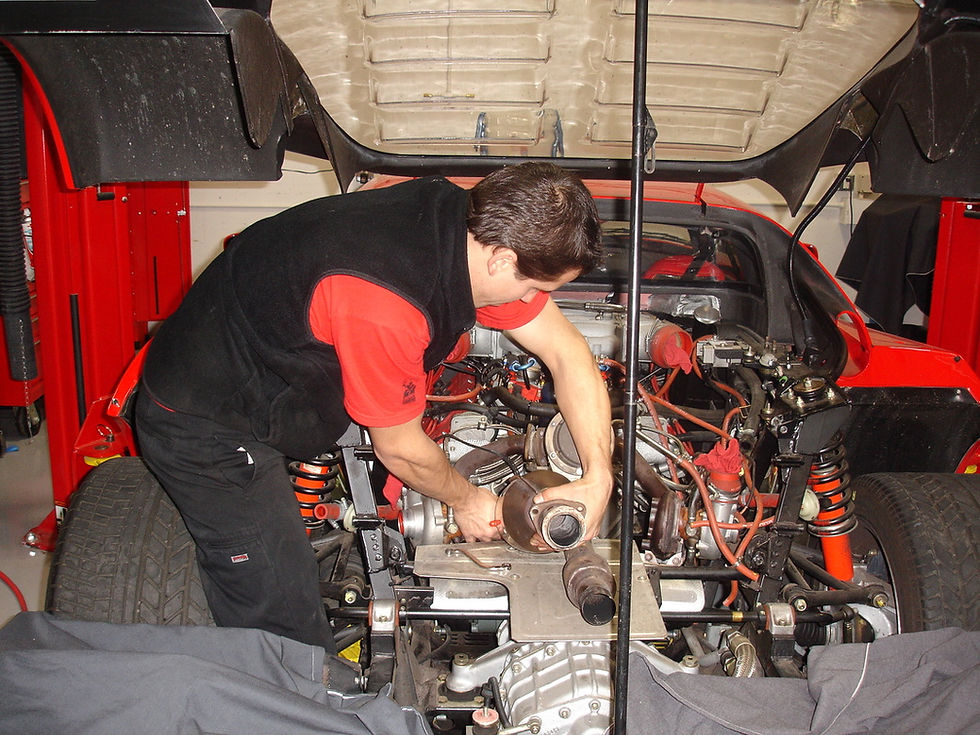
Today, Leggs is a mechanic, machinist, and engine and gearbox builder based in Escondido, California. His career has been built one project at a time. Along the way, he has helped preserve and improve some of the world's most respected performance cars through careful workmanship and years of technical experience.
How Joseph Leggs built a career in automotive performance
Leggs was born and raised in San Diego in a family where practical skills were part of everyday life.
His father worked as a firefighter and paramedic while also running construction projects as a general contractor. Rather than leaving his children behind, he often brought Joseph and his brother to job sites.
"I had tools in my hands by the time I was eight years old," Leggs says. "By the time I was ten, I was using power tools under supervision."
Those experiences helped him become comfortable around machinery at an early age.
His family also repaired and maintained their own vehicles.
"We worked on our own cars growing up," he says. "Transitioning into mechanic and machine work came naturally because I'd already spent years learning how things fit together."
Outside of the garage, Leggs spent his childhood riding bicycles, dirt bikes, skateboards, and snowboards. Looking back, it is easy to see the pattern. He enjoyed understanding how things moved and how they could perform better.
Why an apprenticeship changed everything
After high school, Leggs continued his education through undergraduate studies, technical training, and an apprenticeship that would shape his career.
During college, he joined a Porsche specialist shop.
That opportunity exposed him to an entirely different level of engineering and craftsmanship.
"The apprenticeship taught me that precision isn't optional," he says. "When you're working on high-performance cars, every detail matters."
Instead of simply replacing parts, he learned to understand complete mechanical systems.
That mindset became one of the biggest ideas behind his career. The goal was never just fixing a problem. It was understanding why it happened in the first place.
What makes engine and gearbox building different?
As Leggs gained experience, he expanded beyond Porsche to work on Ferrari and Lamborghini vehicles. His expertise grew to include engine building, gearbox rebuilding, machining, diagnostics, restoration, and preparation for both street and race cars.
Unlike routine maintenance, rebuilding an engine or transmission demands careful measurement and planning.
"Every component affects something else," Leggs explains. "You have to understand how the entire system works together."
That systems-based approach has become one of the defining characteristics of his work.
It also led him to complete factory training with Porsche, Lamborghini, and Bentley, allowing him to deepen his understanding of manufacturer standards while continuing to build practical experience.
How continuous learning drives long-term success
Automotive technology continues to evolve. Engines become more sophisticated. Manufacturing techniques improve. Electronics become more advanced.
Leggs believes successful technicians never stop learning.
"There's always something new to understand," he says. "The day you think you know everything is the day you stop improving."
That philosophy has helped him adapt throughout a career that spans multiple generations of performance vehicles.
Rather than relying only on experience, he continues to build new knowledge while refining the skills he developed decades ago.
"It's about consistency," Leggs says. "Doing things correctly over and over again is what produces reliable results."
Lessons that apply beyond the garage
Although Leggs works on some of the world's most recognizable performance cars, he believes the biggest lessons from his career apply well beyond the automotive industry.
Learning takes time.
Quality cannot be rushed.
Small details often determine the final outcome.
Those ideas first appeared while working beside his father on construction sites. They became stronger during his apprenticeship and continue to guide his work today.
"I've always enjoyed working with my hands and figuring out how things work," he says. "That's really what started everything."
That curiosity has remained constant throughout every stage of his career.
Why Joseph Leggs' story matters
Many people think success comes from one breakthrough moment. Leggs' career tells a different story.
His progress came from thousands of small decisions to keep learning, improve his skills, and take pride in his work.
From learning construction techniques as a child to rebuilding engines and gearboxes for world-class performance vehicles, he has shown how practical experience and technical knowledge can create lasting expertise.
His story also highlights the importance of skilled trades in a world that often overlooks them.
For Leggs, craftsmanship is not about recognition. It is about responsibility.
When every measurement matters and every part has a purpose, success is earned through preparation, patience, and precision.
Those principles have guided Joseph Leggs throughout his career, and they continue to shape the work he does today.