

Is Apple’s New Journal App Good For Your Mental Health?
Written by: Jennifer Schmidt, Executive Contributor
Executive Contributors at Brainz Magazine are handpicked and invited to contribute because of their knowledge and valuable insight within their area of expertise.

Want to improve your mental health? With Apple's new Journal app, your device may be a good place to start.
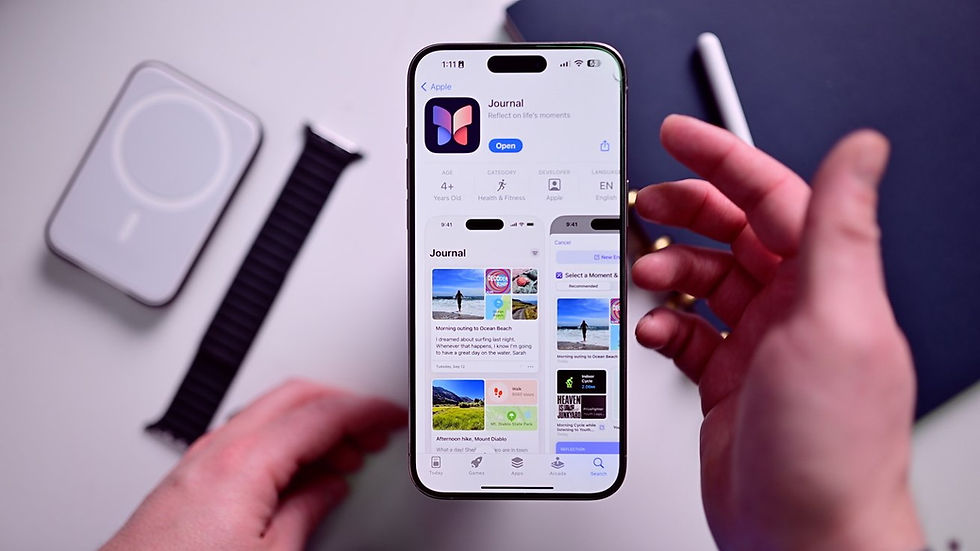
Journalling is often touted for its mental health benefits. As a Mental Health Mentor, I journal myself and encourage my clients to journal as well. But for many, the thought of staring at a blank page can be overwhelming enough to prevent them from actually putting pen to paper. If this sounds like you, then Apple's new Journal app could be exactly what you need to get started with journaling.
Research shows a correlation between poor mental health and an increase in screen time, including increased anxiety and depression. With most people already spending a tremendous amount of time on screens, I'm often hesitant to recommend mental health apps as a support. However, I was also curious to see what the app was all about, and have been using it consistently since it arrived on my device in late 2023. Here's what I've found…
Improves mindfulness Cell phone usage tends to be pretty mindless. For example, we listen to podcasts without truly reflecting or take thousands of photos without taking a chance to enjoy them. The Journal app puts a stop to this by taking your phone activities, such as podcasts listened to, workouts completed, photos taken, and locations visited, and prompts you to reflect on them. It might feel a little creepy at first, but with time you’ll become more aware of the activities you’re doing on your phone, as you’ll want to be prepared to reflect on them later when the app asks! This can help a person to practice mindfulness in a more meaningful way, which is definitely good for your mental wellness!
Reflection prompts get you focused on the positive It’s human nature to focus on what’s wrong with us. Although personal growth is important, being hard on yourself all the time can really damage your mental health. If celebrating yourself isn’t your default, then being positive about yourself in your journal will not come naturally to you. The app's prompts help you focus on your strengths and things that are going well, helping you to rewire your brain and boost your overall mental health. So if you’re someone who is generally quite critical of yourself, then I would recommend using the app's written prompts regularly to learn this skill.
Habit building reminders The benefits of journaling reveal themselves with consistent practice. But like any other new health habit, one of the most common reasons for not doing it is because we simply forget! Luckily, the journal app allows you to set up notifications so that you don’t have to waste precious brain capacity remembering to take part. And instead of just giving you a boring notification that says “Don’t forget to journal!”, it will prompt you to write about a specific activity like your most recent workout or the podcast you listened to on your morning commute. This more in-depth style of notification makes you more likely to stick with your new habit so you can truly reap the benefits!
Overall, I think the app can be a great mental health tool, especially for those who are new to journaling or need that extra reminder to write. I can also see it being useful for individuals who may be looking to explore a more positive mindset or break free from the less useful “dear diary” style of journaling. I also appreciate the convenience of the app, as it removes the barrier of lugging around a heavy journal and pen everywhere you go.
With all that being said, going old school still has well researched benefits, so I’m not willing to say that this app is a complete replacement for pen and paper. If you’re someone who is easily distracted when on your cell phone, then I would suggest keeping journaling analog. However, if a person is excited about this tech based approach and it will actually get them to write, I’m all for it! After all, progress is better than perfection.
As much as I love journaling, it only deals with the mental component of mental health. What it neglects is taking care of your nervous system, microbiome, and inflammation, all of which also contribute to your mental wellness. Intrigued? Let’s chat! Book your complimentary clarity session to find out what the next step is for you on your mental wellness journey!
Jennifer Schmidt, Executive Contributor Brainz Magazine
Jennifer Schmidt is Recreation Therapist, Functional Medicine Certified Health Coach and self-proclaimed "Mental Health Mentor." When consistent triathlon training didn't "cure" her depression and anxiety (as her education promised), Jennifer sought other answers and discovered the root of her mental illnesses were likely being amplified by her intense training regime. Her personal mental health experience combined with her professional experience in psychiatry fuelled her to start Ignite Health Coaching and Wellness, where she mentors endurance athletes on creating a lifestyle for positive mental health while simultaneously unlocking their true athletic potential.


