Interview With Peter Park: A Journey Of Mindfulness And Leadership
In the realm of mindfulness and meditation, there are individuals whose passion and dedication to personal growth inspire others to follow a similar path. One such individual is Peter Park, a meditation teacher, and relational group facilitator, who has devoted himself to supporting people through transformative practices. Peter's journey began back in 2015 when he joined the Monastic Academy (MAPLE), a Buddhist spiritual community that struck a unique balance between deep practice and worldly skills. Today, he shares his experiences and insights with us, shedding light on the transformative power of mindfulness and the importance of true leadership.
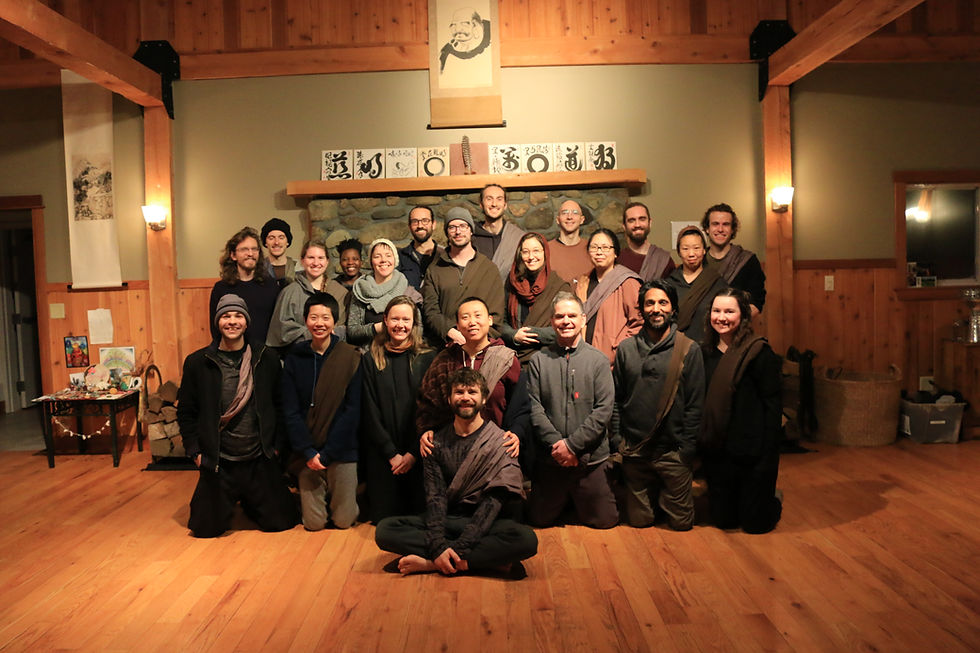
Tell us how you started in the Monastic Academy.
Peter Park: I joined back in 2015 after my good friend introduced me to the Monastic Academy. I was seeking a Buddhist spiritual community that would allow me to delve into deep practice while also applying my worldly skills. The Academy's emphasis on mindfulness in schools and other innovative teaching avenues appealed to me. Initially, I signed up for six months, but as I witnessed more opportunities for growth and service, I kept extending my stay.
What brought you to the field of mindfulness meditation?
Peter Park: My journey into mindfulness began with my exploratory nature. I had a background in studying world philosophy and religion, which led me to explore various spiritual practices. I tried out different traditions and visited churches, temples, and mosques. Eventually, I found a deeply spiritual and embodied practice in Taiqi Quan. However, it was a ten-day meditation retreat that I did senior year of college that profoundly changed my life and steered me towards meditation.
What is something unique about the Academy that sets it apart from similar institutions?
Peter Park: The Monastic Academy's uniqueness stems from its relatively new status, which fosters experimentation and innovation. This allows us to explore cutting-edge intersections and prioritize practical skills alongside deep mindfulness. Additionally, the Academy has a core focus on examining global issues and understanding how they are rooted in the human mind. By resolving these issues within ourselves and our community, we aspire to present a model for the world.
How do you think your background has impacted the success of the Academy?
Peter Park: Growing up in a family business taught me early on how to take responsibility and solve problems independently. Furthermore, my studies in Buddhism during graduate school and years of practice at various centers and with different teachers provided valuable insights that I could apply at the Monastic Academy. This combination of practical skills and spiritual knowledge proved instrumental in contributing to the Academy's success.
Share an example of one of your greatest achievements. How did you feel?
Peter Park: I am particularly proud of expanding the guest program offerings when I became the Executive Director. We organized unique circling retreats and collaborated on programs like the Bio-Emotive Retreat and an Intimacy Workshop. Hosting several meditation retreats with Shinzen Young was also a milestone in broadening our practices and attracting diverse individuals to our community. The feeling of accomplishment and fulfillment from witnessing our community grow and flourish was truly rewarding.
Name a necessary skill that is crucial to be successful as a mindfulness educator.
Peter Park: One of the most crucial skills is the ability to listen without a fixed goal or expectation in mind. Students often present important questions mixed with confusion, and as teachers, it is essential to help them uncover their answers rather than imposing our own. By assisting students in realizing their questions, we empower them to find their paths to understanding.
What are some key takeaways you would like to share?
Peter Park: In leadership, true authority arises from the respect and trust of one's peers. Leadership titles alone are insufficient without the implicit trust and competence that people find in a leader. A genuine leader creates a culture of excellence where individuals naturally give their best without even realizing they are being led. This aspect of leadership is crucial in fostering growth and development within any organization.
About Peter Park
Peter Park's dedication to mindfulness and meditation, along with his unwavering commitment to the Monastic Academy, has led him to become a beacon of inspiration for those on a path of personal growth. Through his teachings, practices, and leadership, Peter encourages individuals to be better versions of themselves, fostering positive change within themselves and the world around them. His journey exemplifies the transformative power of mindfulness and the significance of true leadership, leaving an indelible mark on those he touches with his wisdom and guidance.