

Building Value In A World Where Power Is Compromised - Exclusive Interview with Jose Antonio del Valle Torres
Brainz Magazine Exclusive Interview
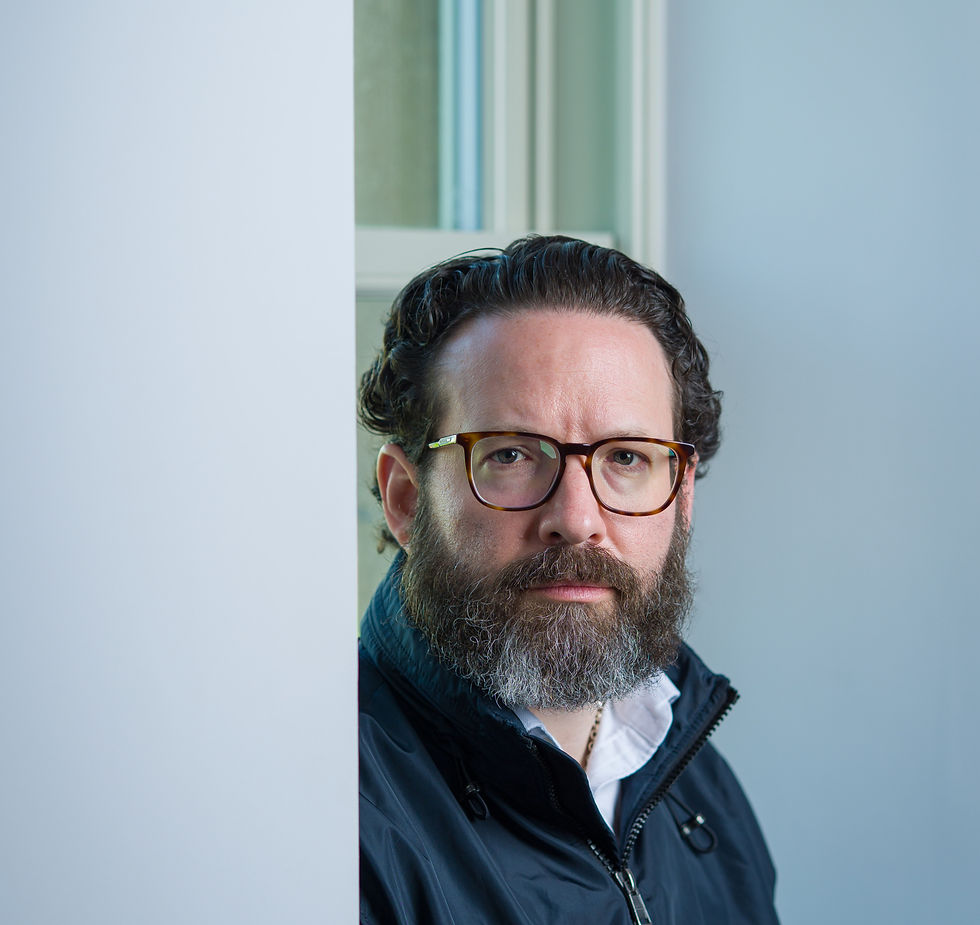
Entrepreneur, business leader, and social advocate Jose Antonio del Valle Torres has spent more than 25 years navigating the worlds of corporate leadership, entrepreneurship, and institutional reform. Through both professional success and significant personal challenges, his journey has given him a unique perspective on power, accountability, and the realities of operating within global systems. In this conversation, Jose Antonio shares the experiences that shaped his outlook on business, justice, and the responsibility of building a more balanced and equitable future.
Looking back on your 25+ year career, were there any defining moments that fundamentally changed how you see business and your role within it?
There have definitely been defining moments throughout my career that changed how I see business. The first one happened in the early years when I was working for a large corporation and understood how important constant innovation is to bring better outcomes to the markets, together with the achievement of internal excellence. A second one occurred as I was setting up my first company, and I had to develop a new set of entrepreneurial skills that went from understanding how to incorporate a new enterprise to ensuring its optimal functionality and operation. The third one happened after entering an agreement with one of the largest multinationals in the world, which turned into an ongoing eight-year-long dispute, where I've had to understand how to defend the value of work and fundamental human rights.
"I've had to understand how to defend the value of work and fundamental human rights."
Your experience with the GO GABA dispute involving The Coca-Cola Company is both complex and deeply personal. How did that chapter affect you, not just professionally but as a person?
That chapter has affected my life from every possible angle. I lost everything that ever mattered to me, including my country, family, a number of my friends, and my business, as I've had to live in exile to protect my life. The corrupt practices of The Coca-Cola Company and their influence peddling to operate with impunity have seriously impacted the credibility of Mexican institutions. This dispute proves that Mexico is unable to provide expedited justice, or even justice at all, when economic interests aligned with the State are at stake, regardless of blatant criminal conduct. I'm certain that this narrative is not limited to Mexico, but rather has become a global problem as numerous high-profile cases in the media project similar narratives of impunity for powerful aggressors and abandonment of the victims.
When you reflect on that experience today, what did it reveal to you about the imbalance of power between individuals and global corporations?
There is a complex yet absolute imbalance of power between individuals and global corporations. Individuals are accountable before the law in limited jurisdictions, whilst multinationals legally play around with borders to evade accountability. When convenient, they act as a whole body or a brand, and yet when the aim is to evade the law, such a single body divides into numerous unaccountable legal entities across borders that are difficult to trace, relate, and hardly ever bring to justice. The Coca-Cola Company, as an example, has been known for human rights violations, monopolistic practices, consistent environmental pollution, tax evasion, harassment and intimidation of union leaders and workers, coercively influencing health research and policy, and sourcing their milk for dairy products through farms with extreme levels of animal cruelty, all while operating globally with impunity.
You have spoken about the tension between global capitalism and local democracies. When did you first become aware of that conflict in your own journey?
After a couple of years in the dispute with The Coca-Cola Company, I understood how local democracies can become compromised in upholding the public interest through the inherent and evident threat of global capital. There is a constant tension between global capitalism and local democracies, as many times the responsible public officials and institutions tasked with upholding democracy are conflicted in standing for the general public good due to economic interests and/or political agendas endorsed by such global capital. This is when the inspiring political campaign speech becomes compromised and develops into a very challenging social reality that affects us all.
Many entrepreneurs are told they will be supported if they play by the rules. At what point did you begin to question that narrative?
There seems to be a global popular narrative of governmental support for entrepreneurs throughout the last few decades. However, the reality is that more than 50% of newly created businesses fail after only a few years. The main reasons would be cash-flow problems or simply poor management, and generally, those two issues can be related to a lack of, or inefficient, institutional support to properly accompany the growth of such businesses in their first years. Many great innovations and ideas end up nowhere, purchased at an insignificant value, or simply developed by the big players in the industries without proper compensation to the real innovators. The social cost is enormous, as creative talent is then disincentivized to further develop and innovate.
Were there moments when you felt the legal system did not protect you in the way you expected, and how did you navigate that reality?
The legal system has failed to protect me as a Mexican citizen despite my constitutional guarantees, and that has extended to international authorities and global institutions. The only way to navigate that is through tremendous effort and substantial work to evidence, over and over again, the truth before the very authorities that are failing in their social responsibility and duty of care.

What led you to found Solidaridad Valiente in 2021, and how does it reflect your personal values and experiences?
The awareness that my country is unable to provide social justice to its citizens, reflected in poor health and educational systems, together with a generalized atmosphere of public insecurity, led me to study, analyze, and react to such a reality. Solidaridad Valiente was established after writing an open letter to then-President of Mexico, Andrés Manuel López Obrador, exposing corruption within the Mexican authorities that favored The Coca-Cola Company, in my case. Despite the immediate efforts of the Presidential Office to rectify such conduct, the corruption not only prevailed but also magnified, proving the limitations even of a Presidential Office to efficiently act in relation to a corrupt global enterprise.
The aim of Solidaridad Valiente is to highlight the positive and significant attributes of Mexico to audiences all over the world through its beautiful touristic sites, incredible gastronomy, and impressive human talent across numerous disciplines. The goal is to inspire individuals and the collective to work day by day, hand in hand, on building a better nation despite the clear failure of numerous governments over decades.
"The goal is to inspire individuals and the collective to work day by day, hand in hand, on building a better nation despite the clear failure of numerous governments over decades."
Today, when you think about the future, both your own and the broader systems you are challenging, what gives you a sense of direction or purpose?
It always has to be the hope of seeing a world with a higher sense of purpose, fairness, and social justice for present and future generations.
This conversation offers a deeply personal perspective on entrepreneurship, corporate power, institutional accountability, and social responsibility. Through both professional success and profound adversity, the experiences shared here reveal the challenges individuals can face when confronting powerful systems. Yet beyond the legal battles and institutional failures lies a message of resilience, purpose, and hope—a belief that meaningful change remains possible when individuals continue to advocate for fairness, justice, and a better future for generations to come.



