

How Women Can Transform Their Lives Through Intentional Growth – An Interview with Vinitha Edward
Vinitha Edward is a Certified Life Transformation Coach and Founder of Transform & Thrive, a platform that empowers women to create meaningful habits and mindset shifts through journaling and conscious living. She helps women overcome obstacles, build confidence, and find balance through intentional growth. Blending practical strategies with emotional awareness, Vinitha guides clients to move from feeling stuck to thriving with purpose. Her mission is to transform lives one step at a time.
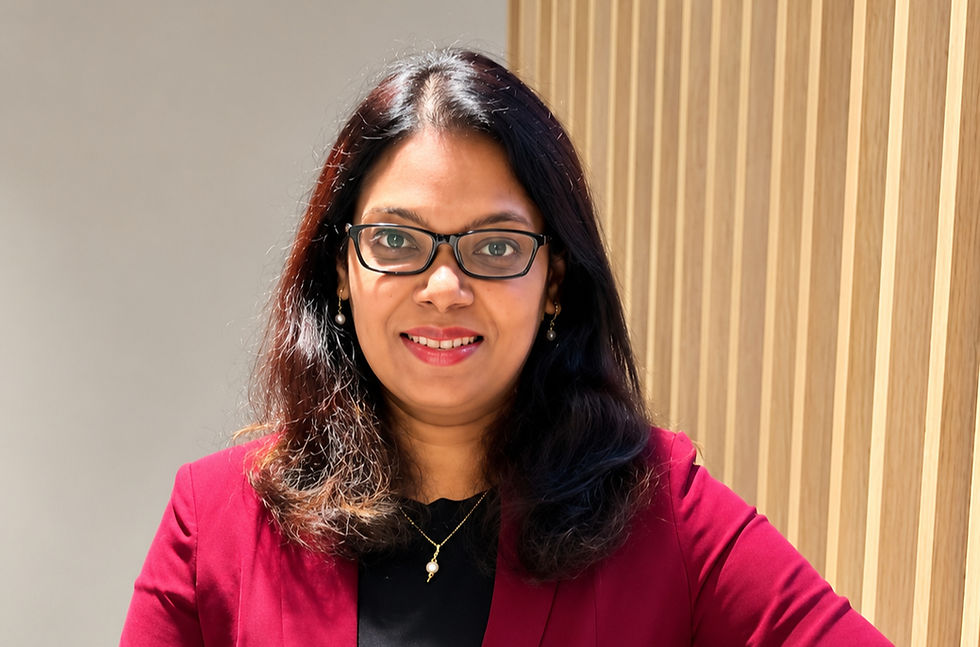
Vinitha Edward, Life Transformation Coach
What inspired you to create Transform & Thrive, and what change did you hope women would experience through it?
Transform & Thrive was born from my own journey.
As a wife, mom of four daughters, coach, and someone who has experienced different seasons and transitions in life, I realized that many women spend years taking care of everyone else while quietly losing touch with themselves.
I didn’t want to create another motivational program that made women feel good for a day. I wanted to create a practical approach that helps women create real, lasting change and build a life they genuinely enjoy living.
My hope is that every woman who works with me gains clarity about who she is, builds confidence from within, and becomes more intentional about the life she is creating.
For me, transformation isn't about becoming someone different. It’s about reconnecting with yourself, understanding what truly matters to you, and making intentional choices that align with the person you want to become.
Ultimately, I want women to stop simply reacting to life and start consciously creating a life they truly love.
You describe journaling as more than a writing habit. How does it become a practical tool for lasting transformation?
Most people think journaling is simply writing down their thoughts. I see it differently.
Journaling is a space where you slow down enough to notice your patterns.
For example, if I find myself feeling frustrated every evening, instead of simply saying, “I’m stressed,” I can pause and ask myself:
What happened?
What was I thinking?
How did I respond?
What could I do differently tomorrow?
When we repeat this process, we begin to recognize the habits, triggers, and beliefs that may be influencing our everyday choices.
That awareness is powerful because once we become aware of a pattern, we have the opportunity to choose a different response.
Awareness leads to better choices, and better choices, repeated consistently, create transformation.
That’s why I don't believe journaling is about filling pages or writing perfectly. It’s about giving yourself the space to pause, listen, reflect, and understand yourself more deeply.
Journaling isn't about filling pages. It's about creating clarity, and clarity gives you the power to change.
Your coaching is built around five areas of thriving. Why is it important to nurture these areas together rather than focusing on just one?
Life is connected. We are not just one part of ourselves, and when one area is neglected, it often affects the others.
That’s why I look at five areas of thriving: Self, Mind, Emotions, Relationships, and Life.
Self is about knowing who you are, your values, needs, strengths, and identity.
Mind is about the thoughts and beliefs that shape how you see yourself and the world. Emotions are about understanding what you feel and learning to respond rather than simply react. Relationships are about building healthy, meaningful connections and learning boundaries. Life is about intentionally creating the life you want, including your health, work, goals, purpose, and everyday choices.
For example, someone may be successful professionally but feel disconnected from herself. Someone else may have a strong mindset but struggle with her emotions or relationships.
Real transformation happens when we stop focusing on just one part of ourselves and start nurturing the whole person.
When we grow from the inside out, our choices become more intentional, and our lives become more balanced, meaningful, and sustainable.
Why do you think so many women struggle to sustain personal growth even after attending workshops and reading self-help books?
One of the biggest reasons is that inspiration is temporary, but transformation requires practice.
A workshop can give you insight. A book can give you a new perspective. A motivational video can make you feel ready to change. But what happens the next morning when real life begins again? The children need you, work demands your attention, your phone keeps buzzing, and your old habits are waiting for you.
That is where many people struggle, not because they don't want to change, but because they don't have a simple way to turn what they learned into consistent daily action.
I believe personal growth needs to move from information to implementation.
Instead of trying to change everything at once, choose one behavior, connect it to something meaningful, and practice it consistently.
Transformation is not created by how much we know. It is created by what we repeatedly practice.
The real question isn't, “What did I learn?” It is, “What am I going to do differently because of what I learned?”
That shift, from knowing to doing, is where real growth begins.
5. In a world that celebrates dramatic breakthroughs, what makes small, intentional habits more powerful over time?
We often underestimate small actions because they don't feel dramatic. But our lives are largely shaped by what we repeatedly do.
You don't become healthier because of one great workout. You become healthier through the small choices you make consistently, how you eat, how you move, how you sleep, and how you manage stress.
The same is true for mindset and personal growth. Five minutes of journaling, a short walk after a meal, putting your phone away during a conversation, saying no when something doesn't align with you, or taking a few minutes to reflect at the end of the day may seem insignificant.
But when repeated consistently, these choices begin to change our behavior, and eventually, they influence how we see ourselves.
I encourage women not to ask, “What huge change can I make?” but rather, “What small change can I actually sustain?”
Because lasting transformation isn't usually one giant leap. It is the accumulation of small, intentional choices made again and again.
6. For someone who feels overwhelmed and doesn't know where to begin, what is the first daily practice you would recommend?
I would start with a simple five-minute daily check-in with yourself.
Before immediately stepping into everything you need to do, give yourself a few quiet minutes and ask three questions, “How am I feeling today?” “What do I need today?” and “What is one thing I can intentionally do for myself?”
It sounds simple, but it creates something we often don't give ourselves enough of, space to pause and listen to ourselves.
You don't need to solve your entire life in five minutes. You simply need to become aware of what is happening within you.
Maybe you realize you need rest. Maybe you need to have a difficult conversation, take a walk, set a boundary, reconnect with someone, or simply slow down.
When you begin listening to yourself consistently, clarity starts to develop.
Sometimes the first step isn't doing more. It's pausing long enough to understand what you truly need.
You’ve recently spoken about creating healthier relationships with technology. What simple habit can help people become more intentional with their time and attention?
One simple habit I recommend is creating a pause between the urge to check your phone and actually picking it up.
We often reach for our phones without even realizing why. We see a notification, feel bored for a moment, or simply experience a few seconds of silence, and automatically reach for the screen.
So instead of creating another rule about when you can or cannot use your phone, I encourage people to ask one simple question, “What am I reaching for right now, information, connection, or simply distraction?”
That question creates awareness and awareness gives us a choice.
You may realize you actually wanted to check an important message. Or you may realize you were simply uncomfortable with having a quiet moment.
The goal isn't to live without technology. It's to stop using it automatically.
Because when we become intentional about where we give our attention, we become more intentional about how we live our lives.
The phone should fit into your life, not become the place where your life happens.
You often say that transformation begins with awareness. How has that principle shaped your own life since you first embraced it at the age of 12?
My interest in personal growth began when I was around 12 years old. I was naturally curious about people, emotions, mindset, and why we behave the way we do. As I grew older, I began to understand that awareness is what allows us to recognize what is happening within us and gives us the opportunity to make different choices.
I've learned that we can't always control what happens around us, but we can become aware of our thoughts, emotions, patterns, and responses. That awareness has been especially important during different seasons of my life, when I have had to pause and ask myself, “Is this still who I am? What do I need now? What do I want the next chapter of my life to look like?”
For me, awareness is not about judging yourself or finding everything that is wrong. It is about being honest enough to see where you are so you can consciously decide where you want to go.
That is why I believe transformation begins with awareness. First, we notice. Then, we choose. Through those intentional choices, we grow.
I don't see transformation as perfection. I see it as continually reconnecting with yourself, resetting when necessary, and rising into who you are becoming.
If every reader committed to one intentional change this week, what would you encourage them to start with?
I would remind every reader that they don't have to change their entire life overnight.
Start by paying attention to the life you are already living. Ask yourself, "What is working? What isn't? What feels aligned with who I am, and what no longer does?"
We often get so caught up in responsibilities, expectations, and what everyone else needs from us that we forget to ask ourselves what we need and what we truly want.
You don't need to have everything figured out. You simply need to be willing to pause, listen to yourself, and make one intentional choice at a time.
Maybe that choice is setting a boundary, taking care of your health, reconnecting with someone, pursuing something you've put aside, or simply giving yourself permission to become a different version of yourself.
Reconnect with yourself. Reset what no longer serves you. Rise into the life you want to create.
Because a meaningful life isn't created in one big moment. It is created through the small, intentional choices we make every day.
Read more from Vinitha Edward


