

How to Build a Profitable and Sustainable Wellness or Retreat Business – An Interview with Manu Molina
With nearly two decades of experience across the yoga, wellness, and retreat industry, Manu has worked in roles ranging from retreat leader to Retreats Director, gaining an inside-out understanding of both transformation and business sustainability.
In this interview, he explores why excellent wellness offers can struggle to attract bookings, the difference between visibility and positioning, and how wellness professionals can build businesses that are both commercially sustainable and aligned with the depth of their work.
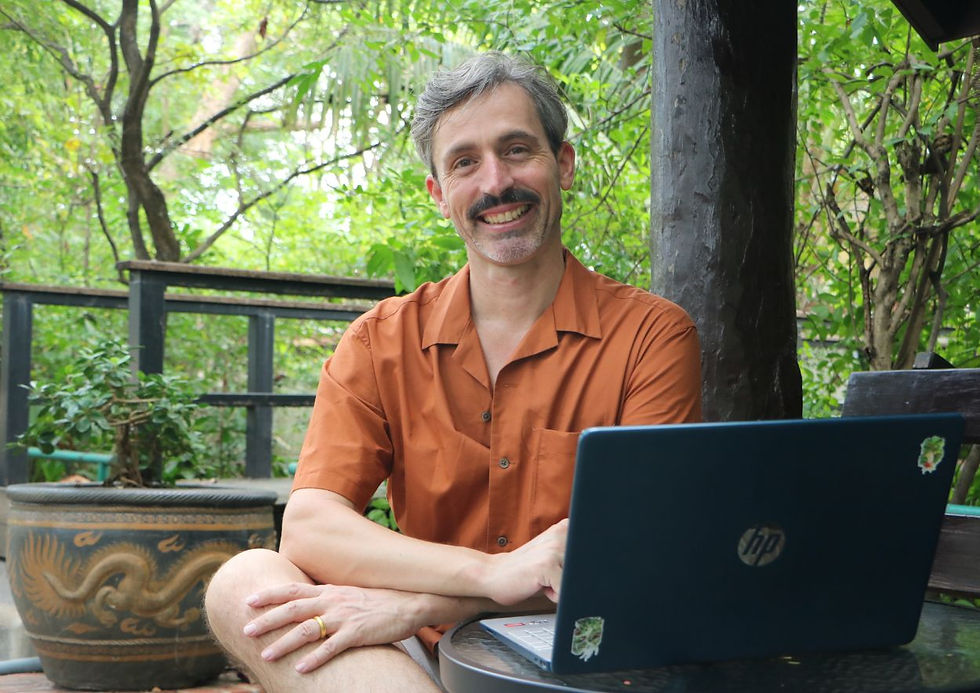
Manu Molina, Wellness Brand Mentor & Consultant
What first drew you into the retreat world, and what has kept you in it since 2008?
I was first drawn to the retreat world through my interest in becoming a yoga teacher. In 2007, while completing my first yoga teacher training in Italy, I met the founder of one of the pioneering retreat centres in Southern Italy. That connection opened the door to my first professional opportunity in the retreat industry in 2008, which was completely new to me at the time.
It gave me valuable exposure as an aspiring yoga teacher, including the opportunity to practise with renowned teachers, while also allowing me to draw on my previous experience in hospitality. I was fascinated by this new environment and felt there was so much to learn.
The opportunity in Italy led to further retreat roles in Spain, including the Canary and Balearic Islands, and eventually in Thailand, Ibiza, Portugal, and beyond. What has kept me in this industry is the chance to understand the business from the inside out, from small, intimate retreats to large-scale projects such as Six Senses, and to witness the meaningful transformation people can experience through a high-quality wellness retreat or programme.
What did working across roles from retreat leader to Retreats Director teach you about what makes a retreat commercially sustainable?
Working across different roles, from retreat leader to Retreats Director, taught me that a transformative retreat is not automatically a commercially sustainable one. I have seen the industry from many angles: as someone delivering the experience, managing retreat operations, and working within larger wellness projects.
The strongest retreats combine genuine transformation with clear positioning, a well-defined audience, and a business model that makes sense financially. This became especially personal for me back in 2018, when I was working independently as a yoga and movement facilitator in Bangkok. Despite having years of training, experience, and passion, I struggled to turn my knowledge into a business that could sustain me.
That experience helped me understand that expertise alone does not create bookings. A commercially sustainable retreat needs more than beautiful content, a compelling location, or a dedicated teacher. People need to understand who the retreat is for, why it is relevant to them, and why they should choose it over other options.
The offer, message, client journey, and enrolment process all need to work together. Ultimately, sustainability comes from creating an experience people value and building the structure that allows the right people to find it, trust it, and confidently invest in it.
How did struggling to make your own wellness business sustainable change the way you now mentor other practitioners?
Struggling to make my own wellness business sustainable changed the way I mentor others in a very direct way: I no longer assume that expertise, passion, or good intentions will be enough.
In 2018, after more than a decade in the wellness and retreat industry, I had the experience and training to guide people and create meaningful work. But when I tried to build a business around it, I struggled to find clients and generate consistent income. I spent time and money on branding, websites, and other visible details while avoiding the deeper questions around positioning, offers, and enrolment processes.
That experience taught me to look at the whole business, not just one isolated marketing tactic. When I work with practitioners today, I help them understand who they are speaking to, how their offer is perceived, and what needs to happen between someone discovering their work and becoming ready to invest.
It also made me very intentional about how I mentor. I believe business guidance should be practical, ethical, and grounded in the realities of the wellness industry, not based on pressure, unrealistic promises, or one-size-fits-all formulas.
Why do strong retreat experiences sometimes struggle to attract bookings even when the programme itself is excellent?
A strong retreat experience can struggle to attract bookings because the quality of the programme is only one part of the decision process.
The first issue is often that the promotional message is too broad or focuses mainly on logistics, such as location, dates, accommodation, and activities, without speaking to a specific person and the transformation they are looking for.
The second issue is that the depth of the work the retreat leader does is not always visible in the way the offer is communicated. A retreat may be incredible, but if its message does not express the retreat leader’s or brand’s values, story, and authority, it can feel like just another option.
Finally, even a clear and compelling offer needs a connected business ecosystem around it. People need a way to discover the work, build trust, and understand the next step towards booking.
If you want to explore how the different parts of your wellness business can work together as a connected ecosystem, you can start with my Free Ecosystem Experience.
What do you think the wellness industry still gets wrong about the difference between visibility and positioning?
Many wellness professionals have been taught that visibility is the answer: post consistently, grow your audience, make your feed look polished, and eventually bookings will follow.
But visibility only helps people see you. It does not automatically help them understand why your offer is the right choice.
Positioning is the work of making the depth of your experience, your perspective, your values, and your way of creating transformation clear and recognisable to a specific person. A practitioner may be highly visible yet still sound like every other retreat leader or wellness professional because the message focuses on generic benefits, logistics, or borrowed marketing language.
People watch, like, and engage, but they do not buy.
In wellness, this distinction is especially important because people are not only buying the programme. They are also responding to the person behind it: their story, philosophy, energy, and approach. When that human layer is missing, even an excellent offer feels interchangeable.
So the problem is often not a lack of content or consistency. It is the gap between the value that already exists and how clearly that value is perceived.
Visibility gets you noticed; positioning helps your offer get chosen.
How can a wellness professional tell when the real problem is their offer rather than their content or marketing?
Working with my clients, ranging from yoga teachers and coaches to retreat leaders and venues, I typically start by looking at the offer itself before assuming that the problem is a lack of content or marketing.
First, I look for the different elements that give the offer its identity: the practitioner’s experience, perspective, story, authority, and way of creating transformation. Does the offer communicate something specific and recognisable, or could it easily be confused with many other wellness offers?
If the message is generic, unclear, or disconnected from the person behind the work, more visibility will not necessarily improve the results.
Then I look at the available signals and data regarding their content and marketing. How many people are visiting the sales page? Where are they coming from? Are they engaging with certain messages, asking questions, saving posts, or responding to particular themes?
I also pay attention to what I call “silent data,” the patterns in what people repeatedly engage with, even if they never comment or say directly what they need.
This helps us distinguish between a visibility problem and an offer problem. If people are not finding the offer, marketing may need attention. But if people are finding it, engaging with it, and still not taking the next step, the issue may be how the offer is positioned, communicated, and perceived.
What makes an offer feel like the clear choice without relying on hype, pressure, or false urgency?
What makes people choose an offer begins with its identity. A strong offer should carry something distinctive and even personal about the person behind it: their experience, perspective, authority, story, and way of creating transformation.
This is what helps it stand apart instead of sounding like another version of a retreat, coaching programme, or wellness experience.
It also needs to be positioned and communicated with clarity. The right person should quickly understand who the offer is for, what transformation it supports, and why it is relevant to them.
When the message reflects a real person’s needs and aspirations, the offer becomes easier to recognise and trust. It is no longer just describing information, logistics, or features; it is communicating value in a way that feels specific and meaningful.
But the offer itself cannot work in isolation. It needs to sit inside an ecosystem that guides people from discovery to decision.
Someone may find you on Instagram, visit your website, and still need more time before investing. Your free resources, email sequence, website, and other touchpoints should help them understand your approach, experience your work, and see the transformation beyond the itinerary.
Different people need different paths, so the ecosystem should make the next step clear whenever they are ready.
How do you balance the need to sell with staying aligned with the values behind wellness work?
For a long time, I struggled with this balance myself. Marketing, sales, and promoting my paid work felt uncomfortable because I associated selling with manipulation. I worried that encouraging people to invest in my work might compromise its integrity.
Over time, I realised that selling is not about persuading people to buy something they do not need. It is about communicating the value of the work clearly enough for the right people to decide whether it is relevant to them.
If your work can genuinely support someone, making it visible and accessible is part of serving them.
The important distinction is how you sell. When your communication is honest, specific, and connected to the real transformation you provide, you are not creating false urgency or making promises you cannot keep. You are offering a clear invitation.
Sales and wellness values do not have to be in conflict. The balance comes from building a business where commercial clarity supports the depth, meaning, and integrity of the work.
What is the one shift you would encourage wellness or retreat leaders to make if they want a business that is both meaningful and sustainable?
The shift I would encourage is to stop treating the meaningful side of their work and the business side as separate worlds, and to find the connection between the two.
I see this in my own story. For many years, the “Zen” side came naturally to me: yoga, creativity, wellness, retreats, and spirituality. Marketing, sales, and business strategy felt much less comfortable.
I see the same pattern in many retreat and wellness leaders. Some are deeply connected to their work but believe that selling is somehow wrong or incompatible with their values. Others, especially those entering the wellness industry from a business background, understand marketing and communication but have not yet connected those skills to the soul and depth of the work behind a compelling wellness offer.
A sustainable business needs both. Your expertise, story, and philosophy should shape your offer and communication, while your business structure allows that value to reach the right people.
This is not about becoming a different kind of entrepreneur. It is about allowing the Zen and the Preneur within you to work together.
When that happens, your depth does not remain invisible, and your business does not become empty noise. It becomes a sustainable way to share work that genuinely matters.
This is the work we do inside my group programme, The ZenPreneur Mastermind.
Read more from Manu Molina







