

How Relational Forest Therapy Offers a Deeper Experience
Written by Juna Ting-Wei Chang, Forest Therapy Guide
Juna Ting-Wei Chang is a forest therapy guide and founder of Shinrin-Yoku Taiwan, specialising in evidence-based forest therapy and Shinrin-yoku. She supports individuals and organisations in slowing down and gently returning their attention to themselves and the more-than-human world through nature.

Most forest programs use nature as a backdrop or resource for human-led activities. Relational Forest Therapy flips that script entirely, and as a guide trained in the Association of Nature and Forest Therapy (ANFT) method, I can tell you how powerful the difference is.
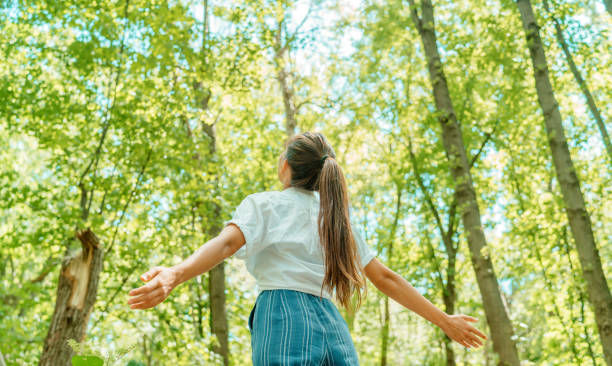
Here's something I tell every new participant before we even step onto the trail. In ANFT, we do not “teach” you how to do things. We provide a series of “invitations” to help you connect with nature and see what it wants to offer you today.
That sentence usually gets a raised eyebrow. We're conditioned to expect a guide who narrates, instructs, and fills the silence with expertise. But that expectation is exactly what Relational Forest Therapy™, the framework developed by ANFT, asks us to unlearn.
Our founder, Amos Clifford, puts it in eight words that have become something like our north star:
"Forest is the therapist. Guides open the door." – Amos Clifford, Founder, ANFT
If you've experienced other forms of forest bathing, ecotherapy, or nature-based wellness, you may assume this is just semantics. It isn't. It's the difference between two completely different relationships with the natural world, and once you see it, you can't unsee it.
The model most of us grew up with: Nature as resource
Let's be honest about how most wellness culture treats the outdoors.
Nature is where we go to get something, clearer lungs, a calmer nervous system, better sleep, a nice photo for the feed. The forest becomes a gym with fresher air, a resource we extract benefits from.
Programs built on this model tend to look the same everywhere, a guide leads a group through a checklist of activities, breathing exercises, journaling prompts, a bit of nature trivia, all of it happening in the forest rather than with it.
The human is the main character. The forest is set dressing.
There's nothing wrong with this. It still gets people outside, off their phones, and breathing more deeply. But it stops short of something bigger that's available to us.
What changes when you make it relational
Relational Forest Therapy starts from a different question entirely, not "what can I get from this forest?" but "what does it look like to be in the right relationship with it?"
That single reframe changes the guide's whole job description.
Instead of leading, we invite. Instead of interpreting the forest for you, we get out of the way so it can reach you directly, through your senses, at your own pace, on your own terms.
This isn't just a nicer philosophy. It's rooted in a real lineage.
ANFT's framework braids together Japanese shinrin-yoku (forest bathing, introduced in the 1980s as a public health approach to stress and well-being), the emerging field of ecotherapy, and a founding mission shaped directly by concern over global warming and environmental catastrophe.
Amos Clifford founded the organization in 2012 with a simple premise, people protect what they love, and meaningful relationships with nature can help rekindle our sense of connection to the living world.
Forest is the therapist
Relational Forest Therapy asks you to build a relationship with the forest and trusts that the forest, not the guide, is the one actually qualified to do the healing.
We do not teach people about trees. We provide invitations and witness what happens when a person finally stops performing wellness and lets the forest meet them instead.
Read more from Juna Ting-Wei Changll
Juna Ting-Wei Chang, Forest Therapy Guide
Juna Ting-Wei Chang is a forest therapy guide and founder of Shinrin-Yoku Taiwan, now part of Green Shower. She is the first Taiwanese guide certified by the Association of Nature and Forest Therapy (ANFT) and also holds the Taiwan Forest Therapist Certificate. With a background in languages, cross-cultural experience, and landscape and recreation management, Juna brings science, tradition, and lived experience together in a warm, grounded way. Her work supports individuals, organisations, and international groups in cultivating emotional resilience, presence, and sustainable wellbeing through nature-based practices.


