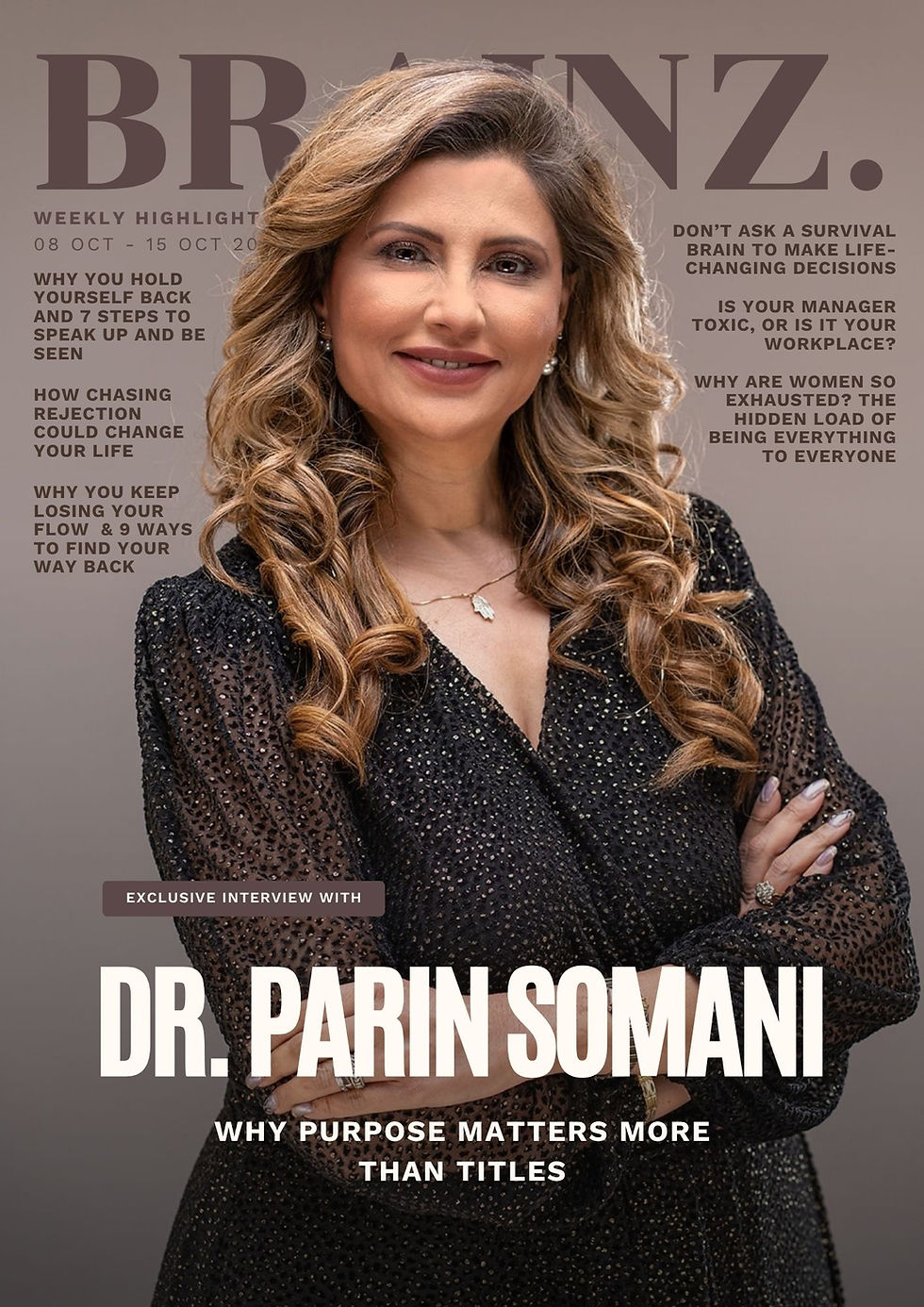
How Managing Chronic Illness Boosted Productivity and Balance – An Interview with Dr. Amee Shah
In this exclusive interview, we speak with Dr. Amee Shah, a healthcare professional who has turned her personal experience with chronic illness into a powerful source of strength. Known for embracing vulnerability in both her personal and professional lives, she’s created a space where honesty and empathy lead the way.
Throughout this conversation, we’ll explore how Dr. Shah shifted from hiding her diagnosis to openly owning it, how this transformation impacted her career, and the strategies she uses to maintain resilience while balancing a demanding career and family life. Her insights offer a fresh perspective on self-empowerment and navigating life's challenges with authenticity.

Dr. Amee Shah, Dentist/Chronic Illness Adv/Speaker/Coach
You’ve turned your experience with a chronic illness into a powerful source of strength- how did that shift from hiding your diagnosis to embracing it impact your life and career?
That kind of shift- moving from hiding something as personal as a chronic illness to openly embracing it- tends to ripple through almost every part of my life, not just one area.
On a personal level, it reduced the constant mental strain of “managing” how others see you. When you’re no longer filtering yourself, there is a sense of relief and stability that comes with it. I found relationships became more genuine, less performative, because they are not built on reality instead of a carefully edited version of myself.
Professionally, I found the impact immensely powerful. What might have once felt like a limitation turned into a clear point of differentiation. In an already highly stressful career, it allowed an opportunity to humanize my experience. There’s a credibility shift. When you openly own your story, it reframes you from “someone dealing with a condition” to someone “leading with a conversation”. Initially, the vulnerability seemed overwhelming, but I have noticed a shift in how others, including my team, have found the courage to also allow themselves to be human. It came with creating a safe space where everyone feels seen, leading with empathy and understanding.
You help others navigate chronic illness and work in healthcare. How do you maintain your own resilience while balancing a demanding career and family life?
For me, it has been about building systems that keep me steady when things inevitably get heavy. When this is done well, my resilience is built with intention. I am intentional about how I manage my energy, create boundaries and implement systems.
Energy allocation: I often plan my week around the combination of energy allocation and time. That might mean protecting sleep as a non-negotiable, spacing out heavy patient care days when possible, allowing recovery days in between. Prioritizing energy for my family also means delegating and outsourcing things that can be taken care of by others. This allows me to be more present for my loved ones while maintaining my energy.
Accepting balance is dynamic: Some weeks my career will take more time, other times family will. Trying to hold a 50/50 balance is not the goal, as it can create more stress. Having a more sustainable outlook is: What needs more of me right now, and what can give a bit temporarily. Accepting every week will look and feel different has been pivotal to my progress.
3. Keep my identity bigger than my role: Because my work is meaningful, as a healthcare provider, wife and mother, it can also be consuming. Maintaining resilience for me also means staying connected to parts of myself that are just for me, not a provider. I make it a ritual to stay connected to my hobbies (tennis, working out) and spending time with friends. Making time for things where no one needs anything from me is crucial to my self-care.
To be completely honest, even with the best systems in place, there are periods where it feels too much. Resilience isn’t about avoiding that its about recognizing it early and adjusting before it becomes burnout.
For someone living with a chronic illness, what’s the first thing they should focus on when trying to live a fulfilling life, despite their diagnosis?
“Focus on your possibilities, not your limitations.” Yes, after a diagnosis, your life will inevitably look and feel different. Allow yourself time to process the diagnosis and let the feelings come to surface, whatever that may be. Only after you have accepted the diagnosis can you focus on the “new” version of you. This isn’t about lowering your standards; it's about adjusting the lens. Taking the time to process the change allowed me to diminish the idea of what I wish I could do and focus on what I could reliably do. It's about creating sustainable routines without pushing yourself too far. If you can get the foundation laid out, really understanding your limits and self-pacing, you are more likely to build a life that feels stable, meaningful, and fulfilling.
Many people living with chronic illness suffer in silence. What are some key steps to breaking that silence and finding empowerment?
Breaking the silence isn’t just about speaking up, it's about building a community where your experience is seen, supported, and respected. This will look different for everyone, but here are a few steps that helped me feel grounded and made a difference in my approach.
Acceptance: Start by naming and understanding your condition. Make sure you do not define yourself by your condition, but rather understand that it's a part of you that you’re learning to navigate. For example, we are not epileptics; we are people who are navigating epilepsy. That distinction matters. It gives language, this language will better assist you in communicating your needs
Connection/Communication: Connecting with others going through the same experience can be transformative to your journey. This could be a local
community or support group or even online. These connections can validate your experience in ways well meaning loved ones sometimes can’t. You will no longer feel like “the only one.”
Practice asking for what you need: This was the hardest one for me. As a mom, business owner, wife, etc, my needs were never my first priority. This shift took time, patience, practice and repetition. As you find those who can be trusted to be there with no questions asked, this gets easier and creates a sense of safety that can only be felt.
Redefine strength: There is a cultural tendency to equate silence with resilience. In reality, speaking up, setting boundaries and honoring your body’s needs is a much more sustainable for and my new definition of resilience.
Empowerment no longer means looking for a cure or suddenly having no fear; it means moving from “I have to deal with this alone” to “I can manage this with full utilization of my support system, how I define it, and honoring my choices without guilt.”
How do you encourage your clients to let go of fear of judgement that often holds them back from pursuing their passions?
Remember, you only have one life to live, make it yours. Often, people forget that most others are so consumed with their own lives, they aren’t thinking about you as much as you may think they are. You have two choices: 1. You stay right where you are (which is also respectable), or 2. You pursue your passion.
Really take a step back and see what each looks like. I truly believe that when your work comes from your heart, you have nothing to lose.
What is the biggest takeaway you want people to have from your story, and how can they apply it to their own lives?
Take a step back, you are more than your condition/diagnosis. Analyze your mindset, make a list of your possibilities. Take your limitations into account and set your own goals, at your own pace, on your own timeline. Your journey is yours, and only yours!
Read more from Dr. Amee Shah