

How AI is Making Innovation Accessible to Everyone – Exclusive Interview with Anthony Castro
From a self-taught innovator to the founder of Axiom Zeta Innovations, Anthony is redefining what is possible when human curiosity meets artificial intelligence. In this interview, he shares how AI is breaking down barriers to innovation, empowering independent creators, and opening new opportunities for people to turn ambitious ideas into meaningful technological solutions.
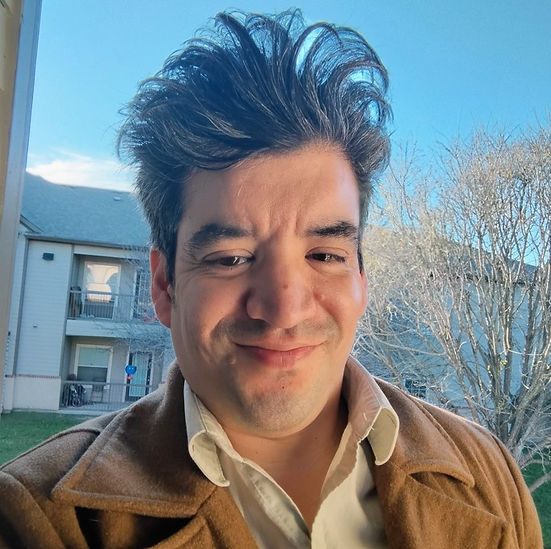
Anthony Castro, Founder, AI Innovation Strategist & Educator
What inspired you to create Axiom Zeta Innovations, and how did your journey as a self-taught innovator begin?
I grew up on the West Side of San Antonio, Texas, in a hardworking Mexican American family. My parents instilled in me the importance of respect, perseverance, and taking pride in whatever you create. I was an avid reader from childhood, particularly drawn to science fiction, physics, and the possibilities of human ingenuity. Authors like Isaac Asimov and Carl Sagan helped shape my curiosity about the universe.
My educational and personal journey, however, was anything but conventional. Despite showing academic promise early in life, I encountered circumstances that interrupted my education and led to more than two decades of personal struggles. For a long time, I felt disconnected from the potential I once recognized in myself.
Axiom Zeta Innovations emerged from my decision to begin creating again. Armed with curiosity, a willingness to learn, and access to artificial intelligence, I began exploring ideas that previously seemed beyond my technical abilities.
What started as independent experimentation evolved into a company encompassing software development, computational research, and interdisciplinary scientific exploration. At its heart, Axiom Zeta represents my belief that human potential should never be defined exclusively by credentials, circumstances, or conventional expectations.
How has working with AI changed the way you develop ideas and turn them into working prototypes?
Artificial intelligence fundamentally changed the relationship between my imagination and my ability to create. Before AI, I could conceptualize complex systems, recognize relationships between different disciplines, and envision technological possibilities, but translating those ideas into functional software or mathematical models presented enormous barriers.
AI helped bridge that gap. Today, my development process is highly iterative. I begin with a concept, break it into individual components, explore its theoretical foundations, and collaborate with AI to develop preliminary architectures and implementations. From there, I examine the outputs, identify weaknesses, run experiments, and refine the design.
This approach has enabled me to explore everything from commercial AI applications to experimental computational architectures and scientific simulations.
But I want to emphasize something important. AI does not magically transform an idea into a scientifically validated invention. It can produce incorrect code, flawed assumptions, and convincing explanations that don't withstand scrutiny.
The human responsibility remains essential. I provide the conceptual direction, ask the questions, make decisions, and determine what deserves further investigation.
For me, AI is not a replacement for human ingenuity. It is an extraordinary instrument for expanding its reach.
With projects like AI Change Radar and Sentinel, what problems are you most interested in solving for businesses using AI?
I'm particularly interested in solving two related problems: information overload and operational reliability. Artificial intelligence is evolving at a pace that makes it increasingly difficult for businesses to understand which developments actually matter. New models, pricing structures, security considerations, and platform changes appear constantly.
AI Change Radar was developed around a straightforward question. How can we transform the overwhelming volume of AI industry developments into useful, evidence-backed business intelligence?
The objective is to help organizations understand what changed, why it matters, whether action is necessary, and what practical steps they should consider.
Sentinel addresses a different challenge: maintaining reliable AI operations. Its architecture monitors model and data drift, identifies anomalous behavior, and applies safeguards within AI-enabled workflows.
Both products reflect a broader philosophy. Businesses shouldn't need enormous technical departments simply to make informed decisions about artificial intelligence.
I want to develop tools that reduce complexity while preserving accountability, transparency, and human oversight. These systems remain subject to continued testing and development, but their intended value is clear. Make AI more understandable, manageable, and dependable for organizations that want to benefit from it.
How do you see AI changing opportunities for people who have innovative ideas but lack formal technical training?
I believe artificial intelligence has the potential to become one of the most significant educational and economic equalizers of our time, provided we make access to it genuinely inclusive.
Traditionally, transforming an innovative idea into a functioning technological product required substantial financial resources, specialized education, and access to experienced developers. Those barriers prevented countless capable people from pursuing their ideas.
I know what that feels like. Growing up in a community where opportunities were not distributed equally gave me an early appreciation for the difference between human potential and access to resources.
AI creates a new possibility. Someone with curiosity, determination, and an internet connection can begin learning programming, exploring scientific concepts, developing applications, and testing ideas that might otherwise remain unrealized.
That doesn't eliminate the value of formal education or specialized expertise. I'm pursuing further education myself because I recognize how much more I have to learn. But it changes where the journey can begin.
I envision a future where a person's socioeconomic background or educational history does not automatically determine whether their ideas deserve exploration. Talent is distributed far more widely than opportunity. AI gives us a chance to narrow that divide.
As AI makes experimentation and development more accessible, how can independent innovators ensure their ideas are reliable and properly validated?
I think this is one of the most important responsibilities emerging from AI-assisted innovation. The ability to generate sophisticated software, mathematical explanations, or scientific proposals doesn't necessarily mean those outputs are correct. AI can make an untested hypothesis look remarkably convincing, which creates a real danger of confusing technical presentation with demonstrated validity.
I've encountered this challenge throughout my own research. At Axiom Zeta Innovations, we've explored experimental computational frameworks such as the Helical Recursive Manifold, alongside materials concepts, field-based computing, and propulsion research. Much of that work remains preliminary, and I believe distinguishing between simulation, theoretical speculation, and independently verified results is absolutely essential.
My approach is to establish measurable objectives, construct reproducible experiments, compare results against established methods, and document limitations.
Whenever possible, I also want experienced researchers and engineers to critically evaluate the work. Independent innovators should welcome criticism rather than perceive it as rejection. If an idea cannot survive rigorous examination, it needs refinement.
AI has dramatically expanded our capacity to explore possibilities. We must now ensure that our standards of evidence grow alongside that capacity. Innovation requires imagination, but credibility requires verification.
When developing a new concept, how do you decide what to explore with AI and what needs further testing or expert input?
I generally begin by asking whether a concept can be meaningfully represented, modeled, or tested using existing computational tools.
If it can, AI becomes an excellent exploratory partner. We can investigate relevant scientific literature, develop preliminary mathematical representations, create software prototypes, and examine whether the underlying assumptions produce internally consistent results.
However, there's an important boundary between computational exploration and physical reality. For example, a proposed material might demonstrate interesting properties in a theoretical model, but determining whether those properties can actually be manufactured requires experimental materials science. Similarly, a propulsion concept may be simulated, but proving its performance requires specialized engineering, instrumentation, and testing facilities.
I try to distinguish what can be explored independently from what demands external expertise. I also recognize that one of my strengths is systems-level thinking, identifying possible connections between different disciplines and assembling broader conceptual architectures.
That doesn't make me an expert in every discipline involved. My objective is to use AI to develop ideas far enough that qualified specialists can evaluate them productively.
Ultimately, I want AI to help create better questions, better preliminary designs, and better opportunities for meaningful scientific collaboration.
What advice would you give someone who wants to build their first AI-assisted project but doesn't know where to start?
Start with something that matters to you personally. You don't need to begin by developing an advanced artificial intelligence architecture or attempting to solve a major scientific problem. Identify a small inconvenience, a repetitive task, or an idea you've carried around but never knew how to implement.
Then begin a conversation with AI. Explain what you're trying to accomplish in ordinary language. Ask it to help you break the project into manageable steps. Have it explain unfamiliar concepts, recommend learning resources, and help develop a simple prototype.
Most importantly, don't surrender your judgment to the technology. Ask why the code works. Test it. Break it. Fix it. Learn what each component does.
One of the most valuable discoveries I've made is that you don't necessarily need to understand everything before beginning. Sometimes understanding develops through the act of creation itself.
I would also encourage people to document their progress. Keep track of what works, what fails, and what questions remain unanswered. Don't be intimidated by people who know more than you. Learn from them.
Your first project doesn't need to revolutionize an industry. It simply needs to teach you that you're capable of building something.
In your article The Chrysalis, you describe rediscovering your purpose through creation. How has that experience shaped your philosophy of innovation?
The Chrysalis is perhaps the most personal expression of why I do what I do. For more than two decades, I struggled with circumstances that profoundly affected my health, education, relationships, and sense of identity. There were periods when the ambitions I carried as a young man seemed impossibly distant.
Rediscovering creation changed that. When I began developing ideas with AI, something remarkable happened. I wasn't simply learning how to produce software or explore scientific concepts. I was reconnecting with a part of myself that I thought I had lost.
Curiosity returned. Purpose returned. Gradually, I began imagining a future defined by possibilities rather than limitations.
That experience fundamentally shaped my understanding of innovation. I no longer view technology exclusively through the lens of commercial success or technical achievement. I see it as a potential instrument of human restoration, empowerment, and self-discovery.
That's also why I want Axiom Zeta Innovations to create opportunities for others, including people who have experienced educational, financial, or personal disadvantages.
My journey taught me that human potential can remain present even when circumstances prevent its expression. Sometimes all it takes is the right opportunity, the right tools, and the courage to begin again.
What is the most important shift you'd like to see in how people approach technology, creativity, and their own ability to innovate?
I would like people to stop viewing innovation as something reserved for a select group of extraordinarily credentialed individuals.
Education and expertise are tremendously valuable, but curiosity, imagination, perseverance, and the desire to contribute are equally important starting points.
We need to move away from the idea that technology is something humanity merely consumes and toward a culture where more people recognize their ability to shape it.
At the same time, I believe technological advancement must remain grounded in human liberty, autonomy, and equality.
Not everyone will choose the same relationship with artificial intelligence. Some will integrate it deeply into their professional and creative lives. Others will prefer limited interaction or none at all. Those choices deserve equal respect.
My broader vision for Axiom Zeta Innovations reflects that philosophy: an ecosystem balancing accessible research, commercial sustainability, collaborative ownership, and opportunities to benefit others.
I want innovation to become a shared human endeavor rather than an exclusive privilege. Above all, I want people to recognize that their circumstances do not necessarily define the limits of their potential.
We have an extraordinary capacity to imagine, learn, adapt, and create. The future should belong to everyone willing to help build it.
Read more from Anthony Castro







