Hiking vs. Forest Therapy – Do You Really Need a Guide to Slow Down?
Written by Juna Ting-Wei Chang, Forest Therapy Guide
Juna Ting-Wei Chang is a forest therapy guide and founder of Shinrin-Yoku Taiwan, specialising in evidence-based forest therapy and Shinrin-yoku. She supports individuals and organisations in slowing down and gently returning their attention to themselves and the more-than-human world through nature.

Same trees, same trail, completely different walk. A light look at what sets forest therapy apart from hiking, and why the simplest thing a guide does may also be the hardest. Picture a hike. There is a trailhead, a route, maybe a step counter, and almost certainly a summit with a photo waiting at the top. Now picture a forest therapy walk: a group of people who have spent an hour covering the length of a few city blocks, and nobody is in a hurry.
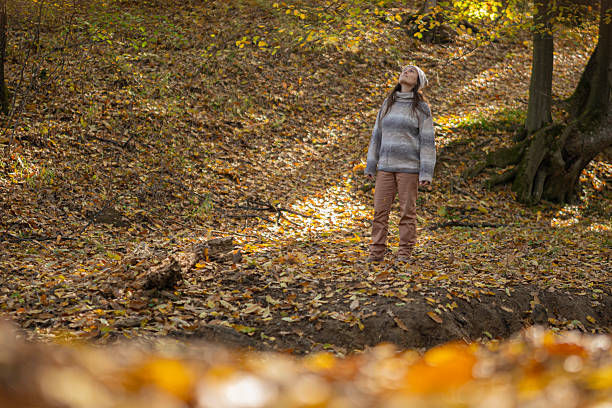
Both happen among trees. Both are good for us. But they ask very different things of the people walking, and that difference is what I get asked about most often, usually followed by two more questions: why would I need a guide for this, and couldn’t I just do it on my own?
Hiking asks “How far?” Forest therapy asks “How are you?”
Hiking is a wonderful practice, and I love it. But it is built around a goal: reach the peak, finish the loop, beat the daylight. The forest becomes the route that gets you there, and your attention tends to point forward, toward the next marker.
Forest therapy has no peak and no finish line. There is nowhere to get to. The invitation is to arrive, again and again, right where you are.
Two ways to walk in a forest:
Hiking has a destination, such as a summit, a viewpoint, or a finish line. Forest therapy has none.
Hiking measures progress in distance, time, and elevation. Forest therapy measures it in what you notice.
Hiking keeps the body moving and the eyes ahead. Forest therapy invites you to stop, sit, and look around.
Hiking rewards you at the end. Forest therapy offers the reward all along the way.
Can we do it on our own?
Honestly? Yes. Nobody owns the forest, and nobody needs permission to sit under a tree and be still. If you can do that, please do.
The catch is that most of us carry our habits into the woods with us. We walk at our usual speed, we plan the next stop, we reach for the phone, and our minds keep running through the to-do list. Without noticing, we turn a quiet forest into one more thing to get done. Slowing down sounds easy until you try it alone.
So what does a guide actually do?
The purpose of a guide is simple: to help you slow down. That is really all there is to it. A guide is not there to teach you the names of trees, entertain you, or lead you to the best view. A guide offers a few gentle invitations, looks after the practical details so you don’t have to, and then makes room.
Think of it like a friend who sits down beside you on a bench and says, “Shall we stay a little longer?” You could have said that to yourself, but somehow it is much easier to hear it from someone else.
The art of keeping blank
Here is the part that surprises people: the hardest thing for a guide is to do less. Every instinct says to fill the silence with a fact, a story, or a clever exercise.
Learning to keep blank, to hold space and let the pause be a pause, takes real practice.
Holding space means trusting that the participants don’t need to be fixed, entertained, or led anywhere. They need time. When the guide stays quiet and steady, people can slow all the way down, and something interesting happens.
They find the in-between. The place between arriving and leaving, between busy and still, between the person who walked in and whoever walks out. There is no peak to reach and no finish line to cross, so there is nothing to win. You can simply be there, and explore.
A tiny experiment for your next walk
You don’t need a guide to try the spirit of it. Next time you are near trees, borrow these three invitations:
Three invitations to try:
Leave the goal at home. Skip the step count and the summit. Pick a spot and let that be the whole plan.
Walk at the speed of your slowest curiosity. Stop whenever something catches your eye, even if it is only a leaf.
Sit and keep blank. Let the place do the talking, and notice what shows up when you stop trying to make anything happen.
If it feels harder than it sounds, that is normal. It is also exactly why having a guide can help.
Read more from Juna Ting-Wei Chang
Juna Ting-Wei Chang, Forest Therapy Guide
Juna Ting-Wei Chang is a forest therapy guide and founder of Shinrin-Yoku Taiwan, now part of Green Shower. She is the first Taiwanese guide certified by the Association of Nature and Forest Therapy (ANFT) and also holds the Taiwan Forest Therapist Certificate. With a background in languages, cross-cultural experience, and landscape and recreation management, Juna brings science, tradition, and lived experience together in a warm, grounded way. Her work supports individuals, organisations, and international groups in cultivating emotional resilience, presence, and sustainable wellbeing through nature-based practices.