Get out of Your Comfort Zone? Think Again!
Written by: Madeleine Shaw, Executive Contributor
Executive Contributors at Brainz Magazine are handpicked and invited to contribute because of their knowledge and valuable insight within their area of expertise.

Quick! You’re in a team workshop, and you have three minutes to write a song about an issue currently facing your team. I’m going to call on you in random order, draw a musical style — country, opera, etc. — out of a hat, and have you perform your song — solo — in that style for the rest of the group.
How effective are you feeling, knowing you’re about to have to sing for everyone on short notice?
How able are you to take on new ideas? To think creatively? To reflect broadly and engage effectively with others? To manage your own physiology to set yourself up for peak performance and flow?
Unless you’re a talented singer, my guess is: not very capable at all right now.
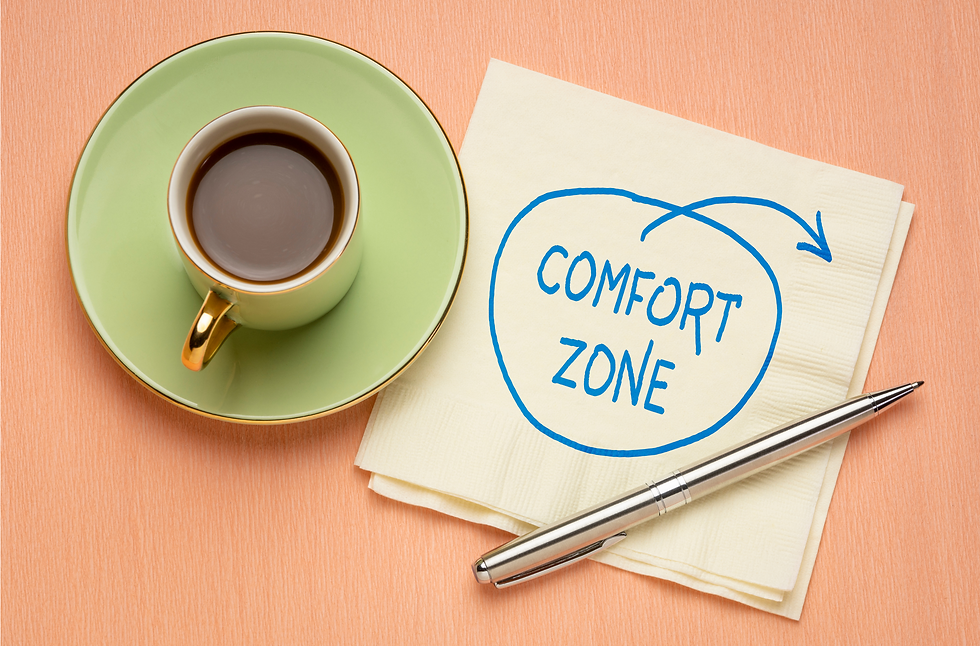
We are often told that getting out of our comfort zones is a good thing – but there is a limit. And beyond that limit is the panic zone – not good!
When you panic, your body goes into fight or flight mode. It focuses its resources on getting to safety.
When you are running for safety, stopping to think creatively about your life path is not optimal. Your brain knows this and will shut down all distractions until you are safe. This is great when you are running from a bear but not so helpful when you are trying to respond to a difficult question in a meeting. Needless to say, when you are running for safety, you are not in a learning zone.
We might learn from these panic situations later - when we have calmed down and can think straight again. But seeking out panic as a way to learn is not the way to go for most of us.
Instead, aim for the learning zone – whether for yourself or those you lead.
Your learning zone is just outside your comfort zone. By stretching into new experiences, challenges, and situations just enough to feel adrenalized but not enough to panic, you are in the optimal zone for growth. You can feel a bit scared in the learning zone, but not enough that your higher-order thinking skills shut down. You can still be confident.
Think nerves before giving a speech – nerves help when they help you switch on and perform, but not when they send your mind blank.
Think of a rubber band stretching outside the comfort zone, but not so far that it snaps.
So should you kiss goodbye to your comfort zone?
Of course, you like your comfort zone. It’s comfortable! In my work, I sometimes hear clients say they want to get rid of their love of their comfort zone. That is actually counterproductive for three reasons:
It makes you wrong for liking comfort, when in fact, it’s a perfectly normal, healthy, and functional preference.
It implies you need to be uncomfortable to be doing anything worthwhile.
You miss out on the recovery and consolidation that only happens when you’re feeling safe – that is, inside your comfort zone.
Embracing comfort can be countercultural. We tend to applaud those who take massive risks to achieve great rewards – but those headlines miss the essential quiet times of recovery and consolidation. Make sure you are allowing those times for yourself, your team, and your organization.
Your comfort zone is bigger now than when you were four years old. Expand your comfort zone by stretching into the learning zone, where new experiences are available, and you can integrate them into your repertoire effectively and easily when you return to “safety.”
Just don’t feel like the only “right” way to grow is to force yourself into terrifying new situations. Like so many of these questions, the answer is to step outside the binary (fear or safety) and find the nuance in between.
Want to learn more from Madeleine? Follow her on Facebook, Instagram, Linkedin or visit her website.
Madeleine Shaw, Executive Contributor Brainz Magazine
Madeleine Shaw PCC is an in-demand executive coach, speaker, and facilitator. She helps C-suite, and other leading professionals navigate challenging career issues so they can thrive in work and life. Madeleine works at the intersection of mindset and evidence-based wellbeing and resilience. Her recent clients include major international consulting, accounting, and law firms, listed financial services organizations, an internationally renowned technology disrupter, and a highly ranked university.
Madeleine has helped thousands of leaders in complex, demanding roles find progress and satisfaction again. She has been there herself in her previous career as a lawyer with top-tier firms in the USA and Australia and a multinational telco. That means this isn’t just nice words and abstract theory: Madeleine knows the drill and can help you sort out your hard questions fast.