

From Personal Struggle to Global Ambition – An Interview with Elhadji Kouyate
What happens when a person leaves behind financial security to pursue a vision, only to find themselves facing some of the most difficult circumstances of their life? For Elhadji Kouyate, Founder and CEO of Kouyaro International Partners Ltd, the answer has been to keep building.
From professional success and personal setbacks to an ambitious vision spanning international commerce, sustainable technology and strategic partnerships, his journey is a story of resilience, self-belief and the determination to create something that outlasts him. Inspired by the history associated with the Kouyaté name and the legacy of the Mali Empire, Elhadji reflects on the lessons that have shaped him, the realities behind entrepreneurship and why he believes our greatest setbacks do not have to determine our future.
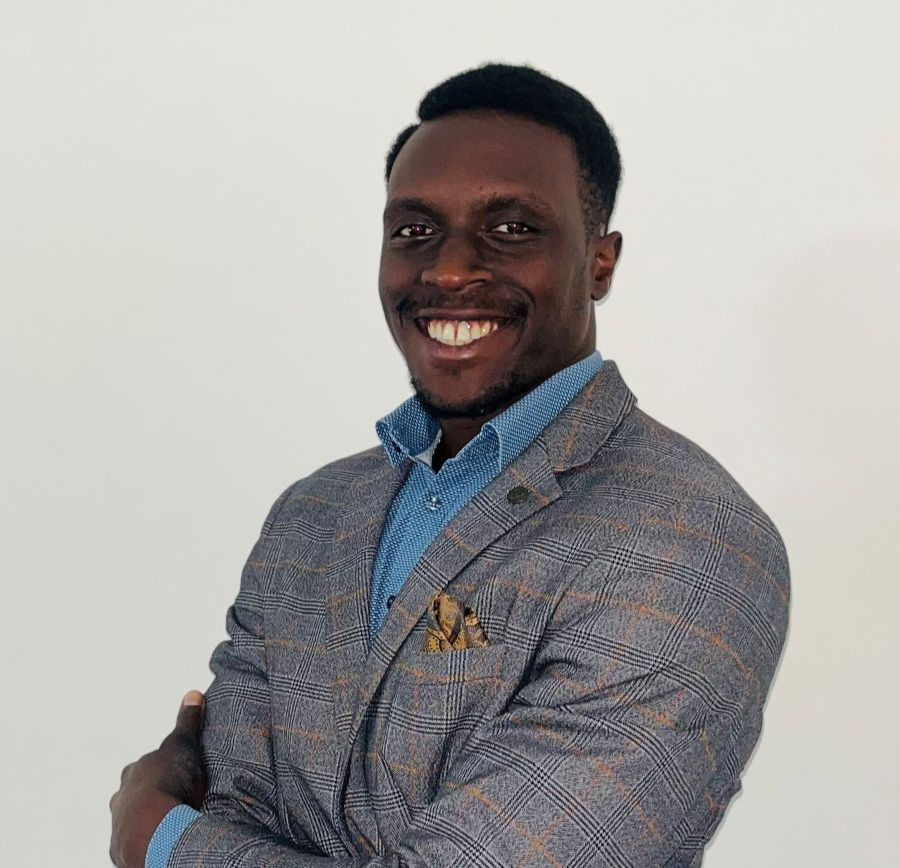
Elhadji Kouyate, International Entrepreneur, Business Strategist & Founder of Kouyaro International Partners Ltd
Can you tell us about yourself and the journey that led you to establish Kouyaro International Partners Ltd?
I have always been interested in opportunities, relationships and the potential that emerges when the right people come together. Before establishing Kouyaro International Partners Ltd, I developed my experience in business development, finance and commercial relationships. I learned how to identify opportunities, understand what businesses needed and connect people who could create value together.
Over time, I realised that one of my greatest strengths was not necessarily owning every product or delivering every service myself. It was recognising where opportunities existed and understanding who needed to speak to whom to make them possible.
That became the foundation of Kouyaro, an international commercial consultancy focused on facilitating introductions and developing strategic partnerships across sectors including energy, commodities and sustainable infrastructure.
However, my journey has not followed the straightforward path I once imagined. I have experienced professional uncertainty, financial hardship and personal challenges that have tested my confidence. Building a business while navigating those circumstances has taught me more about resilience than success alone ever could.
“I am not building Kouyaro simply to become successful. I want to build something that creates opportunities for others and makes a meaningful difference beyond my own life.”
For me, entrepreneurship is not just about reaching a destination. It is about discovering what you are capable of becoming along the way.
You have spoken about self-sabotage and a lesson you learned from a mentor. What changed for you?
One of the most important lessons I have learned came from a mentor who helped me recognise how easily we can sabotage our own potential. We sometimes become our own greatest obstacle, not because we lack ability, but because we allow fear, doubt and our circumstances to convince us that we cannot achieve something greater.
Self-sabotage is not always obvious. It can be procrastination, waiting until everything is perfect, talking ourselves out of opportunities or repeatedly questioning whether we are good enough. Sometimes, it is choosing the familiar because the unfamiliar feels frightening.
That lesson made me reflect on how often people unconsciously place limits on themselves. We look at our present circumstances and mistake them for a prediction of our future.
I began to understand that belief is not a substitute for action, but it can determine whether we take the first step at all. You can possess talent, intelligence and ambition, but if you continually convince yourself that you are incapable, you may never discover what you could have achieved.
“Do not become the person who stands in the way of your own potential. Your circumstances may limit your options today, but they do not have to define your ambitions for tomorrow.”
I still have to apply that lesson to my own life. It is not about pretending everything is possible overnight. It is about refusing to let fear make decisions that should belong to you.
You left a secure, well-paid career to pursue your vision. What has that decision really cost you, and what has it taught you?
This is probably the most personal part of my journey. Leaving a secure, well-paid career to pursue entrepreneurship meant stepping away from a level of financial stability that many people understandably work hard to achieve. I believed in the possibility of building something of my own, but I could not have predicted every challenge that would follow.
Since then, I have experienced financial instability, a relationship breakdown and housing insecurity. I have had to navigate some very difficult personal circumstances while continuing to develop Kouyaro. There is a significant difference between speaking about ambition and trying to maintain that ambition when you are uncertain about your own immediate circumstances.
I do not share this to romanticise hardship. Financial insecurity is exhausting, and entrepreneurship does not automatically reward persistence. There have been difficult moments when the future I envisioned has felt far removed from the reality in front of me.
But I have also learned that a difficult season does not have to become your identity. I cannot change every decision I have made, but I can take responsibility for what I do next.
“There is a difference between being in a difficult position and believing you are destined to remain there.”
I am still working towards the life and business I envision. I have not reached the destination, and I will not pretend otherwise. But I would rather confront the reality of my circumstances and keep working to improve them than allow temporary hardship to convince me that my future is already decided.
Your family history connects you to the heritage of the Mali Empire. How has that influenced your identity and ambitions?
My family history gives me a sense of connection to something much bigger than my individual ambitions. The Kouyaté name is associated with the griot tradition of West Africa, including historical accounts of Balla Fasséké Kouyaté, the celebrated griot and adviser associated with Sundiata Keita and the founding of the Mali Empire.
What resonates with me is the significance of that tradition. Griots preserved history, knowledge, relationships, and stories across generations. Their role was not simply to speak, but to remember, advise, and connect people to a wider understanding of who they were and where they came from.
I see a meaningful parallel with the work I am pursuing today. Kouyaro is built around relationships, introductions, and bringing different parties together to explore opportunities. I am not comparing my work directly with the responsibilities of historical griots, but the broader idea of creating value through knowledge and connections is something I find inspiring.
The history of the Mali Empire, including the legacy of Mansa Musa, also reminds me that African history contains extraordinary examples of commerce, learning and international exchange.
“Your heritage can give you a sense of direction, but it is your own actions that determine what you contribute to the world.”
I do not see my family history as an achievement I can claim for myself. I see it as inspiration to build something of my own, honour the values that matter to me and leave a positive legacy for the generations that follow.
What is Kouyaro International Partners Ltd, and what are you ultimately trying to achieve through it?
Kouyaro International Partners Ltd is an international commercial consultancy focused on connecting businesses, technology providers, buyers and strategic partners. Our model is based on identifying opportunities, facilitating introductions and helping the relevant parties explore potential commercial relationships.
We are developing opportunities across several areas: waste-to-energy technology, tyre-to-fuel technology, fuel and commodities, solar and smart-city infrastructure, and strategic partnerships involving investors and family offices.
The common thread is that valuable opportunities often require several different capabilities. One organisation may have the technology, another may have access to a site, another may have the necessary feedstock, and another may be able to provide funding. Bringing those parties together can help them investigate whether a viable project exists.
Our role is to facilitate those relationships, not to pretend that every opportunity is already a completed project. Credibility depends on proper due diligence, clear agreements, realistic expectations and transparency about the responsibilities of each party.
My ambition is to establish Kouyaro as a trusted international platform capable of helping significant commercial opportunities progress across borders and industries.
“You do not have to own every piece of the puzzle to help create the bigger picture. You need to understand how the pieces fit together and bring the right people to the table.”
Ultimately, I want the company to be judged by the quality of its relationships, the integrity of its work and the tangible outcomes it helps facilitate.
You believe waste could become the new gold. Why do you think this is such an overlooked opportunity?
One of the areas I am particularly passionate about is changing how we think about waste. We often view it as something that must be collected, transported and disposed of, without fully considering whether some of that material could be recovered and turned into useful resources.
Through Kouyaro, I am developing relationships around waste-to-energy and tyre-to-fuel technologies. Depending on the process, suitable feedstocks and operating conditions, these technologies may produce energy, recovered fuels or other useful outputs. The commercial question is whether those outputs can be generated safely, responsibly and at a viable cost.
For waste management companies, industrial operators and local authorities, the opportunity is worth investigating. A material that currently creates a disposal cost may, under the right conditions, become part of a resource-recovery model. Projects may also support employment, infrastructure investment and more circular approaches to resource use.
However, I believe environmental ambition must be supported by evidence. Not every waste stream is suitable for every technology, and no project should be considered environmentally beneficial without examining its emissions, lifecycle impacts, regulatory requirements and financial viability.
“What if the material we pay to get rid of today becomes one of the resources we learn to value tomorrow?”
That is the question driving my interest. I want to help bring together the expertise and partnerships needed to investigate genuine opportunities, rather than simply sell people an exciting idea.
What has been the biggest challenge in building Kouyaro, and what have you learned about success?
One of the biggest challenges has been turning ambition and relationships into tangible commercial progress. It is relatively easy to recognise an opportunity or have an exciting conversation. It is much harder to establish the right partnerships, complete due diligence, agree commercial terms and move towards implementation.
Over the years, I have developed a network of more than 3,000 contacts. That network has given me opportunities to connect with people across industries and explore different commercial possibilities. But I have learned that the size of a network is not the same as the value it creates.
Relationships become valuable through trust, relevance and follow-through. A promising introduction needs a clear purpose, credible information and an understanding of what each party expects. The same principle applies to building a company: a compelling vision must eventually be supported by consistent execution.
The personal side has been equally challenging. It is difficult to maintain confidence in your long-term ambitions when you are managing immediate financial and personal pressures. Those experiences have forced me to become more disciplined about prioritising opportunities and distinguishing genuine progress from the excitement of possibility.
“A network may open the door, but credibility, preparation and consistent follow-through determine what happens next.”
I am learning to focus less on how impressive an opportunity sounds and more on whether it can realistically be delivered. That shift has helped me approach entrepreneurship with greater maturity.
What would you say to someone who is struggling, feels behind in life or is afraid to pursue a bigger ambition?
First, I would tell them that their current circumstances are not a complete measure of their potential. It is easy to look at where other people are in life and feel that you have fallen behind. But we rarely know the full story behind somebody else's success, and comparing your most difficult moments with another person's highlights is rarely helpful.
Second, I would encourage them to turn their ambitions into practical actions. Belief matters, but belief becomes powerful when it changes what you do. Learn the skills you need, speak to people who can challenge your thinking, understand the risks involved and break your goals into manageable steps.
I would also remind them that asking for help is not a weakness. There is no shame in using available support while working to improve your circumstances. Nor is there shame in changing direction when a plan is not working. Persistence is important, but so is the ability to learn and adapt. My own experience has taught me that progress is not always visible from the outside. Sometimes, progress means rebuilding your confidence, becoming more disciplined or making a better decision than you made the day before.
“You do not need to have your entire future figured out. You need the courage to take the next sensible step, even when you cannot yet see the whole road.”
Do not build your life solely to prove other people wrong. Build it because the future you want is worth working towards, and because you deserve to give yourself a genuine opportunity to discover what you can achieve.
When you look towards the future, what legacy do you hope to leave through Kouyaro International Partners?
My ambition is for Kouyaro International Partners Ltd to become a trusted international business that helps meaningful commercial opportunities become reality. I want to develop partnerships across energy, commodities, sustainable infrastructure and other sectors where bringing the right organisations together can create practical value.
In waste-to-energy and tyre-to-fuel, I want to help stakeholders explore technologies that could address waste-management challenges while producing useful outputs. In fuel and commodities, I want to facilitate credible relationships between buyers and suppliers. Across solar infrastructure and strategic partnerships, I want to help connect expertise, resources and opportunities across borders.
But I do not measure the future solely by the size of the company or the revenue it generates. I want the business to create opportunities for other people, contribute to responsible economic development and demonstrate that relationships can be a powerful foundation for enterprise. My family history encourages me to think beyond my own lifetime. The struggles I have faced remind me that a legacy cannot be built on ambition alone. It requires integrity, discipline, accountability and the willingness to keep improving.
I am conscious that Kouyaro is still developing. There is much to accomplish, and I understand that the vision must be supported by real results.
“Success is not just what you build during your lifetime. It is what becomes possible for other people because you chose to build it.”
If, years from now, Kouyaro has helped create meaningful projects, opened doors for people who might otherwise have been overlooked and contributed to solutions that benefit communities, I will consider that a worthwhile achievement.
My story is still being written. I cannot promise exactly where it will lead, but I can choose how I approach the journey: with ambition, honesty, resilience and a willingness to learn.
A final message from Elhadji Kouyate:
If there is one thing I hope people take away from my journey, it is that a difficult chapter does not have to be the final chapter.
You may lose financial security. You may experience disappointment. You may find yourself rebuilding at a point in life when you thought you would already have everything figured out. Those experiences can change you, but they do not have to destroy your sense of possibility.
I am still building. I am still learning. I am still working towards the future I envision for myself and Kouyaro International Partners.
I have no interest in pretending that the journey is easier than it is. I simply believe that our circumstances should encourage us to think carefully about our next steps, not convince us that we have no future worth pursuing.
“Your starting point is part of your story. It does not have to be the limit of your story.”
Keep learning. Build relationships with integrity. Be honest about your challenges. Take responsibility for your decisions, and keep moving towards something that matters to you.
The future is never guaranteed. But we can choose to participate in shaping it.
Read more from Elhadji Kouyate







