Brodrick Spencer – Turning Big Ideas Into Systems That Last
Brodrick Spencer has spent most of his life building things that outlast him. Not buildings. Systems. People. Pathways.
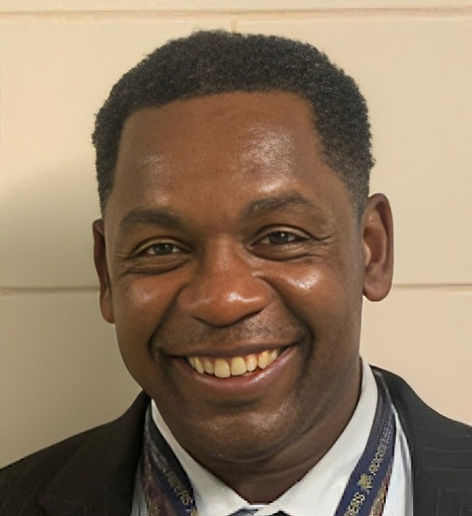
His career has stretched across classrooms, principals’ offices, community programs, and nonprofit leadership. At every stop, the goal has stayed the same: help people succeed by creating structures that actually work.
“Success is defined by accomplishing the goals you have set,” Spencer says. “But the real measuring rod is not what you’ve done for yourself. It’s who you’ve served, and whether the systems you built still work when you’re gone.”
That belief has guided a career rooted in education, mentorship, and community service.
Early life and foundations in leadership
Spencer was born in Jackson, Mississippi. When he was seven, his family moved to Long Beach, California. He was raised by his mother, Clara Spencer, a single parent who instilled in him a sense of responsibility early on.
In school, Spencer stood out both academically and athletically. He was a scholar-athlete who lettered in football, baseball, and basketball. Football became a four-year commitment. Baseball lasted three. Basketball, one. He earned all-league and all-county honors and played in all-star games.
Leadership came just as naturally. He served as student government class president in ninth and tenth grade and won several oratory awards. During those years, he also began mentoring younger students.
“I started working with youth while I was still a student myself,” he says. “That stayed with me.”
Spencer went on to play collegiate baseball at Jackson State University and later played football at the University of California, Santa Barbara. He graduated with a degree in Law and Society in 1993.
Choosing education as a career path
After college, Spencer chose education not as a fallback, but as a calling. He earned a Master’s in Education from Howard University in Secondary Curriculum and Instruction.
His early years were spent in the classroom, teaching social studies and coaching athletics. He became a department chair and learned how instruction, culture, and accountability connect.
“Believing that all children can learn and deserve a fair opportunity to be successful is not a slogan,” Spencer says. “It’s a daily responsibility.”
Over time, that mindset moved him into administration.
Leadership in challenging school systems
Spencer spent 13 years as a secondary school principal and eight years as an assistant principal across New York school districts. Many of these systems were under-resourced and unstable.
“I’ve worked in some of the most challenging educational systems in America,” he says. “The key was listening, observing, and building the human capital around me.”
As a principal, Spencer focused on turning ideas into action. He expanded access to Advanced Placement courses. He strengthened Regents-level instruction. He introduced SAT and PSAT initiatives. He built mentorship programs and improved extracurricular offerings.
His approach was practical. Goals were clear. Metrics mattered.
“I use reliable data and before-and-after measures,” he explains. “You have to look at outcomes, not intentions.”
He also emphasized shared accountability. “I involved all stakeholders in decisions,” he says. “And accountability always started with me.”
Community engagement beyond the school walls
Spencer’s work extended beyond academics. He built partnerships with colleges, healthcare providers, law enforcement, and community-based organizations. These relationships created college tours, health screenings, debate clubs, and mentorship programs.
He organized voter registration drives in Nassau County. He led Thanksgiving food and clothing drives. He developed senior citizen and youth partnership programs.
For Spencer, community work was not extra. It was essential.
“You can’t separate schools from the communities they serve,” he says. “Systems improve when people feel seen and supported.”
He also credits his long-standing involvement with Omega Psi Phi Fraternity, Incorporated. As a 35-year member, he has remained active in service and youth engagement.
Operations leadership and system building
Today, Spencer serves as Southern California Director of Operations for the William Law Foundation. In this role, he oversees after-school programs and childcare centers, ensures regulatory compliance, supports grant development, and strengthens partnerships.
The work is operational, but the mindset is the same.
“I look at what needs to be done first, in order of priority,” he says. “I use a check-off system. Then I revisit goals and build on them.”
He is known for being analytical, strategic, and steady under pressure.
“You have to live with the decisions you make,” Spencer says. “You should be able to look in the mirror and know you were fair and acted in the best interest of those you serve.”
A career built on sustainability
Across decades and roles, one theme stands out. Brodrick Spencer is less interested in quick wins and more focused on lasting impact.
“I focus on what I can control in the moment,” he says. “And I plan for how to overcome challenges with the right support systems.”
His career shows what happens when big ideas are paired with discipline, data, and community trust. Not flashy. Not loud. Just effective.
And in Spencer’s view, that is the point.