Before You Can Lead Anyone Else, You Have to Lead Yourself
Paul Adamson is a global keynote speaker and leadership strategist who helps organisations navigate change, build resilient teams, and create breakthrough performance. His work blends real-world experience from being a professional sailor and pivoting into the business world.

Over 25 years at sea and in the boardroom, I have developed a framework that sits at the heart of everything I teach. I call it SHINE. Each letter represents a dimension of leadership that every founder and senior leader needs to master, not in theory, but under the real pressure of running a business and leading people.
Over the next five months, I am going to take one letter at a time and go deep. We start at the beginning. S is for State.
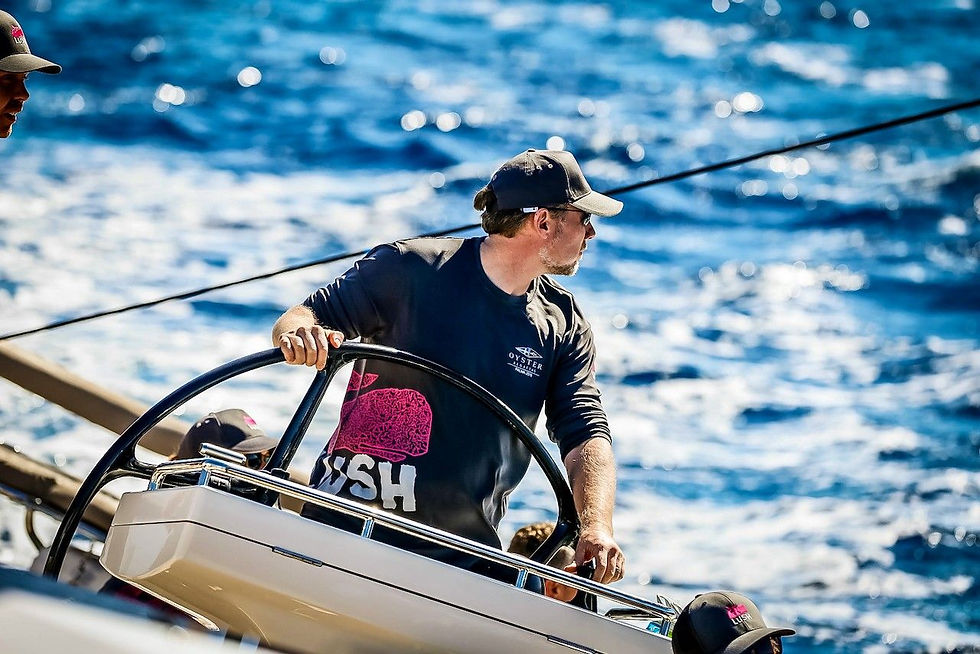
There is a moment every captain knows. It arrives in the early hours, somewhere in the middle of an ocean crossing. The weather is building. The crew is tired. The boat is working harder than anyone would like. Somewhere below decks, there are people lying in their bunks who are not quite asleep because they are listening.
Not to the forecast. Not to the instruments. To you.
They are listening for the quality of your footsteps on deck. For the tone of your voice when you call down to check on the watch. For the pace of your breathing when a wave hits the hull harder than expected. They are reading every signal you give, consciously or not, to decide how they should feel about the situation.
That is the moment that defines a captain. Not the decision you make. But the state you are in when you make it.
What state actually means
State is not your mood. It is not your personality. It is not whether you had a good night's sleep or a difficult morning.
State is your internal condition in any given moment: your energy, your presence, your emotional temperature. It is the single most powerful leadership variable that most founders never deliberately manage.
We spend enormous amounts of time on strategy, execution, process, and performance. Almost no time at all on the internal condition we bring to every conversation, every decision, and every room we walk into.
That is a significant oversight. Because your state does not stay with you. It travels.
The most uncomfortable truth in leadership
I have seen it at sea more times than I can count. A captain who walks into a difficult situation carrying visible tension, even subtly, even without a word, instantly changes the energy on the boat. The crew feels it. They start second-guessing. Confidence drops. Friction appears. Suddenly you are dealing with two problems: the one in front of you, and a team now operating below its capability. The reverse is equally true, and far more powerful.
A captain who walks into the same difficult situation with calm, quiet certainty, not performing positivity, not pretending nothing is wrong, but genuinely centred, raises the performance of everyone around them. Not because the situation got easier. Because the team now believes it can be navigated. Boardrooms work exactly the same way.
The leader who walks into a difficult meeting carrying last night's argument, this morning's cash flow pressure, and next quarter's uncertainty has already compromised the outcome before the first person has spoken. The team reads it. They adjust. They hold back. The conversation you needed to have never quite happens.
This is not about emotional suppression. It is not about pretending to be fine when you are not. It is about something far more deliberate: choosing the state you bring, rather than simply arriving with whatever state you happen to be in.
The habit that athletes practise and leaders rarely do
High-performing athletes often have a pre-performance routine. A sequence they run before they compete, not to rehearse their skills, but to calibrate their state. To move from wherever they are to wherever they need to be before the moment of performance arrives.
Leaders face exactly the same performance demands. Multiple high-stakes conversations in a single day. Decisions with real consequences. Rooms full of people who are looking to them to set the tone. Yet almost no leaders have a pre-performance routine at all. They move from one meeting to the next, carrying whatever emotional residue the last one left behind, and wonder why the quality of their leadership feels inconsistent.
The simple practice I give every founder I work with is this:
"Before your next significant meeting, conversation, or decision, take five minutes on your own first. Not to prepare your content. Not to check your messages. Just to notice where your state actually is. Then consciously choose where you want it to be before you walk through that door."
Sailors call this getting your head in the game. Athletes call it their pre-performance routine. For leaders who do it, it can be a game changer.
The question that changes things
There is one question I ask every leader I work with when we start talking about state. It is short, but it is honest, and the answer is almost always revealing, "How are you showing up right now, and is that serving your team?"
Not how you intend to show up. Not how you showed up in your best week. Right now, today, in this moment, is your internal state an asset to the people around you, or is it quietly getting in the way?
The leaders who ask themselves this question regularly lead differently. They catch themselves earlier. They recover faster. They create environments where people perform better, not because they have better people, but because they have learned to lead from a better place.
State is not fixed. It is not a personality trait you are stuck with. It is something you build, deliberately, every single day. It starts before you say a single word.
Where do you stand across the full SHINE framework?
State is just the first of five dimensions I work with. The others, Horizon, Identity, Navigate, and Energy, each carry their own weight in how you show up as a leader.
If this has landed for you, the next step is to see where you actually stand across all five.
I built a free five-minute assessment called The Lighthouse Check. Ten questions. A radar chart showing how you are tracking across each dimension of SHINE. An honest snapshot of which letter is quietly carrying the most weight in your leadership right now, with immediate, practical recommendations you can act on today. Take The Lighthouse Check here.
It takes about as long as a cup of coffee. It might be the most useful five minutes you spend on your leadership this month.
Read more from Paul Adamson
Paul Adamson, Trusted Advisor to Founders & Leadership Teams Under Pressure
Paul Adamson is an international keynote speaker and leadership strategist known for helping organisations navigate change, build resilient teams, and unlock high-performance cultures. His journey began at sea, where he skippered a 27,000-mile global circumnavigation before leading the commercial turnaround of Oyster Yachts from administration to a £185M order book. Paul’s work blends high-stakes decision-making with practical leadership tools that drive real-world results. A cancer survivor, he speaks powerfully about resilience, purpose, and optimistic leadership. Today, he works with entrepreneurs, founders, and executive teams worldwide, helping them create breakthroughs that move them from where they are to where they want to be.