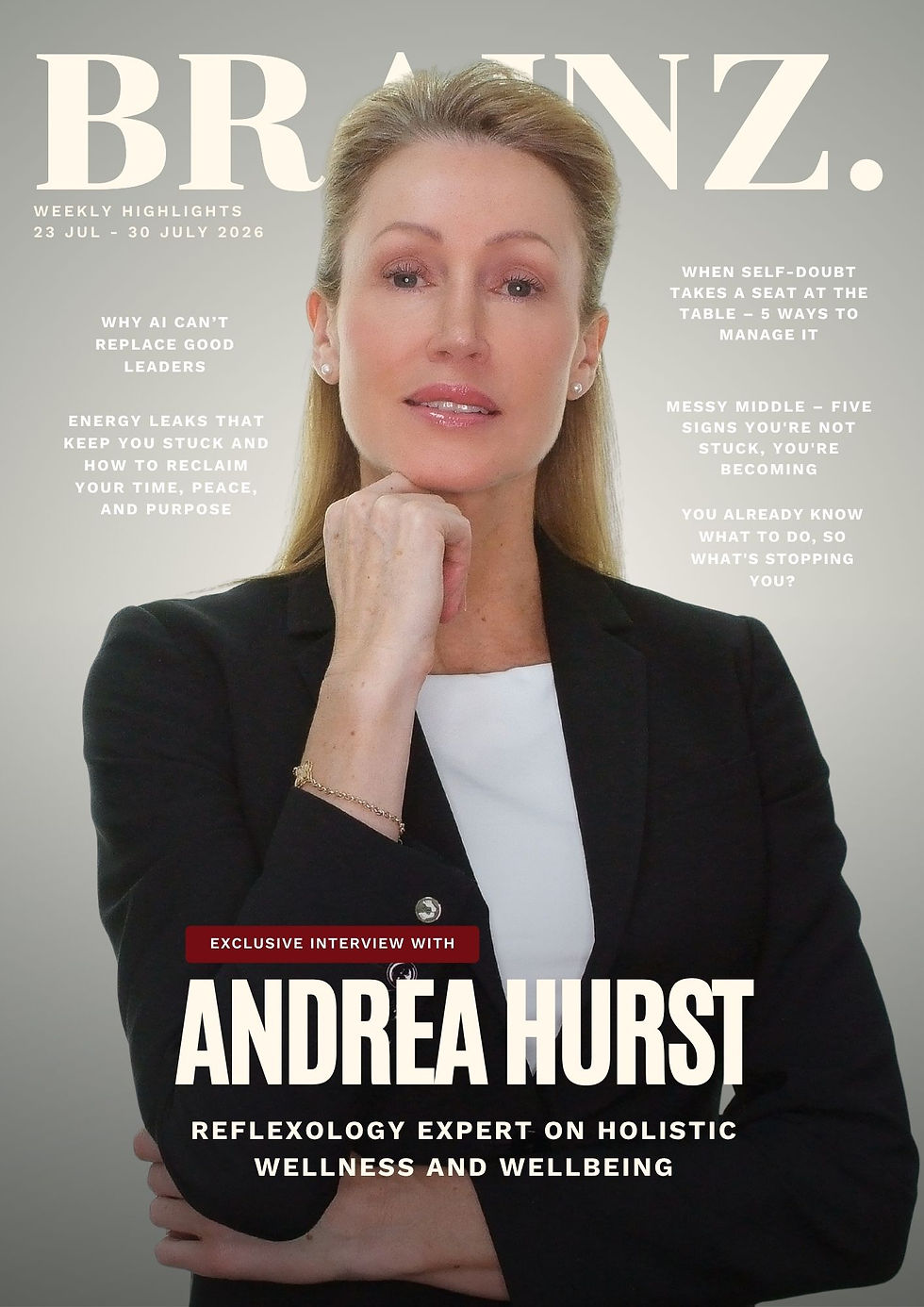
AI Isn’t Killing Your Business, You Might Be
- 5 days ago
- 3 min read
Updated: 21 hours ago
Real organisational change isn't just about strategy, it's about people. Chameleon Skills Coaching partners with organisations to help individuals and teams perform and thrive.

Artificial intelligence is changing the way organisations work. But while leaders focus on new technology, many are asking a more important question, "How do we lead people through this change in ways that build trust rather than fear?"

The future of work won't be shaped by technology alone. It will be shaped by leaders who know how to grow human capability alongside technological capability.
In this article, we explore why employee engagement, not artificial intelligence, may be the real competitive advantage in the years ahead, and share practical ways leaders can navigate AI without losing what matters most, their people.
The leadership question AI can't answer
Everywhere you look, leaders are talking about Artificial Intelligence (AI), how to use it, how to automate faster, how to become more efficient, and how many jobs it might replace.
AI has been positioned as both a miracle and a threat. Yes, it is changing the workplace at an extraordinary pace. But while organisations are busy focusing on the technology, many are missing something far more dangerous, their people.
AI is not the biggest disruptor facing your business right now. Disengaged leadership is. The real risk is not that AI will replace humans. It is that leaders become so fascinated by efficiency and productivity that they stop paying attention to the human ecosystem that makes performance possible in the first place. The warning signs are already there.
Studies continue to show that a significant percentage of employees feel disengaged, disconnected, or undervalued at work. Add AI into that environment without careful leadership, and many employees quietly begin asking themselves dangerous questions.
Am I still valued here?
Is my experience still relevant?
Am I being developed or slowly replaced?
Does anyone actually care what this change feels like for us?
Technology changes systems quickly. Humans adapt more slowly. When leaders fail to acknowledge the emotional and relational impact of AI, uncertainty grows, trust weakens, innovation drops, and resistance increases. Ironically, the organisations investing most heavily in AI may unintentionally create the very disengagement that damages performance, creativity, collaboration, and retention.
Because people do not want to become servants of the machine. They want to feel that technology enhances their contribution, not erases it.
The organisations that thrive in the AI era will not necessarily be the ones with the most advanced systems. They will be the ones whose leaders stay deeply connected to their people while navigating change. That requires a shift in mindset.
Growing human capability alongside AI
AI should not replace human capability. It should expand it. The real leadership challenge is learning how to grow technological capability and human capability together.
That means creating workplaces where:
people feel included in conversations about AI
experimentation is encouraged without fear
learning remains a priority
human skills become even more valued
time saved through AI creates space for growth, creativity, relationship-building, and innovation
The future of work is not human or AI. It is human with AI. But that future will only work if leaders actively engage their teams instead of simply imposing new systems on them.
So before your organisation rushes into another AI rollout, pause and ask yourself. What is your people strategy alongside your AI strategy?
Three ways leaders can introduce AI without losing their people
Here are three practical places to start:
Hold AI conversations, not just AI training: Create space for teams to discuss concerns, ideas, opportunities, and fears openly. People support what they help shape.
Reward human innovation: Recognise employees who use AI to improve collaboration, creativity, customer experience, or problem-solving, not just speed and output.
Reinvest time saved into human development: If AI creates efficiency, use some of that reclaimed time for mentoring, coaching, learning, wellbeing, and relationship-building.
The future belongs to human-centred leaders
Because in the end, sustainable performance does not come from technology alone. It comes from engaged people who feel valued, trusted, and part of the future. That remains a deeply human responsibility.
Contact us here for a copy of our free eBook on leading organisational change and employee engagement in the age of AI, Managing the EAGER Way, and explore practical ways leaders can strengthen engagement, trust, and performance in rapidly changing workplaces.
To learn more about our work, visit this website.
Follow me on LinkedIn for more info!
Read more from Chameleon Skills Coaching
Chameleon Skills Coaching, Ecosystemic Team and Organisational Coaches
At Chameleon Skills Coaching, we believe that organisations change when people do. Since 2006, we've partnered with leaders and teams to navigate complexity, strengthen relationships, and build workplace cultures where people and performance can thrive. Our ecosystemic approach combines coaching, leadership development, and practical insight into the human dynamics that shape every organisation.