7 Signs You're Still Living in Survival Mode Even When Life Is Going Well
Written by Samantha Roach, Integrative Counsellor
Samantha Roach is an Integrative Counsellor, author, speaker, and founder of Beauty for Ashes Ministry and Brokenness to Hope CIC (Community Interest Company). Through counselling, workshops, and community programmes, she helps individuals move from trauma, grief, and emotional pain toward healing, hope, and personal transformation.

Have you ever reached a place in your life where things are finally going well, yet something inside you is still waiting for everything to go wrong? You have worked hard. You have overcome challenges. You may have a successful career, a loving family, or opportunities you once only dreamed about.
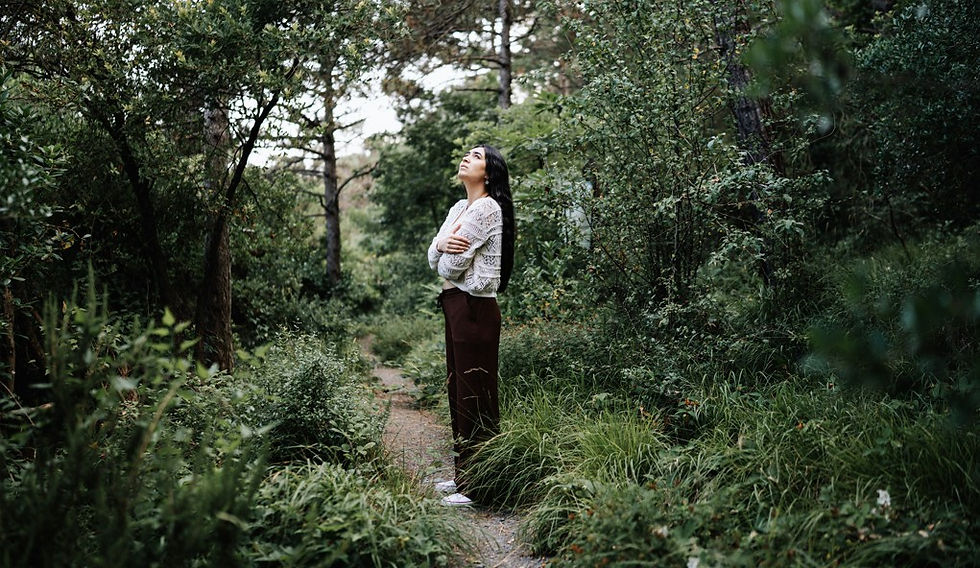
Yet instead of feeling settled, you find yourself worrying, overthinking, struggling to rest, or constantly preparing for the next problem. I understand that feeling.
For many years, I knew how to survive. I knew how to keep going when life became difficult, how to put on a brave face, and how to carry responsibilities even when I was struggling inside.
But what I didn't fully understand was that just because my circumstances had changed didn't mean my mind and body had stopped responding as though I was still in danger.
Through my own journey of healing and my work as a trauma-informed integrative counsellor, I have come to recognise that survival mode can become so familiar that we begin to mistake it for our personality. Sometimes we don't realise we are still surviving because we have become so good at functioning.
Here are seven signs that you may still be living in survival mode, even when life around you appears to be going well:
1. You find it difficult to relax
For some people, rest feels peaceful. For others, it can feel uncomfortable. You sit down, but your mind is still working.
You feel guilty when you're not being productive. You constantly think about what needs doing next. When you've experienced trauma, particularly during childhood, your nervous system may have learned to remain alert to possible danger. Even when your environment becomes safer, that sense of alertness can continue.
I have learned that being busy and being purposeful are not always the same thing. Sometimes we fill every moment because slowing down gives us space to feel things we have spent years avoiding. Healing involves learning that rest is not something we have to earn.
2. You are always expecting something to go wrong
Have you ever noticed that when something good happens, instead of enjoying it, you immediately begin wondering how long it will last? Perhaps you receive good news, but your mind starts preparing for disappointment. Or you experience peace in a relationship, yet find yourself waiting for the next argument.
This can be connected to hypervigilance, where the mind and body remain highly alert to potential threats. When life has been unpredictable, expecting the worst can become a way of trying to protect yourself. But constantly preparing for disappointment can make it difficult to enjoy what is happening in the present. One of the lessons healing has taught me is that I don't have to allow yesterday's pain to steal today's peace.
3. You struggle to ask for help
"I'm okay." "I've got this." "Don't worry about me." How often have you said these words when you were actually struggling? For many trauma survivors, independence becomes a form of protection.
Perhaps there was a time when asking for help led to disappointment, rejection, or silence. So you learned to manage everything yourself.
You became the strong one. The dependable one. The person everyone else could rely on. This is something I can relate to in my own journey. But healing has helped me understand that strength is not measured by how much we can carry alone. Sometimes the strongest thing we can do is acknowledge that we need support.
4. You feel responsible for everyone else's happiness
When you grow up in an environment where you have to pay close attention to other people's moods, you may become highly sensitive to the emotions of those around you.
As an adult, you might find yourself trying to keep everyone happy. You avoid disagreements. You feel guilty when someone is upset.
You take responsibility for problems that aren't yours to solve. You may even struggle to recognise your own needs because you are so focused on everyone else's.
In counselling, I often explore how early experiences can influence the roles we take on in adulthood. For some people, being the helper or peacekeeper began as a way of maintaining emotional safety.
But there is a difference between caring for others and carrying responsibility for their emotions. Healing helps us recognise that we can love and support people without losing ourselves in the process.
5. You react strongly to situations that remind you of the past
Sometimes our emotional responses can feel bigger than the situation in front of us. A disagreement may trigger an overwhelming fear of rejection.
A raised voice may leave us feeling frightened or defensive. Being ignored may bring up feelings of abandonment. We may find ourselves reacting to something happening today while unknowingly carrying emotions connected to yesterday.
This doesn't mean every strong emotional reaction is caused by trauma. However, past experiences can influence how we interpret and respond to present situations.
One of the most important parts of healing is developing the awareness to ask:
"Am I responding to what is happening now, or is something from my past being awakened?"
That question can create space between our emotions and our responses. Sometimes that space is where change begins.
6. You struggle to enjoy your achievements
You reach a goal. You receive recognition. You accomplish something you have worked towards for years. But instead of celebrating, you immediately begin thinking about the next thing. Nothing ever feels quite enough.
For some people, achievement becomes connected to proving their worth. I understand how easy it can be to become focused on doing more, achieving more, and constantly moving forward.
But one of the lessons I have learned on my journey from brokenness to hope is that our identity cannot be built entirely on what we accomplish.
Achievements are worth celebrating, but they do not determine our value. As a Christian, my faith has helped me understand that my identity is found in Christ, not in my performance. You are valuable before the achievement, during the struggle, and even when things don't go according to plan.
7. You know how to survive but struggle to feel safe
This is perhaps one of the deepest effects of living in survival mode. You know how to cope with difficulty. You know how to keep moving. You know how to be strong when life becomes overwhelming. But when things become calm, you don't always know what to do with the peace.
For many years, survival was something I understood. My childhood experiences, the silence surrounding them, and the challenges I faced later in life taught me how to endure difficult circumstances.
But healing began to teach me something different. I didn't just want to survive my story. I wanted to experience freedom from the emotional weight of it.
I wanted to recognise that my past had shaped parts of my life without allowing it to define my future. That understanding became an important part of the journey I share in my memoir, From Brokenness to Hope.
Moving from survival to healing
One of the things I have learned, both personally and professionally, is that healing requires more than simply telling ourselves to move on.
We cannot always think our way out of responses that developed through years of difficult experiences. Sometimes healing involves learning to recognise our triggers, understand our emotional responses, develop healthy boundaries, and gradually build a greater sense of safety.
It may involve counselling, supportive relationships, self-compassion, and learning new ways of responding to situations that once felt threatening.
For me, faith has also played a significant role. There have been seasons when I have had to remind myself that I no longer need to carry everything in my own strength.
One scripture that continues to encourage me is:
"Come to me, all you who are weary and burdened, and I will give you rest." – Matthew 11:28 (NIV)
Those words remind me that rest is not weakness and that healing is not about pretending we have never been wounded.
It is about learning that we no longer have to live every day as though we are still fighting the battles of our past.
3 questions to reflect on
If you recognise yourself in any of these signs, I encourage you to take a moment and reflect.
What survival behaviours have become so familiar that I now see them as part of my personality?
Are there situations in my present life where I am still responding from past fear rather than present reality?
What would it look like for me to move beyond simply coping and begin experiencing greater emotional safety and peace?
You don't need to have all the answers today. Sometimes the first step towards healing is recognising that the way we learned to survive may no longer be the way we need to live.
From brokenness to hope: Learning to live again
When I reflect on my own journey, I realise that for many years I was doing what I knew how to do, surviving. I had experienced childhood trauma, been silenced, and carried wounds that affected how I saw myself and the world around me. But my story did not end there.
Through faith, healing, self-awareness, and the courage to confront my past, I began to understand that my experiences did not have to determine the rest of my life.
That is the heart behind my memoir, From Brokenness to Hope, and the work I now do supporting others on their healing journeys.
It is also the foundation of my From Brokenness to Hope Wounds Framework, which explores four important stages: The Silencing of the Wounds, The Turning, The Rising, and The Transformation.
Through this work, my desire is to help individuals recognise the wounds they carry, understand how those wounds may have influenced their lives, and begin taking meaningful steps towards healing and transformation. You can learn more about my work and workshops here.
Final thoughts
Survival may have helped you get through some of the most difficult chapters of your life. It may have taught you resilience, determination, and strength.
But you were never meant to spend your entire life simply trying to survive. You deserve opportunities to experience peace, feel safe, build healthy relationships, rest without guilt, celebrate your achievements, and discover who you are beyond what happened to you.
My journey from brokenness to hope has taught me something I will always carry. Survival helped me get through my past, but healing is helping me embrace my future.
Perhaps today is the day you begin to recognise that you deserve more than simply getting through life. You deserve the opportunity to truly live.
Read more from Samantha Roach
Samantha Roach, Integrative Counsellor
Samantha Roach is an ACC-registered Integrative Counsellor, author of From Brokenness to Hope, speaker, and founder of Beauty for Ashes Ministry and Brokenness to Hope CIC (Community Interest Company). Having overcome childhood abuse, addiction, trauma, and profound personal loss, she is passionate about helping others find healing and restoration. With over 1,000 counselling hours and extensive experience supporting individuals, couples, and trauma survivors, Samantha combines professional expertise with lived experience to inspire lasting transformation. Through her counselling practice, workshops, and community programmes, she helps people discover hope, healing, and purpose beyond their pain.