

3 Ways Acupuncture Supports Recovery After Surgery
Dr. Andrew Houn is a Doctor of Acupuncture and Chinese Herbal Medicine, professor, and founder of the award-winning Beyond Acupuncture in Dana Point, California, providing acupuncture services to Laguna Niguel, Dana Point, and Laguna Beach. He specializes in pain management, longevity, fertility support, women's health, and stress management.

Whether you're preparing for surgery or have already undergone a procedure, it's important to remember that the operation itself is only one part of the recovery process. From knee replacements to shoulder surgeries and other procedures, the weeks and months that follow are just as important as the surgery itself.
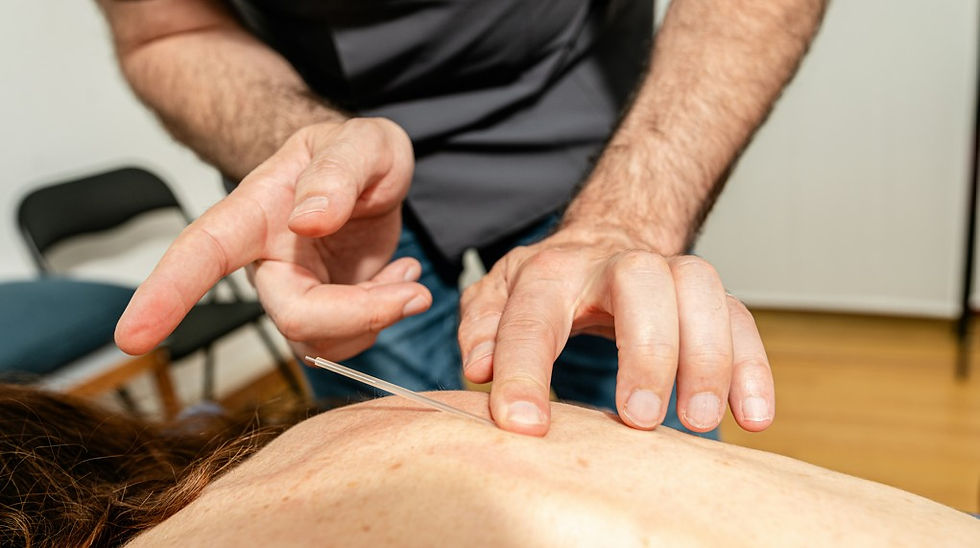
Pain, swelling, stiffness, limited mobility, fatigue, and disrupted sleep are common challenges during recovery. While surgery addresses the underlying medical or structural problem, acupuncture helps manage postoperative symptoms and supports rehabilitation.
As a Doctor of Acupuncture and Herbal Medicine and California-licensed acupuncturist, I regularly treat patients with pain and musculoskeletal conditions at Beyond Acupuncture. Helping patients recover after surgery has become one of the most rewarding parts of my practice.
Here are three ways acupuncture, alongside traditional Chinese herbal medicine, supports the recovery process:
1. Relieving pain and reducing inflammation
After surgery, pain and inflammation are natural responses to tissue injury. Inflammation plays an important role in healing, so the goal isn't simply to eliminate it, but to help the body recover while keeping pain and excessive inflammation under control.
Acupuncture helps manage postoperative pain by influencing the nervous system and activating the body's natural pain-relieving mechanisms.
A 2025 study titled “Efficacy of Acupuncture in Postoperative Pain-Relieving: A Systematic Review and Meta-Analysis,” published in Pain Management Nursing, analyzed 25 studies and found that acupuncture significantly reduced postoperative pain and the amount of pain medication patients required. These findings reinforce the role of acupuncture as a valuable addition to conventional postoperative pain management.
One misconception is that acupuncture needles must be placed directly where it hurts. They don't. A patient recovering from knee surgery, for example, may receive acupuncture at points on the arms, hands, legs, or other areas away from the surgical site. This allows treatment without necessarily placing needles near a healing incision or sensitive surgical area.
What I have seen after total knee replacement
Some of my most memorable postoperative cases have involved patients recovering from total knee replacement surgery.
I have treated patients experiencing significant pain, swelling, stiffness, and difficulty moving comfortably following their procedures. Acupuncture was incorporated alongside the care provided by their orthopedic surgeons and rehabilitation teams.
In my experience, the results have been remarkable. Nearly all of these patients reported substantial pain relief, with noticeable improvements in mobility and comfort. What has been especially rewarding is hearing patients return from orthopedic follow-ups and tell me that their doctors were surprised by how quickly they were recovering.
I remember one patient whose physical therapist reportedly commented that their recovery was among the fastest they had seen in decades of practice.
Of course, surgery, physical therapy, overall health, and individual healing capacity all contribute to recovery. But experiences like these have strengthened my belief that acupuncture is a valuable part of postoperative rehabilitation.
Chinese herbs for pain and swelling
Chinese herbal medicine offers another approach to addressing pain and inflammation. Two well-known herbs are Ru Xiang (frankincense resin) and Mo Yao (myrrh resin).
In traditional Chinese medicine, these herbs are frequently paired to promote blood circulation, relieve pain, reduce swelling, and address traumatic injuries. Modern research has demonstrated anti-inflammatory and pain-relieving activity in compounds found in these resins, while clinical studies have also shown benefits of certain frankincense extracts for conditions such as osteoarthritis.
2. Reducing muscle stiffness and improving mobility
After surgery, pain isn't always the only challenge. Muscle tightness, stiffness, and limited range of motion can make even simple daily activities difficult.
Patients recovering from orthopedic procedures, particularly knee and shoulder surgeries, often experience muscular guarding as the body attempts to protect the injured area. Unfortunately, this protective response can also make movement uncomfortable.
Acupuncture helps relieve pain and discomfort, supporting patients as they participate in physical therapy and gradually regain mobility.
A 2024 study titled “Acupuncture Provides Short-Term Functional Improvements and Pain Relief for Patients After Knee Replacement Surgery: A Systematic Review and Meta-analysis,” published in The Journal of Pain, analyzed 23 studies involving 1,464 patients. Researchers found that acupuncture significantly improved knee range of motion and reduced pain during the early stages of recovery following knee replacement surgery.
These findings are especially meaningful because regaining mobility is one of the most important goals of postoperative rehabilitation.
Chinese herbal medicine also has a long history of addressing muscular tightness and spasms. One important herb is Bai Shao (white peony root), traditionally used to nourish Blood and relax the muscles and tendons. When combined with Zhi Gan Cao (prepared licorice root), it forms the classic formula Shao Yao Gan Cao Tang.
This formula has traditionally been used for muscular tightness, spasms, and cramping. In my practice, I consider both pain relief and functional improvement important goals. It's not simply about helping a patient feel less pain, but also about helping them move more comfortably and regain confidence in their body.
3. Restoring energy and supporting overall recovery
Major surgery takes a considerable toll on the body. Even after the surgical site begins to heal, patients often continue experiencing fatigue, weakness, poor appetite, disrupted sleep, and reduced stamina.
Acupuncture also supports aspects of recovery beyond pain relief and mobility, including digestive function following certain surgical procedures.
A 2024 study titled “Electroacupuncture of ST36 and PC6 for Postoperative Gastrointestinal Recovery: A Systematic Review and Meta-analysis,” published in the Journal of Traditional and Complementary Medicine, analyzed 17 randomized clinical trials. Researchers found that electroacupuncture significantly accelerated the return of bowel function and reduced postoperative nausea and vomiting. These findings demonstrate that acupuncture-based treatments have benefits extending beyond pain management.
This is where the whole-person approach of traditional Chinese medicine becomes especially valuable. In my practice, I look beyond the surgical site and consider how patients are sleeping, eating, digesting food, and regaining their energy.
One important traditional herbal formula is Shi Quan Da Bu Tang, or Ten Complete Great Tonifying Decoction. In Chinese medicine, this formula is traditionally used to nourish Qi and Blood, particularly in patients experiencing fatigue, weakness, poor appetite, and a prolonged sense of depletion.
What I appreciate about Chinese medicine is that recovery isn't just about treating the painful joint or surgical area. It's also about considering the patient's energy, sleep, digestion, appetite, and overall well-being.
When I evaluate a postoperative patient, I want to understand how the entire person is recovering. Are they sleeping well? Is their appetite returning? Are they regaining energy? Are they moving more comfortably?
These are all important parts of the healing process. Chinese herbal medicine is individualized according to each patient's condition and stage of recovery. Because certain herbs interact with medications or are inappropriate immediately after surgery, herbal treatment should be coordinated with the patient's surgical team.
Supporting your recovery at Beyond Acupuncture
At Beyond Acupuncture, located in Laguna Niguel near the borders of Dana Point and Laguna Beach and serving patients throughout Orange County, California, I combine acupuncture and individualized Chinese herbal medicine to help patients manage pain, improve mobility, regain strength, and support their overall recovery. Every patient is different, and my approach is tailored to their symptoms, health history, and stage of healing.
Acupuncture and Chinese herbal medicine are not replacements for appropriate surgical care, prescribed medications, or physical therapy. Rather, they complement conventional treatment as patients work toward regaining their health and independence.
If you're preparing for surgery, recovering from a procedure, or struggling with persistent pain, stiffness, or fatigue after surgery, I invite you to learn more about how acupuncture and Chinese herbal medicine may help.
Visit Beyond Acupuncture to learn more about our treatments and Chinese herbal medicine for pain management and recovery.
"Surgery may repair the structural problem, but recovery is the journey back to movement, strength, energy, confidence, and quality of life."
Follow me on Instagram for more info!
Read more from Andrew Houn
Andrew Houn, Acupuncture for Health and Longevity
Dr. Andrew Houn is a Doctor of Acupuncture and Chinese Herbal Medicine (DACCHM), professor, and founder of the award-winning Beyond Acupuncture in Dana Point, California. His clinic serves Laguna Niguel, Dana Point, and Laguna Beach with acupuncture and Chinese herbal medicine. His specialties include pain management, longevity, fertility support, women's health, digestive disorders, neurological conditions, stress management, and post-surgical recovery. He earned his doctorate from Pacific College of Health and Science and a master's degree from South Baylo University, where he teaches. He also holds degrees from Johns Hopkins University and UC Berkeley, studied at Shanghai Jiao Tong University, and worked at UC Irvine Medical Center.







