Why Your Nervous System is Your Most Powerful Leadership Tool – An Interview with CEO Marcel Daane
Marcel Daane is the CEO of Level V Partners and one of Asia’s most sought-after voices on leadership transformation. A global keynote speaker, executive coach, and published author, Marcel has spent two decades in the rooms where leadership actually gets tested – boardrooms, factory floors, and offsite retreats across Asia, Europe, the Americas, and the Middle East – helping senior leaders perform at their best when the stakes are highest. He is the author of Headstrong Performance and Five Energies of Horrible Bosses (Penguin Random House SEA). His forthcoming book, Leadership Tai-Chi: The Art of Leading with Clarity, Wisdom, and Humanness in the Age of AI, is the definitive guide for executives navigating the leadership demands of the AI era.
What does a karate dojo have to teach a Fortune 500 boardroom? According to Marcel Daane, everything and the answer came to him not in a conference room, but in the stillness of a Tai-Chi energy flow exercise during the COVID lockdown. Marcel had spent years applying neuroscience to leadership and practicing martial arts, but it was the crisis of the pandemic – coaching leaders in real time through the anxiety of leading people they could no longer physically reach – that crystallized his life’s work into a single, coherent idea. In this interview, he shares why the future of leadership is energetic, not behavioral, and what that means for every executive navigating the age of AI.
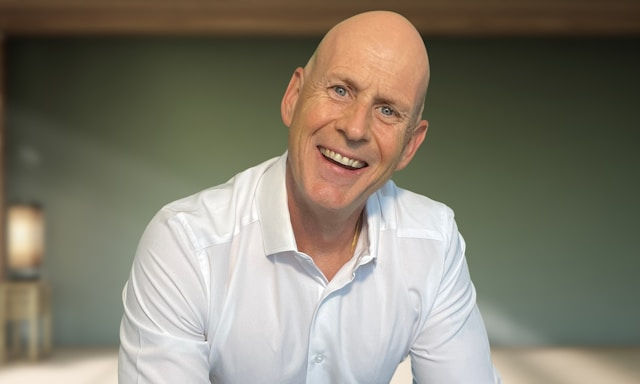
Marcel Daane, Global Keynote Speaker
What first led you to connect neuroscience, martial arts, and leadership into the Five Energies Leadership Method?
The honest answer is that COVID forced the question into the open.
I had already spent years at the intersection of neuroscience and leadership, and martial arts had been a lifelong practice. But it was during the pandemic that everything converged. Suddenly, leaders who had relied on physical presence – the energy of being in the same room, the subtle signals they could read and send through proximity – were leading entirely over Zoom. And they were struggling. Not with the technology. With the connection. How to reach people who were frightened, isolated, and disconnected through a screen.
I found myself coaching leaders on something that had no name yet: how to transmit calm, clarity, and genuine human presence through a video call. How to shift the energy of a team drowning in uncertainty, when you could not walk the floor or sit with someone over coffee. The neuroscience I had been applying to leadership suddenly became urgent in a completely new way.
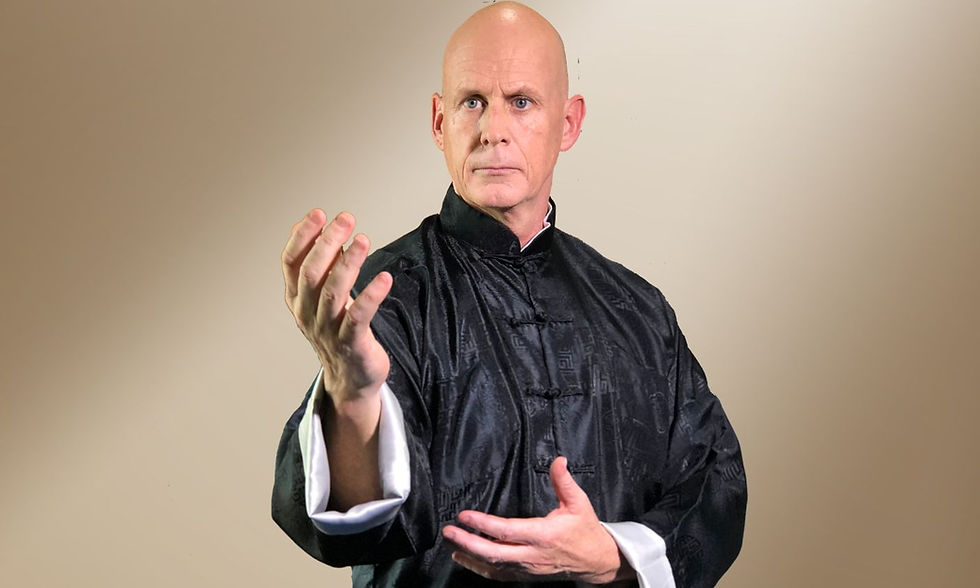
And then there was my own practice. I stepped up my Tai-Chi significantly during that period – not as exercise, but as a tool for managing my own anxiety through the uncertainty. One morning, deep in a meditative energy flow, something clicked. I saw the connection I had been circling for years: that what Tai-Chi teaches about internal energy, flow, and the relationship between your inner state and your outer impact was precisely what leadership required. The metaphor became the method.
That was the moment Leadership Tai-Chi was born – not in a boardroom, but in stillness, during one of the most disruptive periods any of us had experienced. In many ways, the pandemic was the unlikely teacher that brought it all together.
You describe leadership as an energetic experience rather than a behavioral one. What changes when leaders start paying attention to their internal state first?
Almost everything. I have sat in leadership off-sites where the room transformed – not because the agenda changed, not because the data changed, but because the person at the front changed their state. That is a level of leverage most leaders do not know they have.
Most development programs focus on outputs – what to say, how to frame feedback, which style to deploy in which situation. The problem is that outputs are downstream of state. A leader who is unaware of the energy they are bringing into the room cannot read what is actually happening in front of them. At that point, it does not matter how sophisticated the technique or how well-designed the framework – if you cannot read the room, you cannot lead it.
When leaders learn to read their internal state in real time – the quality of their breathing, the tension in their shoulders, the speed of their own thinking – they gain a dashboard that no competency model can replicate. They stop asking “What should I do here?” and start asking “Who am I being right now, and is that who this moment needs?” That single shift, from behavioral management to energetic awareness, produces outcomes I never see from technique-based approaches alone.
How did your martial arts background shape your thinking about presence, awareness, and influence?
In the Five Energies framework, one energy stands apart from all others. Determined Energy moves forward. Inviting Energy seeks perspective. Light Energy brings joy; Heavy Energy brings gravity. But Neutral Energy is the only state in which you can observe without bias – including observing yourself.
Martial arts taught me that through practice, not theory.
The moment I became heavily determined to achieve mastery, my progress slowed. I was gripping the outcome so tightly I stopped seeing what was in front of me. The drive to get better was getting in the way of getting better.
What shifted everything was learning to return to Neutral Energy first – to observe my own patterns without judgment, then shift back to curiosity. To Light and Inviting Energy. To what I call the eternal white belt mindset.
Mastery is a direction, not a destination. I still find new lessons in movements I have practiced ten thousand times – not because the movement changed, but because I keep arriving in Neutral Energy, open to what I have not yet seen. The greatest leaders I know do exactly the same.
Where does traditional leadership development fall short on nervous system regulation?
Traditional development treats the human being as a software problem. You identify the bugs – poor listening, weak strategic thinking, low emotional intelligence and you install new code through workshops and behavioral models. It is a cognitive upgrade approach applied to what is fundamentally a physiological system.
The problem is that under stress, the upgrades do not run. The prefrontal cortex – the seat of every sophisticated leadership behavior we spend millions training – is among the first casualties of a dysregulated nervous system. I have watched leaders who can articulate servant leadership principles with perfect clarity become completely unavailable to those principles the moment genuine pressure arrives. The training evaporates.
What is missing is body-based literacy: the ability to recognize what regulation and dysregulation actually feel like from the inside, and the tools to shift state in real time – not in a quiet coaching session, but in the middle of a board challenge, a team conflict, or an earnings call going sideways. Until development programs address that physiological layer, we are building sophisticated capability on unstable ground. The house looks good until the ground moves.
Why is willpower-driven leadership contributing to burnout?
Because willpower is Determined Energy and like all Five Energies, we only have a finite amount of it available to us at any one time.
Most organizational cultures are designed, unintentionally, to run leaders on Determined Energy alone. Constant connectivity, relentless decision load, the unspoken expectation to project confidence regardless of internal reality – these are not occasional demands. They are the baseline. And they draw continuously from a reservoir that needs genuine restoration, not just redirection.
Willpower-driven leaders operate on chronic override. They feel the fatigue, the doubt, the friction – and they push through, because the culture celebrates that as resilience. But what looks like strength from the outside is often suppression from the inside. And suppression compounds. Eventually, it presents as the bill.
The alternative is energy-intelligent leadership. Not passivity – precision. When leaders learn to consciously shift between energy states, each energy replenishes in real time. Resilience improves. Motivation returns. Performance sustains. The leaders I have seen perform at the highest level for ten, fifteen, twenty years are not the ones with the strongest willpower. They are the ones who stopped running on one energy and learned to move fluidly between all five.
If a leader needs to shift the emotional tone of a conversation quickly, what actually works?
I teach a five-step model I call NICER and the name is intentional, because that is exactly what it produces.
N: Neutral Energy first. Before you do anything else, return to that unbiased observational state. You cannot accurately read a room you are already reacting to.
I: Investigate what energy is actually present. Is the room heavy? Defensive? Anxious? Name it internally before responding to it.
C: Connect and mirror their energy. Not to stay there, but to meet people where they are. Mirroring signals safety and says: I see you.
E: Empathize with their minds. Before you speak, consciously shift yourself into Inviting Energy – the energy of genuine curiosity and perspective-seeking. Then acknowledge what they are experiencing without judgment. This dissolves defensiveness before it calcifies.
R: Reshift energy together. This is the key distinction – you are not telling someone to change their mindset or behavior. You are making a gentle, collective invitation to move. No blame. No analysis. Just – let’s shift this together.
That last step works because it removes the threat. When people do not feel corrected, they become willing to move.
How can a leader quickly recognize which of the Five Energies they’re operating from under pressure?
I call it the most important MBA you will ever need and it has nothing to do with business school.
MBA stands for Mind, Body, Action. Think of it as a continuous scanner running quietly in the background of your consciousness. With practice, it becomes automatic – a built-in early warning system that tells you exactly which energy state you are operating from before it starts operating you.
Mind: What are my thoughts, feelings, and beliefs telling me right now and which energy state do they point to? Racing thoughts and urgency signal Determined or Heavy Energy. Curiosity and openness signal Inviting or Light Energy.
Body: What is my body communicating? Is it tight or relaxed, contracted or expanded, heavy or light? The body does not lie. It registers your energy state before your conscious mind catches up.
Action: What behaviors am I about to take and are they a response or a reaction? Reactive actions almost always signal an unexamined energy state.
The MBA is not a diagnostic you run once. It is a practice of continuous self-observation rooted in Neutral Energy – the same unbiased awareness that martial arts and the eternal white belt mindset train you toward. The leaders who master it stop being surprised by their own behavior. That alone changes everything.
Another option is to do this free Five Energies assessment.
How does the W.I.S.E. philosophy translate into actual leadership decisions?
W.I.S.E. is four questions I invite leaders to run before any consequential decision – not as a checklist, but as a lens.
W: What is in my blind spot? The most dangerous leadership decisions are not made from bad information. They are made from unexamined assumptions. This question alone interrupts autopilot.
I: Invite curiosity. Before deciding, shift into Inviting Energy. Get genuinely interested in what you might be missing. Ask rather than assert.
S: Seek out your most unlikely teachers. The insight you need is often in the room – just not coming from the person you expect. A junior team member, a dissenting voice, an outsider’s perspective – and surrender the need for the answer to come from the right source.
E: Embrace uncertainty with enthusiasm. Not tolerance – enthusiasm. The leaders who navigate complexity best are not the ones who eliminate uncertainty. They are the ones who have learned to move well inside it.
W.I.S.E. does not slow decisions down. It makes them wiser. And in the age of AI, where information is abundant but wisdom is scarce, that distinction is everything.
If leaders could remember just one thing about how their energy affects others, what would you want it to be?
That you are always transmitting.
Your nervous system does not go off the air when you enter a room. It broadcasts continuously – through your breathing rate, your micro-expressions, the speed and quality of your attention. People do not primarily respond to what you say or what your slide deck contains. They respond to the felt sense of who you are in this moment. Research in social neuroscience is unambiguous: we are wired to co-regulate with the people around us. Your anxiety becomes their anxiety. Your calm becomes their calm. Your clarity becomes the ground they stand on – or do not.
This is both humbling and enormously empowering. It means the highest-leverage leadership development work is not external. It is the inner work of cultivating a nervous system that can stay regulated, genuinely curious, and fully present under the exact conditions that would otherwise trigger reactivity and shutdown. That is not soft work. It is the hardest, most consequential work a leader can undertake.
That is what Leadership Tai-Chi is ultimately about: leading from such deep internal alignment that your influence becomes effortless – not because you have perfected the techniques, but because who you are in the room has become the most powerful thing you bring to it.
Read more from Marcel Daane