Why Trying to Fix Yourself May Be Keeping You Stuck – An Interview with Judy Lynn Koons
What if the very things we're doing to become healthier, happier, and more fulfilled are keeping us caught in the patterns we're trying to escape? After more than 30 years of working with thousands of individuals, somatic movement educator, Certified Rolfer®, author, and DAUR founder Judy Lynn began noticing something remarkable: even significant improvements in physical health didn't necessarily free people from familiar cycles of tension, fear, and struggle.
That discovery changed the direction of her work and led to the creation of DAUR, where the focus shifts from fixing ourselves to recognizing the intelligence and freedom already within us. In this conversation, Judy challenges conventional ideas about healing, reveals what may be keeping us stuck, and explores what becomes possible when we stop fighting ourselves and begin living from a different place.
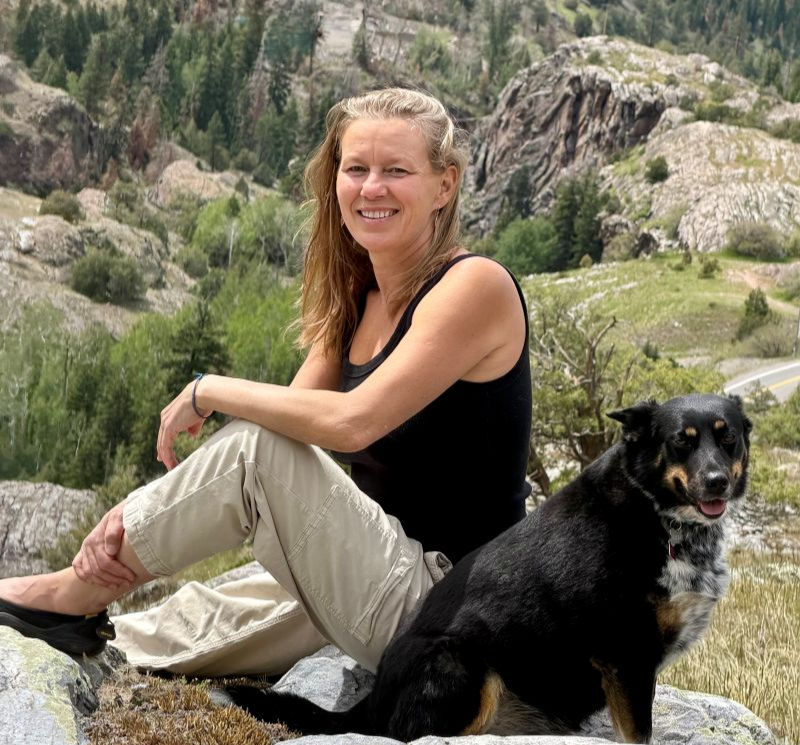
Judy Lynn Koons, Founder of DAUR-Embodied Freedom Advocate
What inspired you to create DAUR, and what does embodied freedom mean beyond the idea of simply feeling better?
For more than 30 years, I've worked with people reclaiming their health, many of whom had been struggling with chronic conditions. We could make tremendous progress through nutrition and physical care, yet something often remained. Symptoms persisted, familiar patterns returned, and people continued struggling despite doing everything they believed was right.
I returned to the golden threads of my Rolfing® and somatic movement education. I began recognizing how accumulated tension, beliefs, emotions, and protective patterns could influence our entire experience of life.
I incorporated somatic movement, breath, and guided inquiry and witnessed people experiencing greater ease, less effort, and a different relationship with themselves. DAUR was born from that recognition.
We're not simply physical bodies that need fixing. We're wholistic beings with an extraordinary capacity to reorganize when we stop interfering with our natural design.
Embodied freedom? It's not an intellectual concept. It's something you live. It's being able to meet life without constantly going to war with what's happening. That doesn't mean you have to accept circumstances you want to change. It means you can change them without fighting yourself.
Feeling better is a beautiful byproduct. Freedom is recognizing that you can return to your aligned center regardless of what life presents.
After more than 30 years of working with the human body, what have you discovered about why people continue repeating patterns they consciously want to change?
After working with thousands of people, I've found that we often focus on changing the behavior without recognizing what's underneath it. Fear of failure, fear of success, fear of being unsafe, and beliefs we've carried for decades can influence how we respond to life. Then we create what I call overlays: strategies, identities, and ways of managing ourselves so we don't have to experience what's underneath.
Imagine carrying a backpack filled with rocks. Each rock represents something you've accumulated: a belief, a fear, or a meaning you've attached to an experience.
Most approaches teach us how to rearrange those rocks so they're easier to carry. But the backpack is still just as heavy! At DAUR, we're interested in taking the rocks out.
When we become present with what we've been carrying, we can begin recognizing what no longer belongs to us. We don't have to keep organizing our lives around it.
Here's what I've witnessed: as those patterns loosen, people often find themselves responding differently without having to discipline themselves and force change. Freedom isn't becoming better at carrying the weight. It's discovering you don't have to carry it.
How has your experience as a somatic movement educator and Certified Rolfer® shaped your understanding of the body's intelligence and the development of the DAUR Freedom Process?
One of the most significant threads connecting my somatic movement education and Rolfing® training is breath. In the Rolfing Ten Series, the first session focuses on freeing the breath. In somatic movement, breath is also where we begin.
There's a reason for that. Breathing influences how we move, organize ourselves, and experience our bodies. When we begin restoring natural movement through the ribs and sides of the body, we create more possibilities for the whole system to respond.
Over time, I recognized that this same foundation applied beyond physical movement as well. When people stopped fighting their experience and became present with what they were actually feeling, something could shift.
My colleague Jenny Campbell helped me recognize that I was already guiding people through a process I hadn't formally named. No matter what it is called, it still belongs to everyone because it is how we are designed.
That became the DAUR Freedom Process: Find, Feel, Free, Allow. It's a simple framework that brings attention back to direct experience, allowing people to recognize and respond to patterns rather than continually managing them.
I don't believe we've invented something new about human nature. We've simply brought language and structure to something inherently available. We're not teaching the body how to be intelligent. We're learning to stop overriding the intelligence already there.
Why can the endless pursuit of healing, fixing, and personal improvement become the very thing that keeps people from experiencing freedom?
Because the pursuit itself can become another way of telling ourselves something is wrong with us. We start looking outside ourselves for the next answer, the next practitioner, the next protocol, or the next breakthrough.
Sometimes those resources are incredibly valuable. But when we're continually searching for something to complete us, we may be reinforcing the belief that we're incomplete. We become skilled at managing ourselves without ever questioning why we believe we need so much managing.
At DAUR, we invite a different question. Instead of asking, “What else do I need to do to become whole?” ask, “What's getting in the way of expressing the wholeness that's already here?”
That's a very different starting point. I believe each of us has an internal design, an aligned center, and our own way of expressing life. Nobody else can hand us those personal instructions.
Guidance can be helpful, but ultimately we have to experience what's true for ourselves. That doesn't mean ignoring health concerns or refusing support. It means recognizing the difference between receiving care and making ourselves a lifelong problem to solve.
My invitation is simple: stop making yourself an endless project. There's a life waiting to be lived.
How do we recognize the difference between guidance that empowers us and guidance that gradually disconnects us from our own knowing?
I think one of the most important distinctions is the difference between teaching and evoking. Teaching has its place. Sometimes we need information, professional expertise, or practical instruction. At DAUR, for example, we help people recognize how they're breathing and moving.
But the deeper work is about evoking what's already within someone. Rather than telling people what their experience means or what they should do, we ask questions that invite them to discover their own answers.
What are you noticing? Where do you feel that? What changes when you become present with it? What feels true for you?
A skilled guide becomes a mirror rather than an authority over another person's life. We encourage people to notice their responses. Does the guidance create more clarity, discernment, and capacity? Or are they becoming increasingly dependent on someone else to interpret their experience?
Discomfort isn't necessarily a sign that guidance is wrong. Most often, meeting uncomfortable patterns is part of becoming free. But ultimately, empowering guidance returns authority to the individual. I often say, “Don't take my word for it. Prove it to yourself.”
The DAUR Freedom Process follows four movements: Find, Feel, Free, Allow. Can you walk us through how someone might experience this when caught in an old pattern, fear, or overwhelm?
Let's say you're feeling overwhelmed. Your mind is racing, your shoulders are tight, and you're convinced there's too much to do.
Rather than immediately trying to fix the situation, begin with “Find.” Where is the overwhelm showing up in your body? Perhaps there's pressure in your chest or tension in your stomach. Just notice what's actually happening.
Then “Feel.” Allow yourself to experience those sensations without immediately going into a story, judging, analyzing, or assigning meaning. It isn't about getting rid of the discomfort. Sit with it. Bring your attention to it.
As you become present, you may or may not recognize a belief underneath the overwhelm: “I have to do everything myself” or “If I stop, everything will fall apart.”
“Free.” Bring gentle breath into the sides of your body and notice what changes. It's about allowing what you've been holding to loosen. You don't have to force a release. You're creating space for energy to move and homeostasis to happen.
Then “Allow.” Notice what remains when you're no longer organizing yourself around that pattern. Instead, the body's intelligence gets to do the reorganizing, returning it to an optimal state. Perhaps there's clarity, a different choice, or simply more room to breathe.
The process isn't about controlling your experience or guaranteeing that discomfort disappears. It's about becoming available to yourself again.
For someone who has spent years overriding their body's signals, what is one simple way they can begin restoring trust in their body's intelligence?
Start treating tension as information rather than immediately assuming something is wrong with you. “Let tension become your temple bell.”
For the next day or two, every time you notice tension, use it as an invitation to pause. Maybe your jaw tightens during a conversation. Perhaps your shoulders rise when you open an email. Or your stomach contracts when you're thinking about money.
Instead of immediately trying to change it, notice where the tension is. Place your hands on the sides of your ribs if that helps. Breathe gently through your nose, allowing movement into the sides of your body without forcing it.
Stay present for a few minutes, then check in again. Has the sensation changed? Is there more space? Is something else asking for your attention?
There doesn't have to be an immediate release. You're beginning a conversation with your body. That simple feedback loop helps you recognize the information your body is continually offering.
Of course, persistent or unexplained physical symptoms deserve appropriate medical attention. But ordinary moments of tension can also become opportunities for greater awareness.
Your body isn't the enemy. It's been communicating with you all along.
In your book Spellbound No More, you explore the beliefs and conditioning that shape our experience of life. What belief have you personally had to question most deeply, and what changed when you did?
One of the most significant beliefs I've had to question was that people could let me down. For a long time, I experienced that pattern repeatedly. Different people, different circumstances, yet somehow the same familiar experience.
Eventually, I became willing to look at my own participation in it. At DAUR, we sometimes say, “Judge their ass off. You're judging anyway, and then you will have made it obvious enough to bring it home. That is where you can shift it.”
It's a playful but powerful reminder to stop making someone else responsible for what's happening within us. When I brought that pattern home, I recognized how deeply I was carrying the expectation of being let down. It influenced what I anticipated, how I interpreted circumstances, and how I engaged with others.
That recognition wasn't about excusing anyone else's behavior or blaming myself for their choices. It was about discovering where I still had the freedom to change my own experience.
As I stopped organizing myself around that familiar expectation, my relationships began to feel different. I no longer needed to approach people through the lens of anticipated disappointment.
Freedom wasn't getting everyone else to behave differently. It was recognizing what I was bringing into the relationship and becoming free to respond differently.
What would you most want someone to recognize about themselves before they begin another healing journey, personal development program, or search for answers?
I'd want them to recognize that what they're looking for may not be missing. We spend enormous amounts of time searching outside ourselves for someone to tell us who we are, what we should do, or how we should live.
Along the way, we collect beliefs, identities, expectations, and instructions from parents, teachers, practitioners, culture, and countless other influences. Some serve us beautifully. Others become burdens we don't even recognize we're carrying. Eventually, those accumulated patterns can make it difficult to recognize our own internal guidance.
At DAUR, we're not interested in giving people another identity to adopt. We're interested in helping them recognize what they've accumulated so they can experience what's underneath.
That doesn't mean rejecting teachers, knowledge, or support. It means no longer handing over the authority to know yourself.
We have a phrase: “Follow your feet.” It's an invitation to listen to your own internal direction rather than constantly trying to figure everything out through mental effort.
Before beginning another journey of personal improvement, consider this: What if you aren't here to become someone else? What if you're here to finally live as yourself?
You often speak about returning to our original design. What does that actually mean, and how might our lives change if we stopped organizing ourselves around what we believe is wrong with us?
When I speak about original design, I'm referring to the living wisdom inherent in each of us. Our bodies have extraordinary capacities to breathe, move, adapt, and respond. Yet over time, we accumulate beliefs and protective patterns that influence how we experience ourselves and the world.
We begin organizing our lives around what we fear, what we believe is missing, or what we've decided needs fixing. Eventually, those patterns can feel more familiar than our natural way of being.
Returning to original design isn't about becoming some idealized version of ourselves. It's about recognizing what belongs to us innately and what we've accumulated along the way.
I don't believe freedom looks identical for everyone. Each person has their own expression, direction, and way of participating in life.
When we stop organizing ourselves around our perceived limitations, we have more energy available for living. We can make decisions with greater clarity, relate without so much defensiveness, and respond to life with less effort.
Original design isn't a destination somewhere in the future. It's the intelligence of life already expressing itself through us, waiting to be recognized.
We live in a culture increasingly focused on optimizing everything, from our health and productivity to our relationships. What if the next evolution of human potential isn't about becoming more, but allowing more of who we already are?
I think that's exactly why we're here. Imagine carrying a backpack filled with 300 pounds of rocks. You'd probably be exhausted, irritable, and constantly focused on managing the weight.
Now imagine setting that backpack down. How much energy would suddenly become available for living, creating, relating, and enjoying your life?
That's how I see much of our human experience. We're carrying an enormous accumulation of beliefs, fears, judgments, and internal conflicts, often without recognizing how much energy they consume.
Some of the most significant conflicts are subtle. We give our power away in small ways, look outside ourselves for permission, or fight circumstances we could meet differently.
I value contrast. Sometimes experiencing struggle helps us recognize what freedom feels like. But I don't believe we need decades of suffering to earn the right to live freely.
What becomes possible when we're no longer constantly at war with ourselves? I believe there's an extraordinary range of human potential available beyond what most of us currently experience.
Perhaps our next evolution isn't about becoming more. It's about becoming available to more of life.
DAUR is becoming more than a collection of programs. What is your larger vision for bringing embodied freedom into leadership, education, business, relationships, and communities?
I often imagine a network of lighthouses around the world. Each lighthouse represents individuals and communities who are living from greater freedom and helping others find their way home to themselves. That's the larger vision for DAUR.
Imagine what education might look like if we supported children in recognizing their internal guidance alongside developing knowledge and critical thinking. Or business environments where people could create and collaborate without so much fear, competition, and struggle. Imagine relationships where responsibility replaces blame and people no longer need to abandon themselves to belong.
I see the Freedom Process as complementary to many approaches because it invites people to experience what they know rather than simply accumulate more information. My vision includes facilitators and practitioners who support others without creating dependency, communities that collaborate rather than compete, and individuals who recognize their own capacity to choose.
I don't believe we need to abandon modern technology or knowledge. We can use those resources with greater awareness and discernment.
When individuals become more available to themselves, they also become more available to one another. My vision is a world where freedom isn't something we're endlessly pursuing. It's something we're living, together.
Closing reflection: If there were nothing left to fix about yourself, what might become possible in your life?
I'd invite you to make that question personal. Don't worry about changing the whole world for a moment. Just look at your own life.
If you weren't spending so much energy managing yourself, questioning yourself, or trying to become someone you believe you should be, what would you have room for? Would you create more? Rest more? Love more openly? Begin something you've been postponing? Perhaps you'd simply enjoy being alive without continually measuring your progress.
That's the freedom I'm interested in. Not an abstract concept. Not another achievement. The freedom to actually live. When one person begins living with less internal conflict, that changes how they participate in their relationships, families, workplaces, and communities.
That's how I see DAUR growing: one person recognizing their own freedom, then carrying that expression into the world. You don't have to wait until you've fixed everything to begin living.
The question isn't, “Who do you need to become?” It's, “What becomes possible when you finally allow yourself to live?” What's possible?
Read more from Judy Lynn Koons