

Why Global Conflicts Still Moves the Markets
Written by Danijella Dragas, CEO
The Bear Stearns Investment Banking firm employed Miss Dragas for over 18 years. She worked in their offices in London, São Paulo, Beijing, New York, and Irvine. Her specialty was asset management, capital markets/investment banking during her final four years at Bear Stearns. Miss Dragas was one of the original team members who introduced Bear Stearns mortgages to the banking industry in the residential wholesale market.

Geopolitical conflict has always extended beyond borders and battlefields, but in today’s interconnected system, its impact is felt almost instantly across global financial markets. This article explores how war, energy, particularly oil, and capital flows remain deeply intertwined, shaping volatility, investment behavior, and long-term economic strategy.
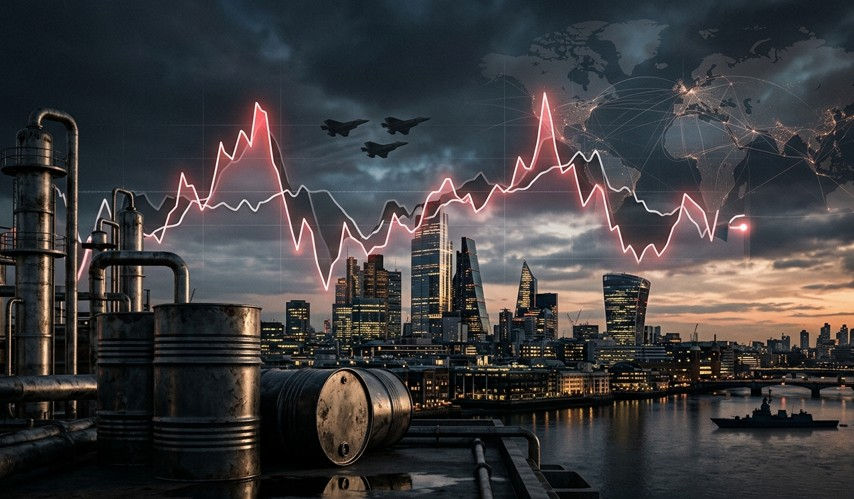
Finance, war, and oil: Why global conflict still moves the markets
In today’s fast moving news cycle, it’s easy to treat geopolitics as background noise, something that belongs in headlines but not necessarily in financial planning. That’s a mistake. War, energy supply, and capital flows remain tightly interconnected, and understanding that relationship is essential for anyone who wants to stay ahead of market shifts rather than react to them. At the center of this dynamic sits oil.
The old engine that still drives everything
Despite the global push toward renewables, oil continues to underpin the global economy. It fuels transportation, manufacturing, and critically, military operations. When conflict erupts, demand patterns shift immediately. Armies mobilize, supply chains reroute, and governments prioritize energy security over efficiency or sustainability.
This creates a paradox. War can both disrupt supply and increase demand at the same time. When major oil producing regions are involved in conflict, markets price in risk almost instantly. Even the possibility of disruption such as blocked shipping lanes, damaged infrastructure, and sanctions can drive prices upward. Traders are not just reacting to what is happening. They are betting on what might happen next.
Markets don’t wait for certainty
Financial markets are forward looking by design. Oil prices, currency valuations, and even equity markets respond to anticipated outcomes, not confirmed ones. That’s why geopolitical tension often leads to volatility long before any physical shortage occurs.
For investors, this creates both risk and opportunity. Energy stocks may surge on expected price increases, airlines and logistics companies often face margin pressure, defense sectors typically see increased attention, emerging markets dependent on fuel imports can experience currency stress. Understanding these patterns allows investors to position strategically rather than emotionally.
The weaponization of finance
Modern conflict is no longer fought solely with weapons, it is also fought with capital. Sanctions, asset freezes, and trade restrictions have become primary tools of geopolitical strategy. These financial measures can isolate entire economies overnight, reshaping global trade flows and forcing rapid realignment of alliances.
For example:
Countries cut off from traditional banking systems develop alternative payment networks
Energy exports are rerouted, often at discounted rates
New trading blocs emerge, challenging established financial dominance
This financial warfare has long term consequences that outlast the conflicts themselves.
Oil, power, and political leverage
Energy independence is no longer just an economic goal, it’s a strategic one. Countries with secure domestic energy supplies have greater flexibility in foreign policy, while those reliant on imports are more vulnerable to external pressure.
This imbalance shapes negotiations, alliances, and even military decisions. In times of conflict, oil producing nations can gain disproportionate influence, while energy importing countries must navigate rising costs and potential shortages. This dynamic reinforces the importance of diversification not just in investment portfolios, but in national energy strategies.
What this means for investors
Ignoring geopolitics is no longer an option. The intersection of war and energy markets affects everything from inflation to interest rates.
To stay resilient, monitor geopolitical developments alongside economic indicators, diversify across sectors and regions, pay attention to energy exposure within your portfolio, be cautious of short term reactions driven by headlines. Most importantly, recognize that volatility is not an anomaly. It is a feature of the current global landscape.
The bigger picture
We are entering a period where financial markets, political power, and resource control are more intertwined than they have been in decades. Oil remains a central pillar of that relationship, even as the world attempts to transition away from it. War accelerates change, but it also exposes how dependent we still are on legacy systems.
For readers, investors, and decision makers alike, the takeaway is clear. Understanding the link between finance, conflict, and energy is no longer optional. It’s essential. Because in today’s world, the battlefield doesn’t just shape borders, it shapes markets.
Read more from Danijella Dragas
Danijella Dragas, CEO Born and raised in England. She earned a BS in Economics/International Trade and Banking from the prestigious University of London. The Bear Stearns Investment Banking firm employed Miss Dragas for over 18 years. She worked in their offices in London, São Paulo, Beijing, New York, and Irvine. Her specialty was asset management, capital markets/investment banking during her final four years at Bear Stearns. Miss Dragas was one of the original team members who introduced Bear Stearns mortgages to the banking industry in the residential wholesale market. She has been in residential and commercial lending for 36 years. Her focus has been on construction finance, asset repositioning, fintech, and the blockchain market. In addition, numerous prestigious commercial projects on an international level. Miss Dragas has also worked in multi-sector business finance, corporate sponsorships, hospitality, clean energy, trade programs, and pre-IPO.


