Why Dancers Need More Than Just Technique
Written by Amy Miller, Dance Wellness Mentor
Amy Miller is a renowned leader in the dance community. As a celebrated judge, mentor, and award-winning choreographer, Amy’s expertise drives success for instructors, dancers, and events alike, all while bringing wellness to a deserving community!

If you've hit a plateau and can't figure out why, this is probably it. Every dancer knows the classic "triple threat", sing, dance, act. But there's another triple threat that rarely gets talked about, and it's the one quietly determining whether you break through a plateau or burn out trying. I call it technique, confidence, and wellness, and here's the truth most training programs won't tell you, neglect even one of these, and the other two can only take you so far.
Technique
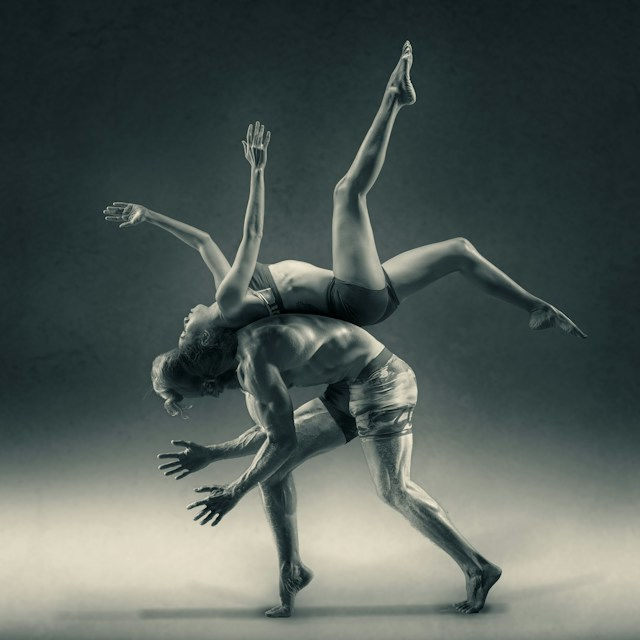
This is the one everyone obsesses over. It's easy to see why. Technique is tangible. You can measure a turn, count and land a leap, film a combination, and pick apart every angle. But technique alone is just the execution of movement, refined over thousands of repetitions. It's necessary, but it's not the whole story.
Dancers who chase technique in isolation often find themselves stuck, drilling the same skill for months with no breakthrough, wondering why more hours in the studio aren't translating to more progress.
Confidence
The piece most dancers assume you either have or you don't. Wrong.
Confidence is trainable in exactly the same way you train a pointed foot or a flexible spine. Start seeing it as a muscle, one that gets stronger with intentional repetition, not luck or personality. A dancer with beautiful technique but no confidence will hold back on stage, second-guess a turn combination, or shrink instead of performing.
Confidence is what turns correct movement into captivating movement.
Wellness
Here is the pillar that gets sacrificed first, and it's exactly backward. In a culture that glorifies pushing through pain, skipping rest, and training until exhaustion, wellness is treated as a luxury instead of a foundation.
But wellness isn't about slowing down your progress. It's about making all your progress sustainable. Without it, you are not getting stronger as a dancer. You are becoming burnt out, getting injured, and walking away from something you used to love.
If you’re not feeling it quite yet and are not making this a priority, all of these negative outcomes may seem to come out of nowhere, like the music cutting off or the stage lights suddenly going out. We have to start preparing and protecting our bodies and minds in smarter ways.
Assess where you are, and let’s keep moving toward your next level
Here's the real shift, technique, confidence, and wellness aren't separate lanes. They're interconnected. Pull on one, and you feel it in the others.
Weak wellness undermines technique: A body and mind that are fatigued, under-recovered, or running on empty can't execute the movement they're capable of on paper. Forget the "on paper" part. You truly are 'not' at your full capacity or ability. You can drill a turn sequence for months, but if your body and mind aren’t recovering between sessions, you're training on top of exhaustion. Exhaustion is the furthest thing from helping you sharpen your technique. It only does the opposite, eroding and depleting what you’ve been working so hard on.
Low confidence sabotages performances: Low confidence sabotages your performance, no matter how clean the choreography is. The audience can tell. No matter who you’re performing in front of, if you hesitate before a turn, hold back on a leap, or perform like you're apologizing for taking up space, this screams that you’re not ready. Confidence isn't a bonus layer on top of skill. In my opinion, it is a skill that we ignore. Confidence is actually what allows technique to be seen and appreciated!
Technique without confidence or wellness is a house built on sand: Your technique might hold up for a while, but it's not built to last if you’re 'only' focused on that. The dancers who keep growing and improving, instead of plateauing or burning out, are the ones who train all three together, on purpose. They grasp that these three pillars are not separate boxes to check off while ignoring the others, but parts of one connected system to practice and train together.
Of the three, technique, confidence, and wellness, where are you weakest right now?
That's usually not the pillar to ignore. It's the one holding everything else back.
That's the work I do at A Healthy Wealthy Thing, helping dancers train technique, confidence, and wellness together instead of treating one as optional. If this article struck a nerve, chances are you already know which pillar you've been neglecting.
See you in my DMs (direct messages) on Instagram, @ahealthywealthything, for tips on training all three. If you're ready to go further, head to ahealthywealthything.org to see how we can work together, from courses to cue card decks to one-on-one mentorship.
Your technique got you this far. Confidence and wellness are what take you further.
Follow me on Instagram for more info!
Read more from Amy Miller
Amy Miller, Dance Wellness Mentor
Amy Miller’s journey from a young protégé to a professional performer has given her a deep, firsthand understanding of the physical and mental demands of the dance world. Recognizing that burnout is a silent epidemic in the industry, she has transitioned her focus toward helping dancers find the wellness answers they’ve been searching for. By bridging the gap between elite performance and biological science, Amy provides relatable, actionable strategies to help performers reclaim their vitality. Whether through mastering "limbic friction" with small habit shifts or optimizing recovery with targeted supplementation, her mission is to show that when we feel better, we perform and live better.