Who Holds You Up When Everyone Leans on You?
Tonya R. Monroe is an author, speaker, life coach, and educational consultant passionate about helping people heal, grow, and move forward. Through faith, practical tools, and honest conversations, she empowers others to turn life’s challenges into stepping stones toward healing, purpose, and freedom.

Being called “the strong one” can feel like a compliment. But it can leave you feeling like you are not allowed to need help. You’re the person everyone calls. You listen, solve problems, and show up even when you have too much on your plate. But when you need help, you hold back. You are so used to being there for others that saying “I can’t today” feels wrong. I know that feeling. For years, I said yes when I needed rest. I stayed quiet when I needed to speak up. I had to let go of a lie I had believed for too long. I thought I had to keep giving to earn love.

When being the one everyone counts on starts to hurt
Sometimes the hardest part of being the strong one is figuring out how to tell people you are tired. People know they can count on you. But do they know when you need someone to count on? Have you told them, or have you gotten so used to saying “I’m fine” that they believe you?
For years, I thought showing up for everyone else would fill the empty places inside me. If I helped enough, gave enough, or did enough, maybe I would feel loved. Instead, I looked to other people to tell me I was enough. Little by little, I lost sight of myself.
Research spotlight – The pressure to stay strong: In a study of 38 African American women, those who felt more pressure to help others or appear strong reported more stress. The study did not establish whether that pressure caused the stress.[1]
You can care deeply about people and still become worn down by the way you are caring for them. In a Psychology Today article, Dr. Melanie A. McNally writes about people who take on too much for others. She says this can leave you tired, upset, and out of touch with what you need.[2]
Maybe this sounds like you. You say yes to a favor. Later, you feel upset because you needed that time for yourself. You wish someone would help you, but when they ask how you are, you say, “I’m fine.” Then, when you get a quiet hour, you feel bad for not doing more.
That upset feeling is worth a closer look. It may be a sign that someone expects too much of you. Or maybe you have not said what you need. Before you judge yourself, ask yourself, “What do I keep putting off?”
Your health deserves attention, too
Taking on too much can hurt more than your mood. In a small 2024 study of 38 African American women, those who felt more pressure to help others or appear strong reported more stress. The study did not establish whether that pressure increases the risk of stroke, and it found no statistically significant link between that pressure and common risk factors for heart disease and stroke.[1]
The American Heart Association (2024) says that stress that lasts a long time may raise blood pressure. High blood pressure can raise the risk of a heart attack or stroke.[3]
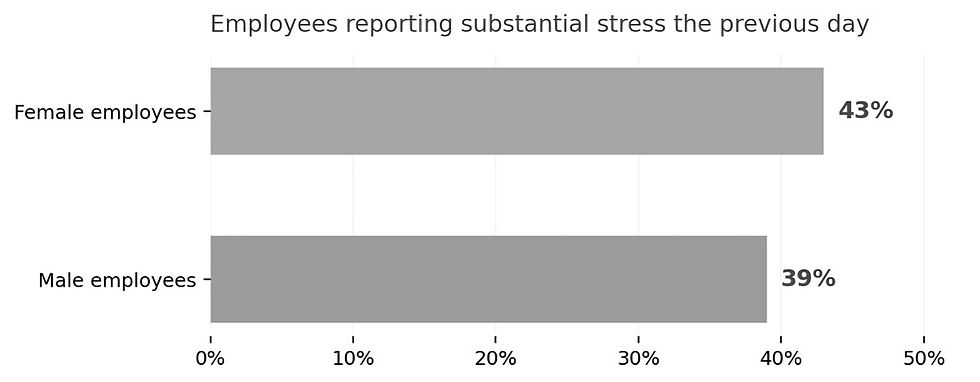
Gallup data – Daily stress among employees: In Gallup’s 2025 global survey, 43% of women and 39% of men reported feeling stressed for much of the previous day. The figures reflect stress among employees overall.[4]
You do not need to blame yourself for being sick. But you do need to take care of yourself. Ask for help. Make time to rest. Keep your appointments with your doctor and talk with them about your blood pressure and your health.
Saying no when you need to is one way to care for yourself. It does not take the place of medical care. You do not have to wait until you are completely worn out to make a change.
5 ways you can make room for yourself
Learning to make room for myself took practice. You can begin making room for yourself, too. Here are five steps you can try.
Pause before you say yes: You do not have to answer every request right away. Check your time, your energy, and what you already need to do.
Try saying, “Let me check what I can manage and get back to you tomorrow.” Then ask yourself, “Do I have room for this, or am I afraid to disappoint someone?” Take that pause. Then give an answer you can live with.
Ask what one more yes will cost you: Before agreeing, ask yourself, “What would I have to give up to do this?” At times, you may be glad to help. Other times, you may give up rest or family time, or break a promise you made to yourself.
What you need matters, too. Just because you can fit something into your day does not mean you have the energy to take it on.
Say what you can and cannot do: You can care about someone and still say, “I can help for thirty minutes, but I need to leave at two.” You can also say, “I’m not available this weekend,” or “I can listen, but I’m not able to lend money.”
You do not need a courtroom defense for every boundary. Say what needs to be said, and let your answer stand. If you already said you would help, speak up early and talk about what needs to change.
Do not let guilt make the choice for you: After you set a limit, you may feel bad. Before you take back your answer, ask yourself, “Did I break a promise or do something wrong? Or do I just feel bad because someone may be upset?”
Those are two different things. If you did something wrong, make it right. If you set a fair limit, you can stick with it even if someone does not like it. You may need time to get comfortable with a different way of responding. Give yourself room to practice.
Ask for support: You do not have to wait until you are completely worn out. Choose someone you trust and tell them what would help. You might ask, “Could you handle dinner tonight? I need a break.” You could also say, “Can you listen for a few minutes? I don’t need advice right now,” or “Could we split up these tasks? I have too much on my plate.”
Asking does not mean you will get the help you want. But it lets people know what you need. It also shows you who you can count on.
Keeping your limits takes honesty and practice
Setting a limit is the first step. The next step is sticking to it, even when you feel pulled to change your mind.
You say you need a night to rest, then agree to one more favor. You say you cannot lend money, then start moving your own bills around. Soon, “just this once” happens all the time.
At that point, ask yourself, “Do I truly have more time and energy now? Or is it just hard for me to say no?” Be honest about the answer without beating yourself up. Are you choosing to help because you have the time and energy? Or are you hoping another yes will keep someone from being upset with you?
Good limits can change when life changes. Just ask yourself why you want to bend one, what it will cost you, and whether that cost is okay with you. You can also repeat your limit by saying, “I understand you need help. I’m still not available tonight.”
It takes practice to stick with a limit. If you fall back into an old habit, catch it and try again. You can say, “I said yes too fast. I need to talk about what I can really do.” Being honest with yourself helps you make promises you can keep without putting yourself last every time.
Caring for yourself does not have to come with a price tag
Once you make room for yourself, what do you do with that space? You do not have to take a trip, buy fancy bath products, or spend money you need for bills. Those things can be nice. But caring for yourself can cost little or nothing.
I challenged myself to do one thing for seven days. Each day, I write down the question “What do I need today?” and answer it honestly. Some days, the answer may be rest. Other days, it may be physical healing, peace, or someone to talk to. Try it for seven days. Give yourself permission to name what you need without feeling guilty about it.
Some days, you need quiet. Other days, you may need a walk, a meal, a friend, or help with a hard task. Here are a few ways you can respond.
Take a quiet pause. Sit for five minutes without answering messages or finding another task. You can pray, reflect, or simply enjoy a moment without being available.
Move in a way that works for you. Take a short walk, stretch, or dance to a song you love. Keep any advice your doctor has given you in mind.
Make room for basic needs. Eat the lunch you keep putting off, get a drink of water, or begin winding down for bed instead of squeezing in another favor.
Put your thoughts somewhere. Use a notebook or your phone to finish any of these sentences. “Today I feel” “Today I need” “One thing I can put down is”
Talk with someone who helps you feel heard. Call a person you trust. You do not have to be the one who fixes every problem.
Do something you enjoy. Read a library book, listen to music, sit outside, or return to a hobby you already have supplies for. Enjoyment deserves room in your life, too.
Even free things take time. Your time may already be tight. Start with what you can do. Ask someone to take on a task so you can have a few minutes to yourself.
Caring for yourself can also mean going to the doctor or asking a trained person for help. Small steps can help you feel better, along with the care you may need.
Pay attention to what you need. Then do one small thing that helps. You do not have to finish everything on everyone else’s list before you care for yourself.
Your needs belong in the conversation
My faith has helped me learn that I can love others while being honest about my own limits. That lesson is something you can make room for in your life, too.
You can love someone and have boundaries. You can be dependable and still need rest. You can care for others while allowing yourself to receive care.
Start with one moment this week. Pause before you say yes. Stick to one fair limit. Do one small thing for a need you have put off. You matter, too.
You deserve care while you are caring for others. You don’t have to lose yourself to be loved.
Read more from Tonya R. Monroe
Tonya R. Monroe, Author, Speaker, Life Coach & Educator
T. R. Monroe is an author, speaker, life coach, and educational consultant who helps people move toward healing and freedom. Through faith, honest conversations, and practical tools, she focuses on emotional wellness, boundaries, resilience, and personal growth. She is the creator of the Rise, Free, Feel Collection and believes healing doesn’t require perfection, just the courage to take the next step. Drawing on more than 20 years as an educator, she brings a practical, relatable perspective to her work with women.
References:
[1] Kyalwazi, A. N., Woods-Giscombe, C. L., Johnson, M. P., Jones, C., Hayes, S. N., Cooper, L. A., Patten, C. A., & Brewer, L. C. (2024). Associations Between the Superwoman Schema, Stress, and Cardiovascular Health Among African-American Women. Annals of Behavioral Medicine, 58(12), pp. 863 to 868. Journal article
[2] McNally, M. A. (2025, updated May 14). The Cost of Always Being the Strong One. Psychology Today
[3] American Heart Association. (2024, February 8). Stress and Heart Health
[4] Gallup. (2026). State of the Global Workplace. 2026 Global Data Summary (2025 survey data)