

When Leadership Systems Fail the People They Serve – Exclusive Interview with Nick Reich
Nick Reich is a Future of Leadership Strategist, keynote speaker, and author of Every Player Is Bigger Than the Program, a book built on a simple but uncommon belief, the people who lead us. Parents, coaches, teachers, and managers can build us or break us, and that impact lasts a lifetime.
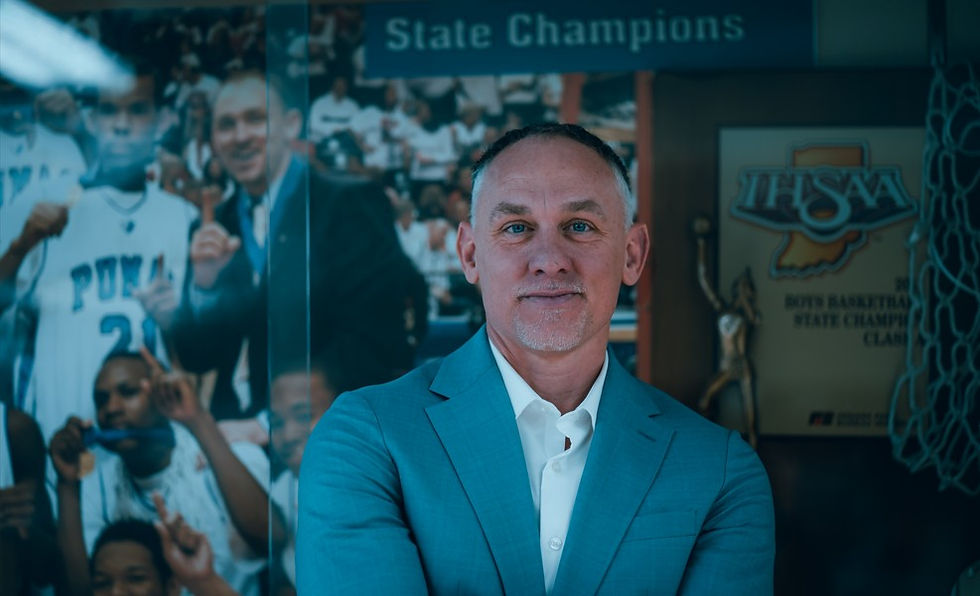
Nick Reich, Future of Leadership Strategist
In this interview, Nick draws on his experience coaching a state championship basketball team with no gym and no budget, and two decades of developing leaders across industries, to challenge the way most organizations think about culture, performance, and what it actually means to lead people well.
What first made you realize that leadership systems often fail the very people they're meant to support?
The people who lead us, parents, coaches, teachers, managers, can build us or break us. That impact often lasts a lifetime. Most leadership systems are designed around output. They were never designed around people. That gap is where I do my work.
There was a moment early in my career when I looked around and realized the systems we had built were designed to protect the institution, not develop the people inside it. Leaders were promoted because they were technically excellent, then handed a people-management job with no real preparation for the relational part of that work. When things went wrong, the system blamed the employee.
I started asking a different question. What if the system itself is the problem? What if we've built organizations full of leaders who were never taught to actually see the people in front of them? Most importantly, what impact would it have on our people and our businesses to focus on people-first?
How did building a state championship basketball program shape the way you develop leaders today?
We won a state championship with eight players, no gym, and no budget at a small charter school in Indianapolis. What I learned had nothing to do with basketball.
What built that team was knowing every player as a person, not just as an athlete. Their home lives, their fears, their potential, what they needed from me that day. When you lead with connection first and see each person as a unique human, people stop performing for the scoreboard and start performing for each other.
I also learned that excellence isn't about the most gifted person in the room. It's about what you build together when everyone knows the standard, trusts the person next to them, and believes the work matters. That's still the foundation of everything I teach. The gym just became a boardroom.
In your experience, what's the biggest misconception organizations have about high-performance culture?
That culture is something you announce. You see it all the time. A company will create a new set of values on the wall, a company-wide email, a culture initiative. Then nothing changes.
Culture isn't what you say. It's what you tolerate. It's built or broken in the smallest moments, the feedback a manager doesn't give, the behavior a leader walks past, the question nobody asks because the room doesn't feel safe enough to ask it.
The misconception is that culture is a communication problem. It's not. It's a leadership behavior problem. The leaders closest to your people, your middle managers, your first-level supervisors, are the ones building or breaking your culture every single day, whether you've equipped them to do that or not. Most organizations haven't.
Why do you believe trust has become one of the most overlooked leadership advantages?
Because we've spent years building systems to measure performance and almost nothing to build the human conditions that make performance possible.
Trust isn't soft. It's structural. Recent Gallup data shows that when employees strongly agree that their leaders communicate a clear vision and follow through on commitments, they are significantly more likely to be engaged, to stay, and to give their best effort. That is a business result. Not a culture initiative.
The leaders who move that number do one thing consistently. They show up the same way whether things are going well or not. Honest in hard moments. Present when it counts. They match what they say with what they do. That consistency is what trust is actually made of. Right now, in a time of AI disruption and relentless change, it is the most underpriced asset in any organization.
You often say "every player is bigger than the program." What does that look like in practice inside an organization?
It means that the brand exists to serve its people, not the other way around. Everything we build is built by the people who are a part of the team.
In practice, it looks like a manager who knows what someone on their team is carrying. It looks like a leader who connects someone's daily work to something larger than the task itself.
Most organizations operate from the opposite assumption. The program, the strategy, the process, the quarterly target, comes first. People are in service of it. What I've seen, in basketball and in business, is that when you flip that assumption, performance doesn't decline. It rises. People don't need to be managed into their best work. They need to be seen into it. That is what "every player is bigger than the program" means in a conference room.
What's one small shift leaders can make immediately to create more human-centered teams?
Ask one real question this week. Not a status update. Not "how's the project going." Something like, "What's one thing that makes it harder for you to do your best work right now?" Then just listen. Don't fix it in the moment. Don't add it to a to-do list. Just hear it.
That single move, genuine curiosity about a person's actual experience, changes the dynamic of a relationship faster than almost anything else. It signals that you see someone as a person, not a function. People work differently for leaders who see them that way.
The data is clear. Employees whose managers know them as people are significantly more engaged, more productive, and more likely to stay. The conversation takes fifteen minutes, but the return lasts much longer.
I hate that we have to constantly create the business case for treating humans like humans in the workplace, but the data is clear. The long-term impact on the people and on the health of the business increases dramatically with human-centered teams.
How do you help leaders balance performance expectations without creating burnout cultures?
Leadership is love, with standards. When we focus too much on the standards and not enough on the care, it leads to burnout. Most burnout isn't a motivation problem. It's an obstacle problem. People want to do good work. What they run into are systems that slow them down, unclear expectations, and a culture that quietly punishes the wrong things while rewarding the appearance of busyness.
The leader's job is to clear the path. That means taking personal responsibility for removing what stands between your people and their best work. It also means understanding the difference between high expectations and unrelenting pressure. High expectations paired with genuine support, clear direction, and the trust that someone has your back, that is a culture where people push hard without burning out. Pressure without support is where burnout lives. As leaders, we get to choose how we show up.
What does "full circle leadership" mean to you personally?
It means that the work starts inside you before it can reach anyone else. A leader who hasn't done the self-examination, who isn't accountable to their own standard before they hold anyone else to it, will always have a ceiling on what they can build.
I heard a line recently, “If we don’t know ourselves, we can’t lead ourselves. If we can’t lead ourselves, we can’t lead others.” That is the start of full circle leadership.
Full circle leadership is about being self-aware enough to know your impact, honest enough to own it when that impact is wrong, and intentional enough to keep growing. It's not about being perfect. It's about being undivided, in that who I am at home, at work, and in my community are in alignment. I am living in integrity.
Full circle leadership means carrying both the wins and the losses, learning from all of it, and still showing up.
As you look at the future of leadership, what gives you the most hope right now?
The conversation is changing. For years, the leadership development conversation was about skills, competencies, frameworks. Those things matter. But what I'm hearing now is a hunger for something more human, especially in the age of AI.
People are tired of leading the way they inherited. They know something isn't working. They're actively looking for a different way. That openness is the thing that changes organizations. The willingness to be honest about what isn't working and courageous enough to try something different.
I've decided to spend my life working one leader at a time so their people feel the difference. What gives me hope is that more leaders than ever are ready to be that leader. The ones who build others up instead of breaking people down.
Read more from Nick Reich







