What the Leaders and Partners Who Shaped Love Before ALL Taught Me About Relationships
Annie Paraison, the visionary behind Love Before ALL, is a Cultural Architect who leverages over 17 years of leadership experience to demonstrate that love is a strategic necessity. She helps leaders, businesses, and communities operationalize love to optimize personal, organizational, and communal wellness and collective success.

What if the most strategic thing a leader could do this season is stop long enough to say, out loud and with specifics, who built the ground they’re standing on? What if gratitude is not a holiday sentiment but the first and most accessible layer of relational infrastructure? Every framework I teach was shaped in rooms full of people who offered their time, their honesty, and their trust long before the framework had a name. This article is my way of saying thank you and making the case for why every leader should do the same.
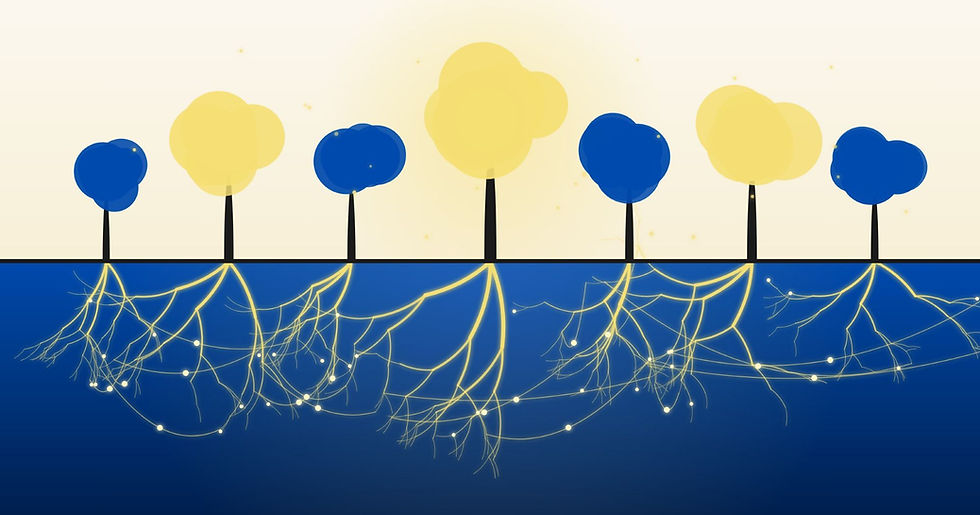
Nothing I built was built alone
In February 2020, I walked away from a role I’d held for years without a clear next step. People call that a leap, and it was. What I say less often is that I was never really alone in it. Trusting yourself is a decision only you can make. Sustaining that trust takes company. Love Before ALL (LBA) was born in a season of quiet, and it has grown ever since in the company of people willing to be changed by the work alongside me.
My first teacher in this was The Posse Foundation. As a member of the Vanderbilt Posse class of 2008, I found community in my senior year of high school, and it stayed with me through college and well beyond. Posse understood something most institutions still resist. A group of strangers can become a support system for one another.
My Possemates widened my perspective and gave me strategies for confronting systems of injustice. In that cohort, I first lived much of what I now teach about belonging and tilling the soil.
As a Black woman, I do not take being held by community for granted. I know how often the systems around us were designed to isolate us from one another and how radical it is to be accompanied instead. That is part of why I refuse to treat gratitude as a soft gesture. It is how we name the infrastructure that was holding us up all along.
The partners who shaped how we support education and culture
Love Before ALL has been trusted by a remarkable group of organizations, and I want to name them because naming is a form of respect. Thank you to All Children Excel Nashville, the University of Tennessee, Knoxville, From Roots to Wings, Harlem 9, Raising Readers Nashville, Prince George’s County Public Schools, Read To Succeed (United Way of Greater Nashville), the Nashville Public Library, the Vanderbilt Child and Family Center, Connecting Our Resources for Educators (CORE Network), Unique Kids, Konscious Youth Development & Service, and Golestan Kids.
They span school systems, libraries, universities, youth programs, and community organizations. In every one of those settings, supporting children and the adults who care for them depends on the same thing. It depends on the quality of the relationships between people. I am especially grateful to serve as a coordinator with the CORE Network of United Way of Greater Nashville, where connecting educators with resources is itself a relational act.
Behind every name on that list are individual leaders who chose to trust a relational approach, which is never the easiest choice in systems measured by test scores, grant reports, and quarterly numbers. Their willingness is the reason the LBA approach to education and culture is grounded in practice rather than theory. It is why we measure success by the quality of the relationships we build and by key performance indicators. The leaders we serve are accountable to both a community and a funder, and honoring only one would leave them carrying the other responsibility alone.
Other organizations shaped how I think and lead, and each opened a different door into the same room. United Way of Greater Nashville and All Children Excel Nashville, thank you for partnering with us as Nashville organizations committed to the success of children and families. That commitment taught me to think about relationships at the scale of a whole community and at the depth of roots.
Black Mental Health Village is a Nashville nonprofit that brings together community, data, and technology to support healing for the whole person and provide mental health education. Its approach recognizes the effects of trauma and centers healing. Thank you for showing what culturally rooted care looks like when it is led with love and for creating spaces where people feel comfortable talking about their experiences.
The Acceleration Project and Hello Alice both serve small business owners who have too often been left to build alone. The Acceleration Project offers owners with limited resources guidance, mentorship, and a powerful network. Hello Alice, founded by Carolyn Rodz and Elizabeth Gore, connects owners with capital, community, and advisors. It says plainly that no one should be stuck building a business alone. Thank you both for proving that economic wellbeing and relational wellbeing cannot be separated and that leadership of any kind is lonelier than it needs to be without a network around it.
The Brain Academy, which Gregory Caremans founded to make brain science accessible to everyone, and Deb Dana helped ground my nervous system work in evidence and gave me a community of coaches who take both science and humanity seriously. Thank you to Brainz Magazine for the platform to share these ideas with the readers who need them.
Education, healing, economic opportunity, and science. Four doors into the same room. Each taught me the principle that Love Before ALL now builds everything around. People first, always, because relationships are not a detour from the work. They are the work.
The individuals who taught me how to lead with love
Organizations are made of people, and some people have shaped this work in ways no logo or partner list can hold. Thank you to Elandriel Lewis, Apri Gassaway, Erica Mitchell, LaTonya Shelton, Jennifer Hill, Shantrelle Edmondson Johnson, Mychal Mills, and Aijeron Simmons. Each of you offered your time, your honesty, and your trust while this framework was still taking shape. It is better and more human because of it. I carry your influence into every room I enter, and I am grateful to be in community with you.
I also want to honor two leaders whose work in education has guided how I think about the inner lives of the people we serve. Linda Lantieri is the founding director of the Inner Resilience Program, which combines social and emotional learning with contemplative practice to support students, teachers, and schools. She is also a cofounder of the Collaborative for Academic, Social, and Emotional Learning. Her book Building Emotional Intelligence reminds me that emotional skill is something we teach and model, not something we assume. Meena Srinivasan, author of Teach, Breathe, Learn and executive director of Transformative Educational Leadership, brings embodiment to educational leaders with cultural responsiveness at the center. Thank you both for showing that caring for the adult is part of caring for the child.
Gratitude is a leadership strategy, not a holiday sentiment
Most of us associate gratitude with a table in late November. The research treats it as a leadership practice that can be used throughout the year, with measurable effects on how people relate to one another.
Meghan Kane and colleagues examined how gratitude moves through organizations in an article published in the Journal of Applied Psychology. Across three studies, including two field studies involving employees and supervisors, the researchers found that when employees see leaders express genuine gratitude, they become more likely to notice helpful behavior, thank their colleagues, and build stronger coworker relationships. The effect extends even to employees who have little direct contact with senior leaders. Kane’s practical guidance is that gratitude works best when a leader names the specific action they appreciate and explains the impact it had.
Most workplaces are not doing this yet. The Center for Creative Leadership, summarizing research on thanks at work, reports that 35 percent of people say their managers have never thanked them, a pattern it calls the gratitude gap. The Predictive Index’s 2025 Workplace Perception Gap Survey found that almost half of workers in the United States say their boss does not fully understand what they contribute.
How you express thanks matters too. A study published in the Journal of Management in November 2025 and jointly led by Tony Kong of the Leeds School of Business at the University of Colorado Boulder found that too much generic appreciation can dilute its impact. The researchers recommend tailoring thanks to the person’s contributions or to the person themselves.
Dr. Shawn Ginwright, in The Four Pivots, calls on leaders to move from transactional relationships to transformative ones. Specific gratitude is one of the simplest ways to make that move because it tells another human being they were seen and not simply used.
The relational infrastructure from the home to the world
Love Before ALL grows compassion from the inside out, allowing transformation to occur at the micro, meso, and macro levels. Gratitude is one of the few practices that travels through every layer. Here is how relational infrastructure shows up, one layer at a time.
The home. Relationships at home are the first classroom for learning to regulate our emotions and recognize our worth. A recent study of adolescents found that relationships with both parents and teachers significantly predicted a sense of belonging at school.
The classroom. In that same study, relationships with teachers had a stronger link to school belonging. A sense of belonging was associated with more helpful behavior, which in turn was associated with academic achievement. When children feel seen by an adult at school, that sense of belonging may go hand in hand with helping others and doing well in class.
The school. In their landmark research, which included fieldwork in twelve Chicago elementary schools, Anthony Bryk and Barbara Schneider found that relational trust, built on respect, competence, integrity, and personal regard, was a core resource for improvement. Schools with persistently low trust had virtually no chance of improving in reading or math, while schools with high levels of trust were more likely to try new practices and partner with parents.
The workplace. The gratitude research above shows how one leader’s thanks can ripple through a team and strengthen relationships. The work on nervous system regulation, emotional literacy, and repair in earlier articles in this series all depends on that same relational soil.
Communities, cities, states, and countries. The infrastructure scales through partnership. Libraries, universities, school districts, nonprofits, and coalitions form relationships with one another, and these institutions are made of people. This is the work of the FOREST in the Love Before ALL (LBA) approach. It connects efforts, informs policy, and amplifies impact so that the quality of our relationships shapes the quality of our cities, states, and nations.
The world. At the widest edge of the circle is the Beloved Community, the shared reality that Kingian nonviolence names as its aim and that LBA works toward. It begins where every other layer does, with one regulated person willing to say thank you and mean it.
The reimagining prompt
What if we stopped treating gratitude as a seasonal courtesy and started treating it as the first layer of relational infrastructure at every level of our lives? What if every leader ended this year by naming, out loud, the people who helped them get results and saying exactly what those relationships made possible?
Here is what Love Before ALL believes that could look like. At home, when family members name what they appreciate about one another, children learn that they matter before they achieve anything. In the classroom, a teacher who tells a student exactly what they noticed builds the belonging that learning depends on. In the school, leaders protect trust as carefully as they protect budgets. In the workplace, people give specific thanks regularly, and it cascades. Across communities, cities, and states, partners say aloud what they have learned from one another, and policy begins to reflect relationships rather than replace them.
That is not naive. It is infrastructure. It costs far less than the disconnection we are paying for now.
An invitation to say thank you out loud
If you lead anything, from a household to a classroom to an organization, try one practice this week. Write a note of thanks. Name the specific thing the person did and the difference it made. Send it. Then notice what shifts in you. Giving thanks can help you feel more grounded, too.
Love Before ALL exists to help leaders and organizations build relational infrastructure from the inside out, one relationship at a time.
Stay connected
Join the LBA movement. Subscribe to the LBA Care and Clarity Update, our monthly resource for leaders navigating the intersection of personal wellbeing and organizational impact. Each issue includes a reflection tied to our monthly theme, a conversation from the Talk to Me podcast, and a practical tool you can use the same week. Visit our website to connect.
Work with me in The Alignment Arc. Offered through Brainz Academy, this coaching program runs for 6 to 12 sessions and starts with a goal you choose. Whether you’re changing careers, working to heal a relationship pattern, or stepping into a new leadership role, you’ll build habits that help you regulate your emotions, stay connected, and sustain the change. Learn more here.
Because love is not simply an idea or a sentiment. It is a strategy we live by. To every partner, mentor, educator, and community member who has trusted this work, thank you! You are the infrastructure.
Join the movement
Spotify podcast: Talk to Me
The Alignment Arc: Learn more here
The Care & Clarity Update: Stay connected
Read more from Annie Paraison
Annie Paraison, Founder of Love Before ALL LLC
Annie Paraison is the visionary behind Love Before ALL, a consultancy optimizing wellness through the power of relationships. A proud Haitian-born leader, she journeyed from New York City to Vanderbilt University, igniting a passion for harnessing human potential and building "Beloved Community." With over 17 years of leadership experience and an Executive MBA, she challenges the status quo by proving that love is a rigorous life and business strategy. She ensures no leader has to choose between impact and well-being by supporting the transformation of unconscious patterns into conscious compassion. Grounded in faith and guided by hope, Annie is committed to a world where personal and collective success are inextricably linked.
References:
Vanderbilt Posse Scholar Program. “Annie Paraison ’08”. Alumni Spotlight, June 27, 2025.
Love Before ALL. “About Us: Origin Story, Vision, Mission, Framework, and Trusted By”.
The Contributor. “Q&A with Esarrah Hopkins”, on Black Mental Health Village.
Charity Navigator. “The Acceleration Project Inc.”, mission profile.
Hello Alice. “About Hello Alice”.
Brain Academy. “Brain Academy: Certification Programs, Community, and Brain Coach Directory”.
People Matters. “A Simple ‘Thank You’ from Leaders Can Strengthen Workplace Relationships, Study Finds”, citing Kane et al., Journal of Applied Psychology.
Center for Creative Leadership. “Giving Thanks Will Make You a Better Leader”, November 2024.
Quartz via Yahoo. “How Gratitude Makes You a Better Leader”, citing The Predictive Index’s 2025 Workplace Perception Gap Survey.
CU Boulder Today. “The Way You Say Thanks Matters at Work”, November 21, 2025, citing Kong et al., Journal of Management.
Shawn A. Ginwright, PhD. The Four Pivots: Reimagining Justice, Reimagining Ourselves. North Atlantic Books, 2022.
Catherine Gewertz. “‘Trusting’ School Community Linked to Student Gains”. Education Week, October 16, 2002, on Bryk and Schneider.
University of Chicago Consortium on School Research. Trust in Schools: A Core Resource for Improvement, by Anthony Bryk and Barbara Schneider. Russell Sage Foundation, 2002.
The King Center. “The King Philosophy”.
Greater Good Science Center. “Linda Lantieri”, contributor profile.
Greater Good Science Center. “Meena Srinivasan”, contributor profile.