What is Insulin Resistance and What Can You Do About It?
Updated: 7 hours ago
Eoghan O’Brien is a community pharmacist with over 30 years’ experience, a certified health coach and a casual lecturer in undergraduate pharmacy at Ulster University. He delivers group and individual sessions on how to improve metabolic health using infrared scans that analyse body composition in three dimensions, blood testing and action plans he develops with clients.

Insulin resistance can develop without obvious symptoms. So what happens when your cells stop responding to insulin as well as they should? This article explains how insulin resistance affects blood sugar, how it’s measured, and which everyday habits can help improve insulin sensitivity.
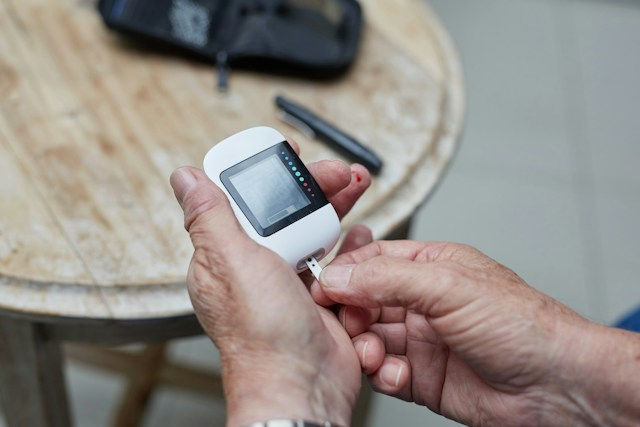
Described as the ‘Biggest blind spot in modern medicine’, all the metabolic moguls are jamming the socials with the latest buzzword: ‘Insulin Resistance’ (IR). Justifiably so.
As well as being elevated a decade or so before a detectable rise in glycated haemoglobin (HbA1c) to 48 mmol/mol (6.5%), a level that can indicate type 2 diabetes, IR can result in the following:
High uric acid, which can lead to the very painful condition of gout
An increased risk of blood clotting
It is also strongly linked to an increased risk of Alzheimer’s disease and cancer. So, what exactly is insulin resistance? How does it happen? Most importantly, what can you do about it?
What is insulin resistance?
Our body’s entire blood volume only has the capacity to carry, on average, 4 g of glucose, the weight of a spoonful of sugar. A higher amount than this can be harmful for our blood vessels. So, when blood glucose rises above this, our pancreas releases insulin to bring it back down to this safe 4 g level.
Frequent high blood glucose levels keep insulin levels elevated. This causes our body’s cells to become less responsive (resistant) to the elevated insulin and its effects.
One of insulin’s beneficial effects is to move glucose into our cells for use as an energy source. When this happens, a signal is sent to the brain, letting us know we have had enough to eat. With insulin resistance, glucose doesn’t move into cells properly, and the signal doesn’t get through. We keep eating because we still feel hungry.
Insulin is a hormone that promotes fat storage, and its presence also prevents fat from being broken down. So instead of storing all the glucose as glycogen for future use, insulin promotes the storage of much of it as fat, particularly in and around our organs, where it does the most damage. This is how people with insulin resistance (IR) find it more difficult to manage their weight.
How is insulin resistance measured?
Among the many beneficial advances in diagnostic testing in recent years is the ability to measure insulin in just 15 minutes from a small blood sample of 30 microlitres obtained by a finger prick. Our AFIAS analyser in the pharmacy has this capability.
The person needs to have fasted for 8 to 12 hours, as blood insulin should not be elevated after fasting. The result is used to calculate a homeostasis model assessment of insulin resistance (HOMA-IR) score by multiplying the fasting insulin reading by the fasting blood glucose reading and dividing by 22.5 or 405, depending on the units used for glucose.
Formula | Calculation |
HOMA-IR (UK units) | (Fasting insulin in μIU/mL × fasting glucose in mmol/L) ÷ 22.5 |
HOMA-IR (US units) | (Fasting insulin in μIU/mL × fasting glucose in mg/dL) ÷ 405 |
The HOMA-IR score should be lower than 2.5 and ideally below 1.5. There are a few different interpretations of this, but all concur that lower is better.
While the analyser is running the sample, I carry out a noninvasive, three-dimensional (3D) infrared body composition scan using Styku. This breaks body weight down into several components, including lean mass and fat mass and their respective percentages. It also reports visceral fat area and the ratio of waist circumference to height.
Insulin resistance is usually, but not always, linked to excessive body fat (in the UK, above 25% in males and above 35% in females) and a visceral fat area above 100 cm² in both men and women. The emphasis is not on losing weight but on losing fat.
How does insulin resistance happen?
To put it very simply, insulin resistance comes from too many blood glucose spikes too often. It comes mainly from the following three drivers.
Food and drink, especially sugar and refined carbohydrates: Our food environment has deteriorated remarkably in the past few decades. Over half of the food purchased in the UK, Ireland and the United States is now ultra-processed.
Many people are unsure what a refined carbohydrate is. It is a long chain of glucose molecules with most of the fibre removed. Fibre reduces spikes by slowing the rate at which glucose enters our bloodstream.
Poor stress and sleep management: We need stress. Our stress response is partly how we have survived and evolved as a species. It is designed to serve us well and ultimately protect us. When we feel threatened, our adrenal glands release the hormones adrenaline (epinephrine) and cortisol, which in turn cause our blood glucose to rise. That should provide us with enough energy for the crucial “fight or flight” response so that we’re in a better position to beat off the assailant or take to our heels once we realise that we’re on a beaten docket.
With chronic stress, however, we ain’t fighting, and we’re not “flighting”. We’re just worrying, and that blood glucose isn’t going anywhere fast. There is a bidirectional relationship between sleep and stress. Each can worsen or improve the other.
Insufficient movement: It’s not so much that insufficient movement is a cause. More accurately, exercise is one of the best solutions for the problem and will improve insulin resistance. However, it is fundamental to understand that you cannot outrun a bad diet!
How will I feel if my insulin resistance is high?
You may feel nothing, as insulin resistance can be asymptomatic. It often goes undetected until symptoms of type 2 diabetes appear years later, such as increased thirst, frequent urination, blurred vision, wounds that heal slowly and recurrent thrush.
IR is strongly associated with high blood pressure (hypertension). Known as the “silent killer”, hypertension is also asymptomatic in over 75% of those affected.
You may feel the following, however:
Persistent fatigue
Energy crashes after eating
Constant hunger
Brain fog or difficulty concentrating
Mood swings or irritability
Cravings for sugar and carbs. Giving in to these cravings will stimulate the release of more insulin, further exacerbating the condition. It’s a real vicious cycle!
What can I do about it?
Insulin resistance arises from three main drivers. There are many ways to improve them, but for now I’ll give you three for each.
1. What, when and how you eat and drink
Reduce sugar and refined carbohydrates while increasing minimally processed protein and fats from real foods. It’s not necessarily about eating less. It’s about eating differently.
Stop snacking. If you’re hungry less than four hours after a meal, you most likely simply didn’t eat enough at that meal or didn’t get enough protein. Addressing why you feel the need to snack will help reduce that desire. If you must snack, a handful of raw nuts will sustain you without spiking your blood glucose.
Don’t eat within two to three hours of going to bed. Eating late in the evening can make blood sugar control harder. It also prevents the shift to burning fat.
2. How you manage your stress and sleep
Get off all screens, including phones, laptops and televisions, for at least one hour before bedtime. The blue light they emit fools the brain into thinking the sun is still shining, and the brain releases less melatonin, the hormone that helps regulate sleep. The content on your socials is designed to be addictive by giving you a dopamine hit. This will not help you sleep. Even if a device helps you get to sleep, just like a glass of wine, your sleep quality will suffer.
Sleep follows a circadian rhythm of about 24 hours. Getting sunlight or even daylight in the morning, ideally outside (not behind glass), helps us sleep better at night. Avoiding electronic devices during the first hour of the morning will help too.
Prioritise and schedule some “me time” to relax and switch off. Many of us have an inherent tendency to wait until all the “important” things are done before switching off. By the time these are all completed, guess what? It’s bedtime! Research has demonstrated that we work more efficiently and are less stressed when we take regular breaks.
3. How and when you move
Walk for 10 minutes after you eat. Your moving muscles will soak up glucose from your blood without the need for insulin, which will reduce the demand for insulin and begin to improve the insulin sensitivity of your cells.
Take up an aerobic activity and do it for 20 to 30 minutes at least three times a week. If walking is your thing, walking briskly up a slope will give you additional benefits.
Incorporate strength training three times a week for 20 to 30 minutes. This is especially important for anyone over 40, as muscles gradually start to waste away at this age. If you don’t use them, you will certainly lose them. There is strong scientific evidence for the benefits of strength training for insulin sensitivity.
Read more from Eoghan O'Brien
Eoghan O'Brien, Health Coach & Community Pharmacist
A childhood interrupted by severe eczema flares set Eoghan O’Brien on a quest for better healthcare that could address the cause rather than temporarily suppress the symptoms. He qualified as a pharmacist, took over his father’s Bannside Pharmacy in 1993 and went on to explore herbs, homeopathy, meditation and nutrition. Now, as a certified health coach trained at the College of Naturopathic Medicine (CNM), Eoghan delivers lectures, group talks and individual sessions on how to improve metabolic health through a holistic, integrated approach to healthcare. Walking the walk achieves more than talking the talk, and Eoghan has a range of tools in the box to help people make sustainable changes to improve their well-being.