What Happens When We Stop Abandoning Ourselves to Belong? – An Interview with Tana Jay von Isser
Updated: Sep 11
Tana J. von Isser, LCSW, CHt, is a Relationship Coach, Identity Architect, Certified Grace Method® Hypnotherapist, licensed therapist in Arizona, and founder of Tonic Wellspring: Healing Arts. Her practice, along with her own lived journey healing through grief, complex trauma, and survival adaptations, inspired the creation of her Quantum Neuro-Developmental Integration (QNDI) method. She helps driven empaths move from enmeshment, self-abandonment, codependency, or hyper-independence into healthy interdependence and deeply fulfilling relationships and lifestyles. She served over 400 clients between 2022-2026 on their transformational paths and is recognized for facilitating profound breakthroughs in accelerated timeframes. Her mission is to guide individuals from survival patterns into self-trust, relational wholeness, and aligned living.
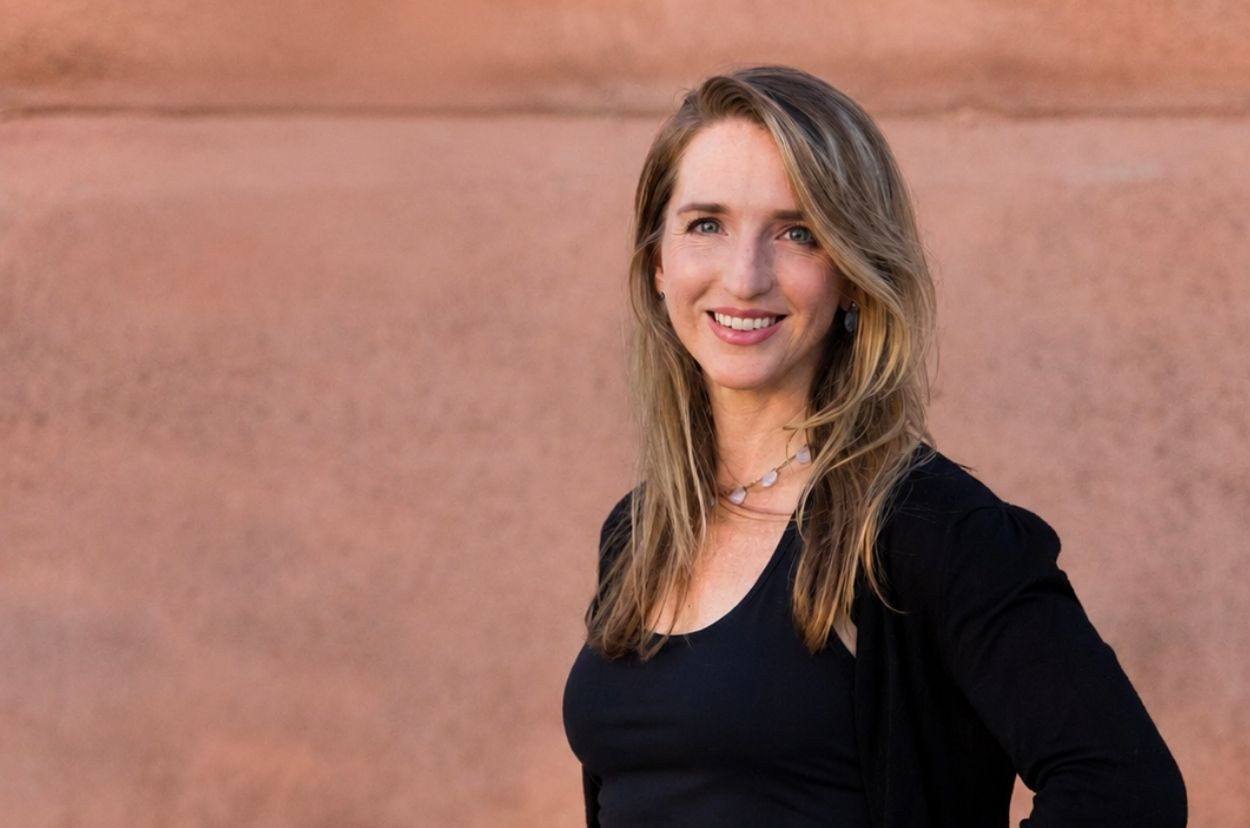
Tana Jay von Isser, Empowerment Coach, Hypnotherapist & Visionary
Who is Tana Jay von Isser?
I've spent much of my life answering one question, "What happens when we stop abandoning ourselves to belong?"
I work with accomplished, spiritually grounded people, mostly women, whose generous hearts have been mistreated or abandoned, by others and often by themselves. They've spent years being capable, intuitive, and deeply caring, only to end up exhausted, disconnected from their own guidance, and stuck repeating relational patterns that no longer serve them. My work helps them recalibrate their relationship to themselves and to the Divine, and from there, heal what's rippling into their outer world, their lifestyle, and their sense of meaning.
I integrate neuroscience, attachment theory, somatic wisdom, hypnotherapy, and spiritually oriented practice to surface the identity structures quietly running the show and reorient clients toward their soul purpose and true legacy. I'm a Licensed Clinical Social Worker (LCSW), Certified Grace Method® Hypnotherapist, Relationship Coach, Identity & Lifestyle Architect, and the founder of Tonic Wellspring: Healing Arts.
Healing isn't just feeling better. It's getting better at feeling. Be with what's real. Feeling good is more sustainable when we're not afraid of the whole range of feelings.
What challenges do your clients typically face before seeking your services?
Many of the women I work with look like they're thriving. They're accomplished, intelligent, intuitive, and capable, with successful careers, families, and full lives, even if the word success falls flat. Underneath, they're running on empty, getting fleeting hits of aliveness from a good playlist or a pet's touch, but haunted by a gnawing sense that something's missing.
They arrive after years of over-functioning, self-sacrifice, hyper-independence, or codependence, carrying more than their share of the emotional weight in every relationship. They say things like, "Why do I keep attracting the same thing?" "Why do I know better but still can't change this pattern?" "Why am I so tired when I'm doing everything right?" Or, the deepest one, "If I stop taking care of everyone else, who am I?"
This work isn't about becoming less capable or less caring. It's about learning the difference between generosity and self-abandonment, empathy and enmeshment, independence and healthy interdependence. It's about transmuting pain into a powerful sense of purpose and loving the inner saboteur on the road to self-mastery.
What inspired you to start Tonic Wellspring, and what unique approach do you offer?
In 2021, I got myself out of a situation that had turned genuinely dangerous, the kind where you're making emergency plans from a parking lot and crossing the country with nothing but roadside naps. My dog and I made it to safety, and some of the deepest work and most rewarding transformation of my life followed.
It took months of untangling myself from what I now recognize as narcissistic abuse and confronting a belief I'd inherited and carried even with years of intentional work, I'm not worthy of better. That belief was the common thread I had to address at its root.
That's when I found Grace Method® Hypnotherapy, and it cracked open something talk therapy hadn't. I'd been living like the walking dead, jolted awake by my own inner critic, forcing myself through exercise, eating healthy, going to grief groups and therapy, and feeling little relief as I was white-knuckling my way through anhedonia.
I finally got off the medications and coping mechanisms I'd leaned on for years because they were causing more harm than benefit. I went deep into nervous-system and fascia release, parts work, inner child healing, and practices shaped by neuroscience and a growing understanding of the subconscious.
Finally, the rubber met the road, and I quantum leaped into a new reality. The vision for Tonic Wellspring's logo came to me in a desert arroyo, mid-meditation. Within months, I met the man who became my husband, someone with whom conflict brings us closer instead of shattering our hearts.
That's the arc I now help clients through, not relief from bypassing what's hard, but bliss from actual alignment.
I followed the breadcrumbs into clinical work and served as a lead therapist in a residential trauma and addiction treatment center before returning to my niche of relational and spiritual healing work. I've walked both sides of this work, my own healing was the real prerequisite for walking alongside anyone else.
A wellspring is a source of nourishment that already exists beneath the surface. My job isn't to give clients something they lack, it's to clear what's blocking their access to what's already there.
What sets Tonic Wellspring apart from other wellness providers in your field?
There are a lot of skilled providers doing trauma work, hypnotherapy, and nervous-system regulation. What's harder to replicate is the person holding those tools, someone who's truly tested the theories, not just studied them.
I've lived the collapse and the rebirth I now guide clients through, from trauma begetting trauma to firmly knowing the worth and beauty of this life and finding reflections of goodness everywhere. These days, I spend my time on trails and in museums, awestruck and inspired, holding my husband's hand, a far cry from the years I spent holed up in self-loathing, or even surrounded by luxury and feeling numb.
That's not a credential. It's a frequency. Clients don't just get my years of education and training, they get a whole human who's already proven this path works. They get my unique energy and medicine.
Techniques can be taught. Presence can't be copied.
I'm offering clients more than modalities, I'm offering them a guide who's already walked the specific terrain they're standing in. I'm helping them collapse time, so transformation toward their deepest desires doesn't take as long as it took me.
The solutions are often simple. That doesn't mean they're easy, and it doesn't mean insight alone gets you there. For many women, the real question isn't "How do I regulate my nervous system?" It's "Who am I now that I no longer want to live the way I used to?"
Survival stops being the goal, and the question becomes, "What do I actually want to create with this life?"
That's where my work moves past symptom management into relationship coaching and lifestyle architecture, designing a life around who she wants to become, not who she had to be to survive.
As a licensed clinician, I know when someone needs a different level of care and how to collaborate with a team of skilled professionals. My coaching lets my own lived experience and spiritual lens come through in ways therapy never could.
This is high-touch, hands-on work, subconscious reprogramming, embodied practice, and real accountability, not a worksheet and a wish.
What would you advise someone who is just beginning their wellness journey?
Get curious about yourself instead of trying to fix yourself. Most people start healing assuming something is broken. Ask different questions instead, "What is this part of me trying to protect? Can I meet what feels unlovable in me with compassion instead of shame?"
Your anxiety was trying to keep you safe. Your perfectionism once helped you perform. Your hyper-independence and people-pleasing made sense when relying on others didn't feel safe. None of that means you have to keep it or discard it entirely, it means you meet it differently.
Slow down enough to listen to your body. Notice what expands you and what contracts you. Don't measure your healing by how little you struggle. Measure it by how fast you find your way back to yourself when you do.
That's the beginning of true belonging, coming home to yourself and realizing you were never the problem you were trying so hard to fix. You were the key all along.
Follow me on Instagram, LinkedIn, and visit my website for more info!
Read more from Tana Jay von Isser