What Do You Actually Want? The Question Many Men Stop Asking Themselves
Updated: 8 hours ago
Connie Ng is an international speaker helping people overcome chronic pain, mobility issues, and complex health challenges, especially when conventional approaches fall short. Integrating Five Elements philosophy, vibrational medicine, and mind-body coaching, she empowers clients to reclaim their health, reconnect with who they truly are, and create lasting transformation.

Men, let me ask you something that sounds almost embarrassingly straightforward: what do you actually want? Most people can tell me fairly quickly what they would happily remove from their lives. The back pain can leave, the extra weight can disappear, and the anxiety could kindly stop announcing itself at 3 am.
In my counselling room, I also hear about money worries, loneliness, the longing to find the right partner, and difficult family dynamics, particularly the anguish caused by an overbearing or tyrannical father whose behaviour continues to affect everybody around him. Occasionally, in a fit of anger and sheer exhaustion, a man will admit that family life would simply be easier if his father were no longer alive.
Knowing what you want gone is handy, but it hints far more to me about what you are trying to escape than about what you actually want to move towards. If the problem vanished tomorrow, what would you want your life to contain instead? That question points us somewhere much more interesting.
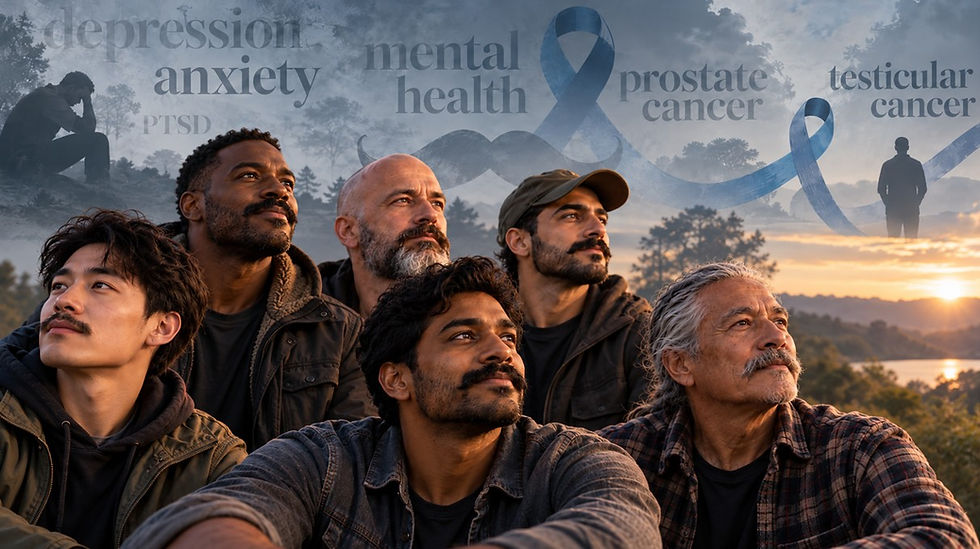
Movember brings three enormously important areas of men’s health into focus: mental health and suicide prevention, prostate cancer, and testicular cancer. All three encourage men to pay attention earlier, speak sooner, and take their health seriously before a crisis makes the decision for them.
I would like to add another health check dimension to that conversation. But what do you actually want those extra years to contain? That is where knowing your “what” begins.
When the “how” barges in before the “what” has finished speaking
Many of the men I work with have wonderfully capable logical minds. Give them something practical to solve, a financial problem, an operational issue, a dodgy appliance, or a spreadsheet, and they can analyse it six ways before breakfast and already have a solution ready to execute.
That same talent becomes restrictive when every desire has to pass a feasibility study before it is even permitted to exist. A man may long to regain his mobility, then immediately remember what the scan showed. He imagines changing careers and, within seconds, has calculated the mortgage, superannuation, and several financial catastrophes that have not actually happened. The original desire barely has time to introduce itself before his internal risk committee rejects the proposal.
Relationships provide another familiar version. He may be drawn to the funny, intelligent, attractive, self-confident woman who seems emotionally independent and financially grounded, then privately decide that somebody like her would never seriously choose him. A “safer” relationship with someone who admires him more can feel less threatening, even when he already knows safety has come at the price of excitement and genuine connection. Wanting the woman he truly wants means accepting the possibility of rejection, and caution through opting out early, before trying, can suddenly sound remarkably like foresight and wisdom.
Health can follow the same pattern. The thought “I want my body back” is quickly chased by everything the person has been told about age, degeneration, prognosis, or what should now be considered realistic. I explored how easily those messages can shrink a person’s imagined future in “What Future Has Your Diagnosis Quietly Persuaded You to Stop Imagining?”
The “how” becomes so loud that the “what” barely gets a word in. Knowing your “what” reverses that order. The logical mind will have ample opportunity to work out the practicalities. First, the desired outcome needs enough room to become honest. A man with chronic pain may discover that his real “what” is not simply less pain. He wants to walk eighteen holes of golf again. A father may realise that another promotion matters far less than being emotionally present enough to enjoy his children before they grow up. Someone carrying years of family pressure may want stronger boundaries with a guilt-tripping parent, or simply to feel seen and heard in a parent and adult child relationship fraught with frustration and hurt. For somebody living with cancer, the “what” might be having more time, intimacy, independence, good food, travel, sexual confidence, or simply the feeling that life still belongs to him.
Now we are talking about something much more meaningful than “I just want this problem gone”.
When “I can’t see how” really means “I don’t feel enough”
Underneath “I cannot see how this could happen” sometimes sits something quieter and more vulnerable: “I am not enough.”
The measuring stick varies. One man does not feel successful enough. Another feels insufficiently wealthy, physically or mentally strong, muscular, intelligent, attractive, slim, or young. Someone else has spent much of his adult life privately wondering whether he is masculine enough.
What fascinates me is how easily an old worthiness wound disguises itself as practicality. “I could never afford that” sounds financially sensible. “She would never seriously choose someone like me” sounds realistic, while cutting off the possibility before it has even been explored can conveniently disguise itself as foresight and wisdom. “My body cannot do that anymore” can sound like mature acceptance.
When we do not feel “enough”, wanting can feel dangerous. Dreaming creates the possibility of disappointment, while desire exposes what is missing. It can seem emotionally safer to decide that something is unrealistic than to admit how deeply we want it. “I don’t know what I want” can then quietly become code for “I have stopped giving myself permission to want very much at all”.
Sometimes the “how” problem is really an “I’m not enough” problem wearing a very sensible suit. This is where self-awareness becomes essential. Without it, old fear, insecurity, or conditioning can keep driving the response while bravado dresses itself up as logic and calls the result “being sensible”. Self-awareness notices the tightening in the chest, the irritation, sadness, recurring thought, or subtle sense that something is “off” before we automatically override it.
Deep healing requires that kind of attention. The body and mind are communicating all the time. Curiosity is what allows us to hear them, often bringing the next insight, solution, or avenue of healing to the surface.
When survival has been running the show
For many men, this goes considerably deeper than everyday self-doubt. Trauma, post-traumatic stress disorder (PTSD), and complex post-traumatic stress disorder (Complex PTSD) can shape a person’s relationship with safety, control, trust, and possibility for years.
I think of men who have served in the military or worked in policing, emergency services, corrections, and other frontline environments where authority, composure, and vigilance are part of the role. Fear, shock, or horror experienced beneath that professional exterior, especially during confronting workplace incidents on the frontline, may have had nowhere safe to go when appearing composed and fearless was itself part of the job. Years later, those unprocessed experiences can remain embedded in patterns of trauma, PTSD, or Complex PTSD. For other men, the survival pattern began much earlier through childhood physical, sexual, or emotional abuse.
A nervous system shaped by trauma can spend years organising life around preventing the next threat, remaining in control, and avoiding ever being caught off guard again. Survival becomes so practised that imagining what you actually want from life can begin to feel almost foreign.
The man may still appear highly functional. He works, provides, fulfils his responsibilities, and remains the person everybody considers dependable. At night, perhaps alcohol takes the edge off, gaming provides a world with clearer rules, television fills the silence, or work follows him home because staying occupied feels easier than checking in.
What catches my attention is the type of relief he is seeking through the habit. Once the noise stops, something quieter may finally become audible.
I explored a similar tension between optimisation and a nervous system still organised around survival in “Can You Out-Biohack a Nervous System Still Stuck in Survival Mode?”
This is why Movember’s mental health conversation needs to go deeper than simply telling men to “talk more”. For somebody whose identity has been built around coping, vulnerability can feel remarkably close to dismantling one of the structures that helped him survive. Self-awareness offers a gentler place to begin.
Making peace with the parts you would rather not meet
When I use the word “shadow”, I mean the parts of ourselves we would prefer not to spend an evening with: fear, shame, grief, loneliness, inadequacy, resentment, sexual insecurity, or the deeply inconvenient realisation that something in our life is no longer working.
Some men have spent decades becoming extremely competent at avoiding those feelings, so telling them to “open up” can be about as useful as telling someone with insomnia to try harder to sleep.
Curiosity gives us another entry point. Can you remain with discomfort long enough to notice what it is revealing without immediately suppressing it, judging it, or converting it into another problem requiring a practical solution?
Fear, depression, grief, or feeling lost deserve to be taken seriously, but they need not become the permanent identity through which every future possibility is interpreted. An emotion can be deeply real without becoming the total definition of the man experiencing it. That distinction is one I return to often in practice, particularly because Traditional Chinese Medicine never taught me to separate emotional and physical life into neat and distinctive compartments.
In the Huangdi Neijing (黄帝内经), also known as the Yellow Emperor’s Classic of Internal Medicine, the Heart occupies the sovereign position and houses the “Shen” (神), our Spirit and conscious awareness. I continually return to the classical understanding that “Bing” (病), meaning illness, ultimately leads us back towards the Heart and our inner state.
In “When the Body Speaks: Decoding Mental Health with the Five Elements”, I explored another map: anger and frustration through the Wood element and Liver, fear through the Water element and Kidneys, grief through the Metal element and Lungs, and worry or overthinking through the Earth element and Spleen. The Fire element and Heart bring us back towards joy, connection, Spirit, and our capacity to experience life fully.
When difficult emotions remain suppressed for long periods with no healthy avenue for release, Traditional Chinese Medicine describes patterns such as Qi stagnation, Blood stasis, and other forms of internal imbalance. Over time, this is one pathway through which “Bing” (病), or chronic illness, may take hold. In my broader mind-body work, I also consider the role prolonged emotional stress and inflammatory terrain can play in more serious illness.
I explored related patterns in “The Weather Inside the Body and the Hidden Patterns Behind Chronic Pain”. The Head can spend years calculating the “how” while the Heart has quietly known the “what” all along.
From life happening “to me” to living “as me”, a shift in consciousness
There is another framework I use in one-to-one sessions relating to four levels of consciousness because it helps explain why two people can meet similar circumstances from very different places.
“To Me” consciousness is where life continually appears to happen to us. Other people, employers, family, money, diagnoses, or bad luck seem to hold the cards. Trauma can understandably leave somebody here because genuine experiences of powerlessness teach the nervous system that control lives somewhere outside the self.
Moving into “By Me” consciousness can be enormously empowering. We reclaim responsibility and absolute self-accountability, stop waiting for everybody else to change first, and recognise the influence of our own choices. The trap appears when this becomes so hyper self-aware that agency turns into another form of control and the ego concludes that every result depends entirely on how hard we push, calculate, and force an outcome.
That stoicism can certainly produce achievement. It can also become exhausting because it leaves little room for serendipity, benefactors, good Samaritans, unexpected opportunities, and the strange precision of what some of us would call “Divine Timing”. A person can become very successful while simultaneously wearing himself out trying to personally engineer every moving part of life.
It brings to mind one highly prominent billionaire in the modern longevity movement who has spent millions trying to optimise almost every measurable aspect of his biology, yet has recently disclosed significant health concerns and publicly questioned whether he may have taken the longevity experiment too far. I find that juxtaposition fascinating. Extraordinary discipline can optimise an impressive collection of data, but relentless optimisation and genuine wellbeing are not necessarily the same thing.
“Through Me” consciousness introduces what many people describe as being in a flow state. The right person appears unexpectedly, an idea arrives when we stop wrestling with the problem, or a synchronicity serendipitously places us somewhere we could never have planned on a spreadsheet.
The place I am most interested in cultivating is “as me”. As Connie. As John. As whoever you actually are beneath the conditioning about who you ought to be.
Authenticity lives here. Knowing your “what” becomes fundamental because authenticity is difficult when your desires are still being dictated by everything you have been taught you “should” want. Somewhere underneath the respectable career, sensible financial decisions, and accumulated ideas about what a man is supposed to be is the person who once knew what fascinated him and made him feel alive before practicality became the permanent chaperone. Finding that person again may be the beginning of coming home.
When cancer reprioritises the significance of doing life
Movember’s prostate and testicular cancer pillars bring these questions into sharper focus because both conditions can touch deeply personal aspects of male identity: masculinity, sexuality, fertility, ageing, virility, body image, and mortality.
Metaphysical writers such as Louise Hay, Annette Noontil, and Dr Evette Rose have explored the emotional terrain around physical illness from different perspectives. Louise Hay, for example, linked prostate themes with masculinity, sexuality, ageing, and the male principle.
These ideas resonate with my mind-body work because I explore the physical condition within a much wider terrain. Diet, lifestyle, constitution, and environmental exposures form part of the picture, while trauma, grief, fear, shame, resentment, identity, and emotional history can reveal other layers of why the system has become so burdened.
A serious diagnosis also has an extraordinary way of rearranging the importance of things. Work problems that once occupied enormous mental space can suddenly seem rather small, relationships are viewed through a different lens, and experiences politely postponed until “someday” begin asking why someday has been taking quite so long.
This is one reason Movember’s three pillars belong in the same conversation. Cancer affects the physical body, but a diagnosis can also touch mental health, identity, relationships, sexuality, purpose, and the way a man imagines his future. If time and health now feel precious, what do you actually want to do with them?
Perhaps we have been taking our human character a little too seriously
A Buddhist monk I recently listened to in a reel described human consciousness in a way that stayed with me. I realise reincarnation, karma, and consciousness are not everybody’s preferred coffee-break topics, although they are remarkably normal territory for me. Blame my Chinese Buddhist and Taoist upbringing.
The monk described human life almost like a high-difficulty game. In his worldview, consciousness is far larger than the individual personality, yet we become so absorbed in the human character that we forget there is anything beyond the role.
A man may spend decades becoming the reliable provider, competent professional, husband, father, or strong one everybody calls when something goes wrong. Then illness, trauma, ageing, or divorce unsettles that identity, and a rather inconvenient question appears: if I am not only what I do for everybody else, who exactly am I?
You do not need to believe in reincarnation to appreciate the invitation underneath his message. We can take responsibility for this human life without mistaking the role, diagnosis, or circumstance we are currently experiencing for the entirety of who we are. We may live with cancer or depression, but we are not the cancer or depression. Take a moment to digest and appreciate that distinction.
Maybe part of being here on Planet Earth is allowing ourselves to experience the extraordinary mess of being human, including love and loss, desire and disappointment, fear and courage, moments of spectacularly poor judgement, and the occasional surprising discovery about who we are underneath all of it.
If so, the Movember question becomes even more thought-provoking. It is not only whether a man can add years to his life, but whether enough of him, the authentic John rather than the role John has perfected, is present inside those years to actually experience them.
The flower, the seed, and the part you cannot micromanage
There is a Buddhist idea I find wonderfully practical: Mind gives rise to Intention, and Intention needs Action before anything can take form.
I think of it like growing a flower. The Mind first holds the possibility that a flower could exist. Knowing your “what” gives that possibility direction. Intention plants the seed, while the choices and actions that follow provide the conditions for something once held only in thought to begin taking physical form.
Nobody plants a flower seed and digs the soil up to check every morning whether roots have appeared. We do not stand over the soil demanding to know why nothing has bloomed by Thursday. We give it water, decent soil, and enough sunlight, then trust Mother Nature to do the part we cannot micromanage. Curiously, we do not question whether we are personally worthy enough for tomorrow’s sun to rise or whether the rain has received our manifestation request.
That is the part I call “surrender”. Surrender is not sitting around waiting for the universe to do your homework. The gardener still checks the soil and adjusts what needs adjusting. He simply understands that some parts of growth cannot be accelerated through constant interference.
Knowing your “what” also means believing you are enough to receive it
Once a man becomes clear about what he genuinely wants, his choices become much harder to hide from. If his “what” is being present with his children, a working life that leaves him perpetually unavailable deserves examination. If intimacy matters, emotional armour in the form of a lack of honest and open communication, avoidance, or habitual blame cannot remain permanently welded shut while he wonders why nobody can truly reach him.
Knowing your “what” gives the Mind direction. Intention plants that possibility into consciousness, while aligned Action gives it somewhere to move in physical reality. Trust allows the process enough room to develop, and surrender releases the exhausting demand to know precisely “how” and exactly “when” the flower must appear.
A man can consciously name his “what” beautifully while another part of him quietly believes he is not enough to receive it. This is akin to planting the seed, watering it twice, and then digging it back up because somewhere beneath all that effort sits the conviction that flowers bloom for other people, but somehow not for him.
Knowing your “what” is therefore not simply about identifying a desire. It is about becoming congruent enough that your thoughts, intentions, actions, and sense of deserving stop pulling in opposite directions. Your “what” then becomes an inner compass, helping you consciously shape the direction of your life towards the highest destiny you genuinely desire.
When history starts masquerading as destiny
One of my male clients had lived with restricted ankle mobility for eight years after surgery following an accident. During a brief healing session, his mobility began changing in real time.
I shared his story in “He Had Accepted Eight Years of Restricted Mobility, Then in 20 Minutes His Ankle Began to Change”.
What stayed with me was not only the physical change. Eight years of lived experience following a massive reduction in mobility after an operation had taught his mind what tomorrow was supposed to look like, until the history of the body had quietly become the forecast for its future.
Present reality deserves our attention, but it does not automatically deserve permanent ownership of our imagination. Once the current condition becomes the identity and the identity begins dictating the future, possibility can shrink without us noticing it. Knowing your “what” interrupts that process.
Movember is about prevention, but prevention begins with self-awareness
Men are quite rightly encouraged to know their bodies, understand prostate and testicular cancer risks, pay attention to mental health, speak earlier, and seek support before things reach crisis point.
I want to pause for a moment on the “how”. How do you notice those signs if you have become disconnected from what your own body and emotions are communicating?
If prevention is better than cure, perhaps prevention begins further upstream than many of us realise. Knowing your “what”, whether that means desiring good physical health, fulfilling relationships, greater peace of mind, or something deeply personal, gives self-awareness a direction.
Once the outcome is clear, a much more useful question becomes available: what can I begin incorporating into my life that supports these heartfelt outcomes taking physical form?
That may mean noticing changes in the body rather than overriding them, acknowledging that anxiety has become constant, recognising that alcohol has shifted from enjoyment to emotional anaesthetic, or admitting that the apparently successful life you built no longer feels remotely like your own.
My addition to the Movember conversation is simple: do not work so hard at preserving your life that you forget to decide how you actually want to live it.
Above all, do not postpone wanting it until you have finally become successful enough, rich enough, attractive enough, slim enough, clever enough, healed enough, or masculine enough.
I explored a similar relationship with self-worth and the body in “A Love Letter to the Body That Never Gave Up on You”. Your body has carried you through every heartbreak, illness, triumph, mistake, questionable decision, and perfectly ordinary Tuesday so far. Perhaps honouring it also means deciding what you would still like it to carry you towards.
What do you want this life to have meant?
If this human life is partly here to be experienced rather than perfectly solved, another question becomes worth sitting with: what do I still want to experience while I am here, and what do I want this life to have stood for when I eventually leave it?
That brings us to legacy, although I do not necessarily mean a multimillion-dollar company or having your name engraved on a building.
Your legacy may be becoming the first man in your family to stop carrying an ancestral pattern into another generation. You might finally draw the boundary nobody before you felt able to draw, become emotionally available to your children, stop allowing guilt to dictate your choices, or choose a life that feels authentically yours rather than faithfully repeating what was handed down to you.
Breaking an ancestral pattern can itself become a legacy. So can finally choosing yourself, not from selfishness, but from enough authenticity and self-awareness to know your “what” and stop abandoning yourself merely to preserve everybody else’s version of peace.
That matters to health too. When somebody becomes more emotionally centred, develops stronger boundaries, and makes choices that feel genuinely congruent with who they are, there is often less internal friction and greater freedom in how life can be lived. A happier, more settled mind creates a very different terrain for the body than one that has spent years braced for conflict, swallowing emotion, or living somebody else’s version of life.
Exercise, nutrition, hormones, sleep, supplements, and longevity strategies all have their place, but knowing yourself well enough to stop continually overriding what you feel, need, and value may be one of the most fundamental forms of health optimisation available to us.
Stay curious about where social conditioning tells you what you should want, where trauma still whispers that something is unsafe, where the logical mind demands the entire “how” in advance, and where “I am not enough” interrupts before the desire has even finished speaking.
Give your “what” enough room to become honest. Let it show you how you want to live, what you are ready to stop carrying, and what you would like this lifetime to have meant when you eventually leave it behind.
Legacy is not only what remains after you. It can also be the person you finally gave yourself permission to become during your time here on Planet Earth, fortunate enough to spend perhaps 80 or 100 years playing this extraordinary character called “[your full name], Human Being”, fully at home in yourself and no longer living as a supporting character in somebody else’s idea of your life.
Connect with Connie
If your life looks perfectly functional on paper yet something inside you knows there is more you want to experience, this is the kind of work I explore with clients.
My approach brings together Holistic Counselling and TCM Five Elements Coaching, Vibrational Medicine with 0’Ishiki, and Star Magic Healing to explore physical concerns alongside emotional, subconscious, psycho-spiritual, and energetic patterns. I work with people navigating chronic and complex health concerns, trauma, PTSD, major life transitions, and the deeper question of what they genuinely want their lives to become. I explore this wider approach in “Why I Look Beyond Symptoms to Understand Chronic and Complex Health Conditions”.
Sometimes the first breakthrough is not having the entire plan. It is finally giving yourself permission to know your “what” and, through that self-awareness and authenticity, coming home to yourself.
Read more from Connie Ng
Connie Ng, Holistic Practitioner, Quantum Healing Facilitator & Transformational Coach
Connie Ng is a multi-disciplined holistic practitioner and quantum healing facilitator who specialises in helping clients overcome chronic physical and emotional conditions by addressing their root cause at the energetic level. Blending Five Elements wisdom with Star Magic Healing, vibrational medicine, and holistic counselling, she facilitates deep transformation for those who feel stuck despite trying everything. Connie is the founder of The Salt Therapy Clinic & Sanctuary and works with clients both in-person and remotely.