

The Future of Food May Be Buried in the Grains We Left Behind
Margie Raimondo is a storyteller and chef who focuses on the connections between food, agriculture, heritage, and culture. She founded Urbana Farmstead and The Grain Keeper. She is also an author, educator, and filmmaker dedicated to preserving the stories that connect seeds, the table, and place.

There is something almost deceptive about a handful of wheat seed. At first glance, one kernel looks much like another. But look closer, and a very different story emerges. Some varieties traveled with immigrant families. Others adapted over generations to particular soils, climates, and farming practices. Some became prized for the bread they made, the flavor they carried, or simply because they survived where other wheat would not. Then much of that diversity disappeared from our fields and, eventually, from our tables.
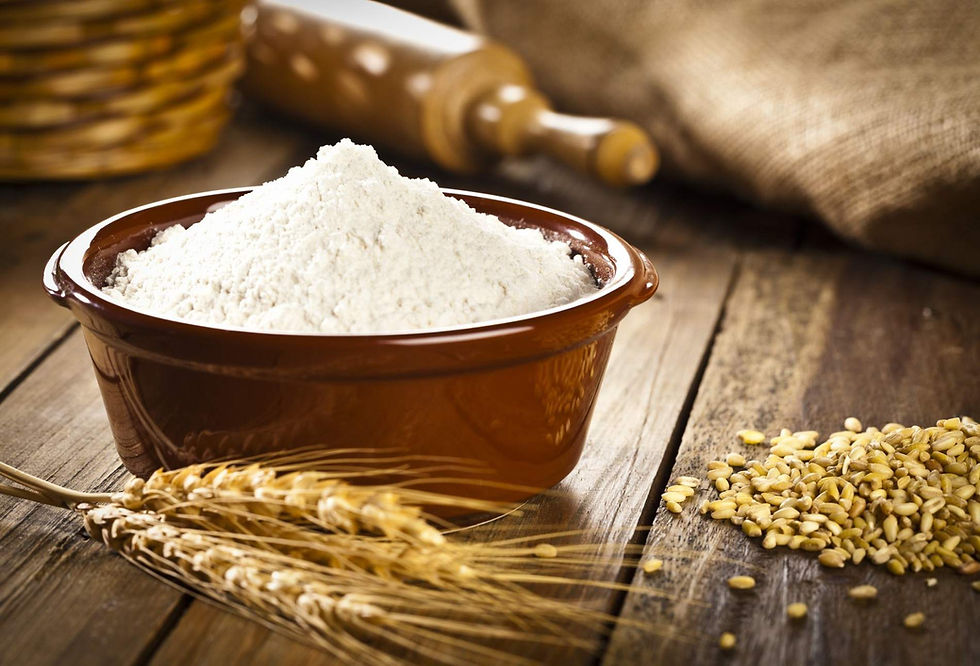
Today, as farmers, breeders, millers, bakers, and cooks search for more resilient, diverse, and flavorful food systems, we are looking backward for clues about how to move forward. The future of wheat may depend, in part, on what we nearly left behind.
What do we mean by heritage wheat?
The language surrounding older grains can be confusing because terms such as heritage, heirloom, ancient, and landrace are often used interchangeably. They are not quite the same thing.
Heritage wheats generally refer to older varieties of common wheat that predate much of modern semi-dwarf breeding. Landraces are traditional populations shaped over generations through farmer selection and adaptation to particular environments. Ancient wheats, including einkorn and emmer, belong to earlier domesticated forms of wheat, while spelt is often grouped among ancient or hulled wheats.
Sicily preserves another important part of this story through traditional durum wheat landraces such as Timilia, also known as Tumminia. Timilia has a long history in Sicily and the Mediterranean and remains valued for its distinctive qualities and deep connection to the island’s agricultural and culinary heritage. Research continues to document significant genetic diversity within Sicilian durum wheat landraces such as Timilia.
What unites these grains is not that they are automatically “better” than modern wheat. Their importance lies in the broader reservoir of agricultural history, genetic diversity, flavor, and cultural knowledge they represent.
Consider Red Fife. First grown in Canada by David Fife in Ontario in 1842, it became widely cultivated and later contributed to Canadian wheat breeding, according to Agriculture and Agri-Food Canada’s history of Canadian wheat breeding.
Or Turkey Red, which Mennonite immigrants from southern Russia brought to Kansas in the 1870s. It helped establish hard red winter wheat across the central and southern Plains and contributed to the region’s wheat industry, as documented in USDA Agricultural Research Service records. These are not simply old seeds. They are chapters in the agricultural history of places and people.
Why did so many wheat varieties disappear?
The answer is more complicated than simply blaming industrial agriculture. For generations, farmers and plant breeders selected wheat for traits people genuinely needed: higher, more reliable yields; disease resistance; earlier maturity; stronger straw; improved milling qualities; and better performance under particular growing conditions.
Modern wheat breeding dramatically increased productivity and helped feed a growing global population. But success also brought consolidation. As fewer high-performing varieties occupied larger acreages, a wide range of locally maintained varieties moved out of commercial production. Some survived in farmers’ fields. Others remained in seed collections and germplasm banks.
The result is something of a paradox: agriculture became extraordinarily productive while much of the diversity that preceded modern breeding became less visible in everyday farming. That diversity, however, did not lose its value.
Why does grain diversity matter?
Modern wheat breeding is far from finished. Breeders and researchers continue to return to landraces, wild relatives, and older germplasm because these materials may contain useful traits that are scarce in contemporary varieties.
Researchers are examining traditional wheat populations for genetic variation associated with drought and heat tolerance, disease resistance, yield stability, and adaptation to challenging environments.
In one study of 990 bread-wheat landraces, researchers identified genetic material linked to drought and heat tolerance that could support future breeding programs. CIMMYT highlighted the work in its research on drought and heat tolerance in bread-wheat landraces.
A recent systematic review also found that wheat landraces and other genetically diverse populations can contribute valuable traits for drought tolerance, disease resistance, adaptability, and yield stability, particularly in organic and marginal farming systems. The review of traditional wheat populations and genetically diverse materials reinforces why diversity gives breeders and farmers more options.
Brainz Magazine also explores this broader relationship between agriculture, food choice, and climate resilience in Smart Foods for Your Health and the Climate.
That distinction matters. Older does not automatically mean better. But diversity gives agriculture options. In a changing climate, options matter.
What do we lose when every field grows the same thing?
We lose more than genetic variation. We may also lose flavor. Wheat varieties can differ in aroma, sweetness, nuttiness, color, texture, protein characteristics, and how they behave in bread, pasta, pastry, or fermentation. A variety bred primarily for commodity production may serve one purpose extremely well, while another grain may offer qualities a baker, miller, pasta maker, or chef values.
As a chef, this is where the conversation becomes tangible. A grain becomes flour. Flour becomes dough. Dough becomes bread. Suddenly agricultural diversity is no longer an abstract idea. It becomes something you can smell, touch, taste, and share. That is where preservation stops being theoretical. Grain also carries cultural memory.
Food is one way people remember who they are. Seeds migrate with people. Recipes travel with families. Varieties become associated with landscapes, migration routes, farming traditions, mills, bakeries, and particular ways of eating.
Turkey Red is a powerful example. Its place in the Great Plains is inseparable from the Mennonite communities who carried the seed, planted it, and helped establish the hard red winter wheat tradition that became so important to American bread production. Sicilian grains tell similar stories. Timilia and Russello remain connected not simply to agriculture but to particular landscapes, breads, farmers, and regional traditions.
When a grain disappears, we may retain its name in an archive. But we risk losing the living chain around it: the farmer who knows how it grows, the miller who understands how it mills, the baker who knows how it behaves, and the cook who remembers what it was meant to become. Preserving grain is also preserving knowledge.
Why are these grains returning now?
Part of the answer is flavor. Part is curiosity. Part is a growing recognition that agriculture needs genetic diversity. Researchers are actively examining gene banks and traditional wheat collections for traits that may strengthen future wheat varieties. At the same time, farmers, regional grain networks, small mills, artisan bakers, chefs, and consumers are creating markets for grains that may never compete with commodity wheat on yield or scale but have value because of their flavor, history, regional identity, or suitability for particular foods.
These are two very different movements: scientific conservation and culinary rediscovery. But increasingly, they meet around the same seed.
That is where I believe things become especially interesting. A grain preserved for its genetic value can also find new life when someone wants to grow it, mill it, bake with it, or put it back on the table. Preservation becomes participation.
Brainz has also explored the connection between land, farming, and human experience in How Regenerative Farms Can Save Your Soul As Well As The Soil.
What should you look for when buying heritage flour?
Start with the grain’s name. “Whole wheat flour” tells you how much of the kernel remains in the flour, but little about the wheat itself. Look for producers who identify the variety and, whenever possible, tell you where it was grown.
Then ask a few simple questions:
Where was the grain grown?
Who grew it?
What variety is it?
Was it stone-milled or roller-milled?
When was it milled?
Is it whole grain or sifted?
What does the farmer or miller recommend using it for?
These questions turn flour from an anonymous commodity back into an agricultural product with a source, a farmer, a place, and a purpose. Freshly milled whole-grain flour also retains the germ and its natural oils, so freshness and proper storage matter. Most importantly, taste it.
The revival of heritage grain will not be sustained by history alone. These grains must also earn a place in contemporary kitchens because people enjoy cooking and baking with them.
The shared table may be part of the solution
This is the part of the grain story that captivates me most. We can preserve thousands of seed samples in collections, and we absolutely should. But a grain remains culturally alive when people also grow it, mill it, cook with it, buy it, eat it, and teach the next person how to use it. Preservation cannot live only in a seed bank. It must also live in a field. In a mill. In a kitchen. Ultimately, around a table.
This understanding lies at the heart of my work with The Grain Keeper: reconnecting the seed to the farmer, the farmer to the miller, the miller to the cook, and the cook to the person who ultimately breaks the bread.
Perhaps the future of food is not entirely new. Perhaps some of it is waiting for us in the grains we stopped noticing. From Soil to Soul, the work is not simply to save the seed. It is to keep the story alive.
Continue the journey from seed to shared table
To explore more about heritage grains, regional food traditions, and the stories connecting seed, table, and place, follow Margie Raimondo’s work through The Grain Keeper and Urbana Farmstead.
Read more from Margie Raimondo
Margie Raimondo, Agrarian Storyteller, Chef, Author, Educator & Filmmaker
Margie Raimondo is an agrarian storyteller and chef whose work explores food, agriculture, heritage, and culture. She founded Urbana Farmstead and The Grain Keeper and is an author, educator, and filmmaker preserving the stories and traditions that connect seed, table, and place.



