The Art of Extraordinary Possibility – An Interview with Dawn Elgin
Dawn Elgin is challenging the way we think about success, personal transformation, and leadership. As the founder of The Aligned Human Project, she is bringing a different conversation to the forefront: What becomes possible when we stop trying to overcome our humanity and begin understanding it?
A traumatic brain injury led Elgin to question how much of her identity was tied to what she could achieve. In this interview, she explains how that experience shaped her approach to Human Alignment and explores how recognising the beliefs behind our reactions can help us make more deliberate choices, build trust, and lead under pressure.
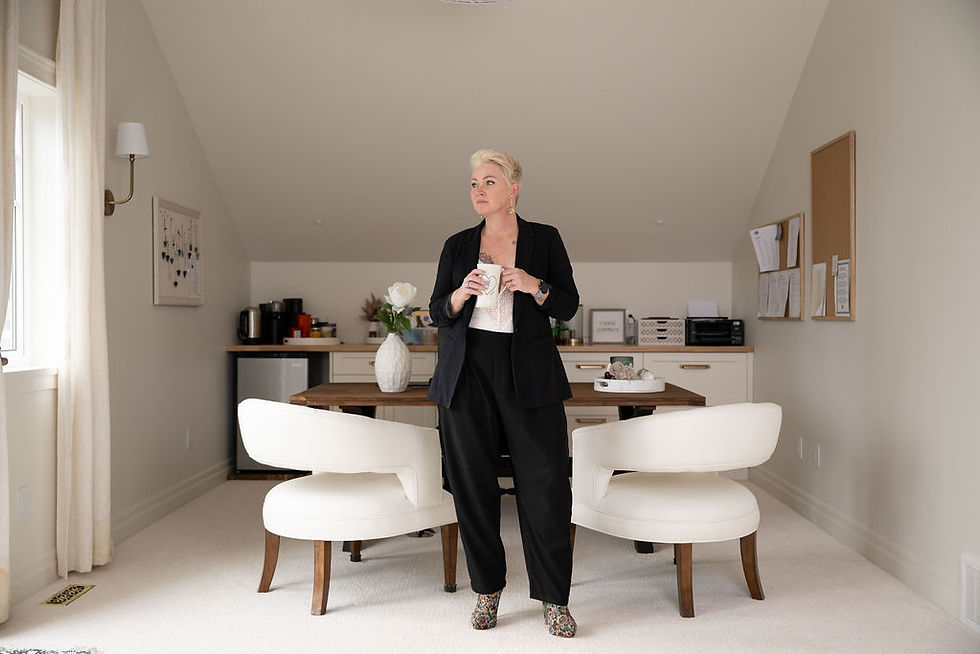
Dawn Elgin, Architect of Human Alignment
Dawn, you've built your work around something you call Human Alignment. Before we explore that, tell us a little about yourself and the journey that brought you here.
My journey has certainly not been a straight line, and looking back, I wouldn't have it any other way. Although I might have had a few choice words about that along the way!
Before stepping into this work, I spent more than a decade in the high-end lighting industry. I was a lighting designer, showroom director, and leader. I loved the creativity, the people, and the challenge of bringing someone's vision into reality. I was known as the Lighting Goddess, a title I thoroughly enjoyed.
Then life took a rather unexpected turn. Two car accidents and a traumatic brain injury changed almost everything about the way I experienced the world. The person I had spent so many years becoming, the one who could push through, figure things out, and keep going no matter what, suddenly couldn't operate the way she always had.
I found myself questioning things I'd never really questioned before. Who was I without my career? Without my ability to perform at the level I expected of myself? Without the roles and identities I'd built my life around? It was an incredibly confronting experience, but it opened a door I might never have walked through otherwise.
I became fascinated with consciousness, the nervous system, human behaviour, ancient wisdom, and the relationship between our inner experience and the lives we create. The more I explored, the more I began to recognize how much of what we call our personality, our identity, and even our limitations is shaped by what we've learned to believe.
That exploration eventually became Practical Spiritualism, Field + Form: The 12 Laws of Co-Creation, and The Aligned Human Project. Today, I work with individuals, visionary founders, and organizational leaders who are ready to explore what becomes possible beyond the limitations they've come to accept as truth.
There's a certain poetry to the journey. I spent years designing light for the spaces people inhabited. Now my work is about helping people recognize the light within themselves and bring it into the way they live.
What exactly is Human Alignment, and why do you believe it's so important?
Human Alignment is the practice of bringing who we are, what we believe, how we choose, and what we create into greater coherence. It sounds simple, but when we begin looking at how human beings actually operate, we discover just how often those things are working against one another.
Most of us have been taught to approach change by focusing on behaviour. We want to be more confident, communicate better, develop healthier habits, become more productive, or stop reacting in ways we later regret. So we look for strategies, tools, and techniques to help us change what we're doing.
There's nothing inherently wrong with that approach, but it often overlooks a fundamental question. What's driving the behaviour in the first place?
Imagine a leader who genuinely values open communication but becomes defensive whenever someone challenges their perspective. They might understand every principle of effective communication and still struggle to apply those principles when they feel threatened. Or consider someone who dreams of building an extraordinary business but repeatedly pulls back when opportunities for greater visibility appear.
We can call these things self-sabotage, poor communication, or a lack of confidence. But those labels don't necessarily help us understand what's happening.
Human Alignment invites us to become curious about the beliefs, expectations, emotional responses, and protective patterns operating beneath our conscious intentions. It asks us to develop the capacity to remain present with our experience so we can respond from our values rather than automatically reacting from our conditioning.
I want to be very clear about something. Alignment is not about becoming perfectly calm, endlessly positive, or immune to life's challenges. We're human. We experience fear, grief, uncertainty, anger, disappointment, and everything in between.
The goal isn't to eliminate those experiences. It's to become capable of experiencing them without automatically surrendering our ability to choose how we participate in our lives.
Your signature philosophy is called The Art of Extraordinary Possibility. What does that mean to you?
I absolutely love this conversation because I believe most people have no idea how much of what they consider possible has been shaped by what they've already experienced.
Think about it. From the moment we're born, we're learning how the world works. We learn what earns approval, what creates conflict, what makes us feel safe, what threatens our sense of belonging, and what people like us are supposedly capable of achieving. We make meaning out of our experiences, and over time, those meanings become beliefs.
Eventually, we stop questioning them. We simply call them reality.
But what if some of the limitations we've accepted aren't actually limitations at all? What if they're conclusions we reached at a particular point in our lives, based on the information, experiences, and emotional capacity we had available at the time?
The Art of Extraordinary Possibility is an invitation to question those conclusions and become curious about what else might be possible.
Now, I'm not talking about simply thinking positively, creating a vision board, or pretending that anything we imagine will magically appear. I'm talking about something much deeper. We can have an extraordinary vision for our lives and still carry patterns that make the reality of that vision feel unfamiliar, overwhelming, or even threatening.
That's why the work isn't just about expanding the vision. It's about expanding the human being's capacity to live it.
I often tell my clients, "You don't need a smaller vision. You need the capacity to live your bigger one."
I work with incredibly capable people who have already created significant success. They're not looking for someone to convince them they can achieve something. They know they can. What they're exploring is how to move into an entirely new expression of themselves without bringing every old limitation along for the ride.
The invitation at the heart of this philosophy is simple: Dream beyond what you've known. Become capable of what you envision.
You challenge the idea that we need to fix ourselves to become better. Why is that distinction so important?
Because I think we've created an entire culture around the idea that human beings are problems to be solved.
We're constantly being encouraged to improve ourselves, optimize ourselves, overcome our weaknesses, eliminate our fears, and become better versions of who we are. While I'm a tremendous advocate for growth, I think we've confused growth with the belief that something about us is fundamentally inadequate.
One of the questions I keep coming back to is this: What if the parts of ourselves we've spent a lifetime trying to fix are the very parts that most need our understanding?
Consider perfectionism. We can spend years trying to stop being perfectionists, but what if perfectionism developed because making mistakes once carried a high emotional cost? What if people-pleasing became a way to preserve connection? What if control developed because uncertainty once felt overwhelming?
These patterns often have understandable origins. They may have helped us navigate circumstances when we didn't have other resources available. That doesn't mean they're still serving us, and it certainly doesn't mean we aren't responsible for the impact of our behaviour. It means that understanding the pattern gives us a much more useful starting point than condemning ourselves for having it.
This is why three principles are inseparable in my work: radical self-acceptance, radical self-compassion, and radical self-responsibility.
Self-acceptance allows us to acknowledge what's actually happening. Compassion gives us the willingness to understand it without attacking ourselves. Responsibility reminds us that regardless of how a pattern developed, we have a role in what happens next.
I'm not interested in giving people permission to remain stuck in behaviours that hurt themselves or others. I'm interested in helping them understand those behaviours well enough that they can genuinely change them.
There's an enormous difference between taking responsibility for ourselves and making ourselves wrong for being human.
How does this philosophy connect to your book, Align Your Life!, and Field + Form: The 12 Laws of Co-Creation?
Everything I create is ultimately an exploration of the relationship between our inner experience and the lives we're living.
My book, Align Your Life!, invites readers to begin recognizing the beliefs and patterns shaping their experience and reclaim their capacity to participate consciously in what they create.
Field + Form: The 12 Laws of Co-Creation explores the deeper principles underlying that process. It brings together threads from ancient spiritual traditions, philosophy, and contemporary understandings of human experience, asking how these ideas can become practical tools for everyday living.
I use the terms Field and Form to describe two interconnected aspects of our experience. The Field represents our inner world, including our beliefs, interpretations, intentions, emotions, awareness, and the internal conditions from which we operate. The Form is how that inner world is expressed through our behaviour, communication, relationships, decisions, and actions.
I think one of the greatest misunderstandings in personal development is the idea that understanding something intellectually means we've transformed it.
You can understand why you react defensively and still become defensive. You can recognize a limiting belief and still organize your choices around it. You can know the importance of boundaries and still struggle to establish them.
Knowledge is valuable, but embodiment is where that knowledge becomes part of how we actually live.
That's why my work continually returns to practical questions. What happens when you feel challenged? What meaning are you assigning to an experience? Can you recognize the difference between what's happening and the story you're telling yourself about what's happening? Can you remain present long enough to make a conscious choice?
For me, spirituality has never been about escaping the human experience. It's about becoming more fully present within it. That's why I founded Practical Spiritualism in the first place. I wanted to bring these conversations out of the abstract and into the reality of our relationships, businesses, decisions, and everyday lives.
You work with visionary founders, entrepreneurs, and executives. What do you see as the greatest challenge for people who have already achieved considerable success?
I think one of the most interesting things about success is that it doesn't automatically change the beliefs we hold about ourselves.
Someone can build a multimillion-dollar business, lead hundreds of people, or accomplish something truly extraordinary and still carry an internal expectation that they have to prove their worth, maintain control, or keep everyone happy.
Success can change our circumstances without necessarily changing the patterns through which we experience those circumstances.
I also think we need to stop assuming that every successful person who wants to grow is secretly miserable, burned out, or trying to escape their life. Many of the people I love working with are genuinely excited about what they've created. They're passionate, visionary, and deeply engaged in their work. They aren't looking to abandon their ambition. They're ready to explore what else is possible.
But expansion has a way of bringing us face-to-face with the edges of what's familiar.
A leader might be completely comfortable managing a successful company but feel an unexpected contraction when considering a much larger public role. An entrepreneur might love creating and innovating but struggle with delegating because their identity has become intertwined with being indispensable.
These experiences aren't necessarily signs that the vision is wrong. Sometimes they're invitations to examine the patterns that have shaped our current capacity.
My work is about helping people recognize those patterns, understand what they're protecting, and develop the capacity to move beyond them.
I don't believe extraordinary success should require us to sacrifice our health, relationships, integrity, or humanity. I certainly don't believe we need to shrink our ambitions to create a meaningful life.
I believe we can expand our capacity to hold more of what we genuinely want to create.
How does Human Alignment translate into leadership and organizations?
This is where the work becomes especially interesting because organizations are made up of human beings, yet we often approach organizational challenges as though the human experience is somehow separate from business performance.
We invest in communication training, leadership development, performance management, culture initiatives, and organizational change. These are all important, but we can overlook the internal patterns that influence how people actually use those tools.
A leader can understand the importance of psychological safety and still respond defensively to feedback. A manager can believe in accountability and still avoid difficult conversations. A team can have clearly documented values and still operate through mistrust, unspoken expectations, and protective behaviour.
The question isn't always whether people know what good leadership looks like. Sometimes the question is whether they have the capacity to practice it when they're under pressure.
Through AlignmentOS, I bring Human Alignment into leadership development and organizational culture. We explore the relationship between self-awareness, emotional capacity, communication, trust, accountability, and the environments people create together.
Of course, organizational problems aren't always individual alignment problems. Excessive workloads, poor systems, unclear roles, unfair practices, and inadequate resources are real issues that require structural solutions. Human Alignment doesn't replace those responsibilities. It helps leaders recognize and work with the human dynamics that influence how those systems are experienced and managed.
I often describe the progression as Human Alignment, Leadership Alignment, and Organizational Alignment. When individuals become more aware of their patterns and more capable of responding consciously, they can contribute to healthier relationships and more effective leadership. When those qualities are supported by appropriate structures and shared accountability, they can influence organizational culture.
Ultimately, leadership isn't simply what we know or what we intend. It's what other people experience through the way we show up.
You've also developed The Architecture of Trust. What makes trust such a central part of your work?
Trust has become one of the most fascinating aspects of my work because the more I explore alignment, the more I recognize how deeply the two are connected.
I've come to define an Aligned Human as someone whose presence naturally creates trust because there is no gap between who they are being and what they are expressing.
That doesn't mean they're perfect or that everyone will agree with them. It means there's a recognizable consistency between their values, words, choices, and behaviour. They're willing to acknowledge mistakes, take responsibility, communicate honestly, and repair relationships when necessary.
The Architecture of Trust explores four interconnected dimensions: trust in self, trust between people, trust in teams, and trust in life.
Trust in self is particularly important because so many people have learned to look outside themselves for permission, approval, certainty, or a sense of belonging. When we begin developing self-trust, self-respect, and the capacity to remain connected to ourselves through discomfort, our relationships with other people can change significantly.
That doesn't mean becoming independent of everyone or no longer caring what others think. We're relational beings. We need connection, cooperation, and belonging. The distinction is that we can participate in those relationships without making another person's approval the foundation of our own identity.
In organizations, trust also requires consistency, fairness, transparency, clear expectations, and accountability. We can't simply ask employees to trust leadership while ignoring the systems and behaviours that undermine trust.
One of the ways I express the relationship is that trust is what it feels like when someone's Field and Form are in alignment.
I believe this is an important conversation for leadership because trust isn't something we can manufacture through a communication strategy. It develops through what people consistently experience.
What is The Aligned Human Project, and what is your larger vision for it?
The Aligned Human Project is the larger movement that brings all of this work together, and it's something I feel an enormous sense of purpose around.
I look at the world we're living in and see extraordinary technological advancement, access to information, and opportunities that previous generations could barely have imagined. Yet I also see people struggling with belonging, identity, disconnection, fear, and the relentless pressure to become something more.
We've become incredibly sophisticated at measuring performance, productivity, and achievement, but I wonder whether we've given nearly enough attention to the human beings behind those measurements.
What if extraordinary human potential isn't about overcoming our humanity? What if it's about becoming so deeply at home in our humanity that we no longer need to abandon ourselves in order to become extraordinary?
That's the conversation I want The Aligned Human Project to bring into the world.
I want to see people who can experience disagreement without immediately turning one another into enemies. Leaders who can remain present with difficult truths without becoming defensive or shutting down. Individuals who can pursue extraordinary visions without believing their worth depends on the outcome. Organizations where accountability and compassion aren't treated as competing values.
And I want this work to be accessible across belief systems, cultures, industries, and backgrounds. Someone doesn't need to share my spiritual philosophy to benefit from greater self-awareness, conscious choice, emotional capacity, and personal responsibility.
The Aligned Human Project is expressed through books, speaking, education, leadership development, practical tools, and the Aligned Human Playbooks. But the movement itself is much bigger than any individual program or framework.
It's an invitation to reconsider what it means to be human and what becomes possible when we begin living and leading from greater alignment.
If readers take one thing away from your work, what would you want them to remember?
I would want them to recognize that their humanity is not something they need to overcome to become extraordinary.
We've been taught so many versions of the same message. Be stronger. Be more confident. Stop being afraid. Get over your past. Think positively. Push harder. Become the best version of yourself.
But what if we began with understanding instead of judgment? What if we became curious about our fears rather than trying to overpower them? What if we recognized that the patterns we've developed throughout our lives are not necessarily permanent truths about who we are?
I believe we have an extraordinary capacity for awareness, growth, connection, creativity, and change. But that capacity isn't realized by pretending we don't experience pain, fear, uncertainty, or disappointment.
We're not trying to create people who never experience those things. We're developing people who can experience them without automatically surrendering their capacity to choose, connect, and create.
That's a very different relationship with ourselves, and it changes the way we participate in our relationships, our work, and the world around us.
So if there's one invitation I'd leave with readers, it's to become curious about the limits they've mistaken for truth. Question what you've learned to believe about yourself. Explore what your patterns might be protecting. Give yourself permission to imagine possibilities that your past hasn't yet provided evidence for, and then begin creating that evidence through the choices you make.
You don't need to become less human to create an extraordinary life. You need to become more conscious of the human being who's creating it.
That's the heart of Human Alignment, and that's the work I'm here to do.
Read more from Dawn Elgin