The 7 Habits Of Equality – Which Ones Are You (Not) Living?
Updated: Mar 16, 2025
Written by: Laurie Levin, Executive Contributor
Executive Contributors at Brainz Magazine are handpicked and invited to contribute because of their knowledge and valuable insight within their area of expertise.

As a Coach who focuses on health and wellbeing (nutrition, stress/anxiety reduction, and a healthy weight/lifestyle), I oftentimes say: "Either you are living habits of health or you are living habits of disease.” The goal of course is to eliminate habits of disease so that you don’t create a disease.
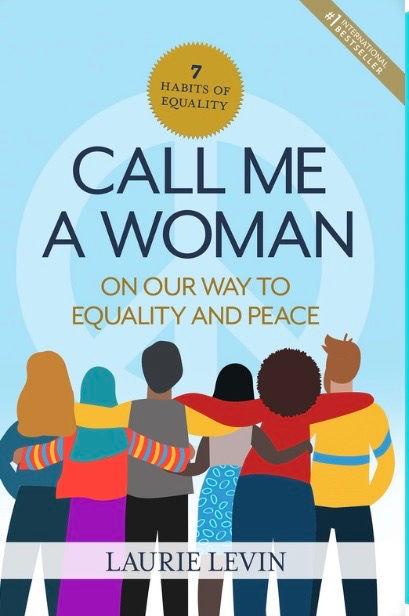
As an author and social justice advocate as well, the same holds true for habits of inequality that most of us are living without understanding the impact they have on our lives. In my book, Call Me A Woman: On Our Way to Equality and Peace, I put it this way:
As is true when we choose habits of health, unplugging from habits of disease, we begin to feel less discomfort and healthier. As we live more Habits of Equality, people are happier, uplifted by the good news of the day, and the improving quality of their lives—equal pay, equal health care, equal representation, and opportunities.
Before we take a look at the 7 Habits of Equality, let’s take a closer look at the habits of inequality that so many of us are living on a daily basis; unaware in most instances the impact these habits and countless double standards have on our lives, our health, and futures—individually and collectively.
Consciousness is critically important to progress. Which habits of inequality are you living?
1. Pink for girls, blue for boys
Assigning colors, toys, sports, activities, etc., based on gender is as crazy as assigning our children, at birth, to a specific college and major. In many ways that is what we are doing. Kids are taught from their earliest of days they are on one track or another, beginning with balloon/baby announcement and clothing colors, to sports and activities. We significantly limit theirs and our collective potential, skillset, creativity, and aspirations when we perpetuate this archaic and harmful gender-based paradigm.
2. Boys will be boys
This commonly heard phrase and attitude perpetuates entitlement, a lack of responsibility and accountability, misconduct, and oftentimes illegal acts including rape, other forms of violence, and corruption. Imagine a world where children, regardless of gender, are raised with the same expectations when it comes to good behavior and that bad behavior is not excused for boys because they are boys. I think we have all experienced, in one form or another, the suffering entitled boys and men bring to a family, workplace, and community.
3. Big boys don’t cry
I can’t think of many things worse to teach a child than to not feel their feelings or express them. This weakens boys (and anyone else raised this way) and makes a person more prone to violence, poor health, and poor relationships. Strong children and adults are comfortable with their feelings and manage them—not suppress them. Suppressed feelings are a nightmare kicked down the road in their relationships, careers, and health.
4. Calling women girls
Just a few years ago, a Webster dictionary defined men by stating, “sometimes men are called boys when they are acting childishly.” Not so for women! The definition for girls, at that same time, was that women are oftentimes referred to as girls. No mention of behavior when we call women girls. In other words, a synonym.
Let’s be clear. Girls and boys are children by definition. Women and men are adults. Referring to women as girls is like a racist calling a black man a boy. We might not feel the same discomfort because calling women “girls” is normalized in a patriarchal society. That’s what we’re working to end—habits of inequality that perpetuate sexism, misogyny, and patriarchy.
Consider how often you hear a 50-year old woman referred to as a ‘salesgirl.’ Think how many times you hear a 50-year old man referred to as a ‘salesboy.’ You don’t! Start calling 50-year old men ‘boys’ and you’ll feel the discomfort we need to feel when women are called girls.
It doesn’t matter the age or rank; women and men commonly refer to adult females as girls. How can we expect women to be paid like an adult, or elected and promoted as often as men, when we still refer to them as children?
5. Females subsumed—in the male pronoun and in marriage
Oh boy. Mankind. Man the station. Hey guys—calling everyone in the room guys when many are not. Using the male pronoun “he” when gender isn’t known for animals and people—all examples of women subsumed in the male pronoun.
As Gloria Steinem once said about women’s intellectual self-esteem as their years of education increase, “Women have been studying our own absence.” And when our language leaves women out and women are subsumed in everything male, we erase women in the present.
There are so many habits of inequality when it comes to marriage. Before the wedding, women wait for the proposal. Most heterosexual women still change their last name to his when they get married with very few men changing their last name to her name. Men are asking women’s parents for their permission to marry their daughter—still!
“Miss and Mrs.” Men are not expected to proclaim their marital identity every time they sign their name. Goodness—is the worth of women still dependent upon their marital status? All this sounds like it’s from the 19th century, not the 21st.
6. “The man of the house.” “She doesn’t work.” News Flash: It doesn’t take ovaries to do housework and care for children
Well, fortunately the expression “man of the house” is on its way out. Let’s speed it up!
I still hear women who take care of their children and home say that they “do not work!” Whether you ‘provide’ outside the home or provide inside the home—you work! You are both providers! Most will agree, particularly those of us who have cared for children, along with very demanding jobs outside the home, that caring for children and home is one of the most labor-intense and difficult roles of all.
Let’s now create some equality and turn our attention to the 7 Habits of Equality. (The quotes below are taken from my book: Call Me A Woman: On Our Way to Equality and Peace. Discussions of each Habit of Equality are shortened significantly in the interest of space and your time.)
1. Start the kids off equally with one identity—a human identity
“A single human identity based on love, compassion, and connection, and the ability to feel and express one’s emotions, are essential for a successful and fulfilling life.”
2. Start the marriage/family on equal footing
There are so many habits of inequality as it relates to marriage and starting families—far too many to include here. Here’s a starter list: waiting for men to propose, the majority of heterosexual women taking men’s last names while very few heterosexual men take women’s last names, the terms Groomsmen vs Bridesmaids—how about Brideswomen? Best Man vs Maid of Honor—how about Best Woman?
‘You may now kiss the bride.’ You is inferred to be the man who takes the action while she waits passively to be kissed. How about “you may now kiss each other?”
‘I now pronounce you man and wife’—he remains a man while she becomes a role. How about, ‘I now pronounce you wife and husband?’
3. Call her a woman
“When gender is relevant, the most respectful thing you can call a woman is a woman, not a girl—just as we call males men when they reach adulthood. Girls are children, as are boys. When we shift away from the gender bias in our language, we elevate women to their rightful place—worthy of the same respect, pay, and opportunities as men.”
4. Respect and appreciate kind, caring, and peaceful men, and strong, confident, and smart women
I think this one speaks pretty much for itself. Current gender identities do not honor either: kind, caring, and peaceful men or strong, confident, and smart women. In fact, current gender identities diminish and marginalize both which is what perpetuates the patriarchy and inequality.
5. Speak equality
“Pay attention when you hear phrases like “man of the house” and “she doesn’t work.” Challenge them. Men, when you hear other men calling men ‘ladies’ as an insult, call them on it. When you hear your friends, family members, and colleagues speak disparagingly about females, intervene. Speak up for equality.”
And let’s stop joking about sexism. I like to think that most people would not even consider joking about racism. Both can be deadly, so let’s make them equally serious.
6. Vote equality
“Constitutional equality—women have only one constitutional right; the right to vote. The Equal Rights Amendment (ERA) will finally put the protection of women’s rights in the U.S. Constitution. We’re so close. It’s our responsibility and our time to make it happen.”
Vote for equal representation. Let’s make equal representation a goal: In the public and private sectors, in history books, on the front pages of newspapers, including business and sports sections.
Equal pay (equal pay for women in the U.S. will cut poverty rates in half for employed women and their children and add $500 billion of income to U.S. economy-Institute for Women’s Policy Research, 9/6/20), freedom to make one’s own health care choices, and equal work at home—all essential to create an equitable, secure, and safe future for us all. Vote for policies and legislators that support equality.
7. Age with grace
“In the healthiest cultures in the world, the elderly are revered. What they are not doing is spending hours every month and umpteen dollars coloring their hair, having surgeries to alter their bodies to be something they never will be again. There is great freedom in embracing the changes and stages we go through as human beings. We give our children the gift of aging gracefully as they see their loved ones age with grace and ease.”
Our habits make us who we are, individually and collectively. By living Habits of Equality we change the world; one word, one choice, one action, at a time.
Inequality is a heavy load to bear and hurts us all. Let’s lighten the load. Live consciously. Choose equality.
Laurie Levin, Executive Contributor Brainz Magazine
Laurie Levin is an author (Call Me A Woman: On Our Way to Equality and Peace) and Transformation Coach. She specializes in optimal nutrition, healthy weight loss, and the leading HeartMath® stress reduction techniques. She has been a featured speaker on each of these topics. Laurie has an MBA, is a Certified Coach, and HeartMath® Certified Coach, supporting clients globally to achieve their health and well-being goals. Her new book, Call Me A Woman: On Our Way to Equality and Peace, provides real-life experiences, global studies, and insights, and the 7 Habits of Equality that will reshape the world into one where all children have equal opportunities, from the beginning to the end of their lives. Healthy happy equal: It takes all 3 to thrive!