

Tarot as a Reflective Practice for Nervous System Awareness
Tatiana Aleobua is a Registered Nurse, Certified Reiki Practitioner, and Certified NASM Wellness and Nutrition Coach with over a decade of medical experience that shaped the foundation of her holistic wellness business. She supports individuals through integrative mind, body, and energy-based care.

Tarot is commonly associated with prediction, spirituality, and the pursuit of answers about the future. Yet the practice can also be understood through a different lens–one less focused on forecasting what comes next and more focused on becoming aware of what is occurring in the present moment.
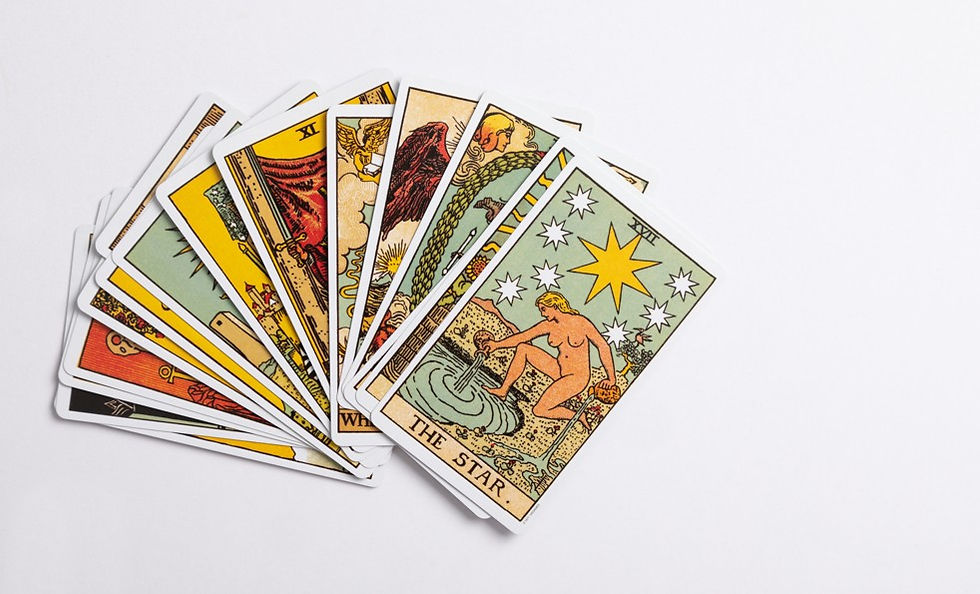
In an increasingly overstimulated world, many people navigate professional responsibilities, caregiving demands, financial pressures, relationships, technology, and constant access to information. The body may appear to be at rest while the mind remains active, anticipating the next responsibility, decision, or potential problem.
As a registered nurse and holistic wellness practitioner, I am particularly interested in the intersection of self-awareness, stress physiology, and the intentional practices people use to create space for reflection.
Within that context, tarot can be viewed differently. Rather than asking whether tarot itself “regulates” the nervous system, a more precise and professionally responsible question may be, "Can the reflective process surrounding tarot create conditions that support greater self-awareness, emotional processing, and a sense of grounding?"
Understanding the nervous system’s response to stress
The autonomic nervous system regulates many functions without conscious effort, including heart rate, respiration, digestion, and physiological responses to stress.
When a threat is perceived, the sympathetic nervous system helps mobilize the body for action. This response is protective and necessary. However, modern stressors are not always brief or easy to resolve.
Work demands, caregiving, relationship difficulties, financial concerns, grief, uncertainty, and chronic emotional strain can contribute to prolonged periods of heightened stress.
People may experience this differently. Some feel restless and hypervigilant. Others become emotionally overwhelmed, irritable, fatigued, disconnected, or unable to concentrate.
The goal of nervous system regulation is not to eliminate stress altogether. Stress is a normal part of human life. Rather, regulation involves developing the capacity to recognize one’s internal state and respond to stress with greater flexibility and intention. Self-awareness becomes an important part of that process.
Tarot as a structured reflective practice
A tarot reading typically involves several behaviors that are easily overlooked when discussions focus exclusively on the cards themselves.
A person pauses what they are doing.
They identify a question or concern.
They direct attention toward a specific experience.
They observe imagery and symbolism.
They consider their emotional responses.
They reflect on how the themes presented relate to their current circumstances.
In this sense, tarot can function as a structured prompt for introspection. The cards do not need to be viewed as having a direct physiological effect on the nervous system for the experience to hold value. Instead, the process can invite a person to slow down and examine thoughts, emotions, behaviors, and patterns that may otherwise remain unrecognized.
This distinction is essential. Tarot should not be positioned as a clinical intervention for nervous system dysfunction. It may, however, fit within a broader personal wellness practice centered on reflection, self-awareness, and intentional meaning-making.
Why the pause matters
One challenge of chronic stress is that people may become accustomed to functioning in a state of constant activity. We move from one responsibility to another without intentionally evaluating what that pace is costing us.
The nervous system continually receives information from both the external environment and the internal body. Creating intentional periods of reduced stimulation may give individuals an opportunity to notice their internal experiences more clearly.
A tarot session can provide such a pause. The ritual itself: sitting quietly, slowing the pace of conversation, focusing attention, and considering a meaningful question. Can create an environment that differs significantly from the pace of everyday life.
For someone who spends much of the day responding to the needs of other people, simply being invited to direct attention inward can be significant.
How symbolism can give language to experience
Human beings have used symbols, stories, art, and metaphor to make meaning of their experiences for centuries. Tarot operates within that tradition. For example, the Ten of Wands is commonly associated with burden, responsibility, and carrying a heavy load.
Rather than interpreting the card solely as a prediction, it can become the starting point for reflection, "What am I carrying right now?"
Which responsibilities are necessary, and which have I taken on unnecessarily?
Where am I experiencing exhaustion?
What would support look like in this season of my life?
The card does not diagnose the individual’s emotional state. Instead, its imagery provides a framework for examining an existing experience. This distinction transforms tarot from a passive search for answers into an active process of self-inquiry.
Developing emotional awareness
A person can experience stress physiologically before consciously identifying its emotional source. Tension in the shoulders, changes in breathing, restlessness, difficulty concentrating, irritability, or a sense of uneasiness may emerge before someone can clearly articulate what is troubling them.
Reflective practices provide an opportunity to notice those experiences. During a tarot reading, an image or interpretation may create an immediate emotional reaction. Rather than treating that reaction as proof of a prediction, approach it with curiosity.
What about this card feels significant to me?
What emotion appeared when I saw it?
What situation came to mind immediately?
What am I noticing in my body while discussing this subject?
These questions encourage observation rather than judgment. Developing the ability to identify emotions and internal experiences can support more intentional responses to stress. Awareness does not automatically resolve a problem, but it can create an important space between experiencing an emotion and reacting to it.
Moving from prediction to personal agency
One of the most valuable shifts in contemporary tarot practice may be moving from predictive questions toward empowering, reflective ones.
Uncertainty naturally creates a desire for answers. When people feel anxious about relationships, careers, finances, or major life transitions, asking what will happen can feel reassuring.
However, an exclusive focus on prediction can place a person’s sense of control outside of themselves. A reflective approach asks different questions.
Instead of asking, “Will this relationship work?” Consider, “What do I need to understand about my needs, boundaries, and behavior within this relationship?”
Instead of asking, “Will I receive the opportunity?” Consider, “How can I prepare myself for the opportunities I am seeking?”
Instead of asking, “When will my life change?” Consider, “What is within my control as I move toward change?”
These questions encourage agency. The cards become prompts for decision-making rather than instructions for living.
Bringing the body into the conversation
My nursing background has reinforced the importance of observing the body as part of the whole person. Our physical and emotional experiences are not entirely separate.
Stress can influence breathing, muscle tension, sleep, appetite, energy, concentration, and other aspects of daily functioning. Reflective practices can therefore include simple body awareness without attempting to diagnose the meaning of every physical sensation.
During a tarot session, someone might be encouraged to notice:
Where am I holding tension?
Has my breathing changed while discussing this topic?
Do I feel more settled or more activated?
What emotion seems connected to this physical response?
This type of observation should not replace medical assessment when symptoms require professional evaluation. Its purpose is simply to encourage people to pay closer attention to their own internal experiences.
Spiritual practice and evidence-based care can co-exist
An integrative approach to wellness does not require rejecting conventional healthcare. It requires understanding the appropriate role of each practice.
Tarot is not psychotherapy, medical treatment, or a diagnostic tool. It should never be used to diagnose mental or physical health conditions, determine medication decisions, or discourage someone from seeking qualified professional care.
Instead, tarot may serve as one component of a broader self-care or spiritual practice. Depending on the individual, supportive practices may also include journaling, mindfulness, prayer, meditation, movement, time in nature, creative expression, counseling, coaching, massage, or other appropriate wellness interventions.
When used responsibly, spirituality and healthcare do not need to compete. The essential principles are appropriate boundaries, informed decision-making, and timely recognition of when professional medical or mental health support is necessary.
Perhaps tarot is less about knowing and more about noticing
Tarot does not have to provide certainty to provide value. For some individuals, its greatest contribution may be creating enough space to recognize what has already been present beneath the noise of everyday life.
A fear that has not been acknowledged. A boundary that needs attention. An emotion that has been suppressed. A responsibility that has become too heavy. Or perhaps simply the realization that rest is needed.
In those moments, the cards become less about predicting an unknown future and more about facilitating awareness of the present. That distinction matters when discussing tarot in relation to nervous system wellness.
The cards themselves should not be credited with treating or regulating the nervous system. Rather, the intentional pause, focused attention, emotional identification, body awareness, and self-reflection that can occur during a thoughtful tarot practice may complement a broader approach to stress management and personal well-being.
The question, therefore, may not be, “Can tarot tell me what happens next?” Perhaps a more meaningful question is, “What is this experience helping me notice about myself right now?” Because sometimes we do not need another prediction about the future. We need enough stillness to recognize what our minds, emotions, and bodies have been communicating all along.

Read more from Tatiana Aleobua
Tatiana Aleobua, RN, Reiki Practitioner, Wellness and Nutrition Coach
Tatiana Aleobua specializes in nervous system regulation and burnout recovery, a focus shaped by her own journey of healing chronic stress and burnout. As a holistic and spiritual nurse, she blends clinical knowledge with mind, body, and energy-based practices to support sustainable healing. As the founder of Wholistically Yours LLC, she helps individuals restore balance, clarity, and long-term vitality through approaches grounded in both experience and care.


