Sean Scully’s Sculpture and the Evolution of Geometry, Color, and Form
Michael Klein is best known for his work and achievements in the field of contemporary art. As both a dealer and curator, he has had a long and distinguished career as a New York gallery owner and director, representing an international roster of emerging and mid-career artists. He became the first in-house curator for Microsoft Corporation.

Few painters can or desire to make sculpture. Throughout the history of art, Picasso, Giacometti, even Willem de Kooning and Robert Rauschenberg are prime examples. Today, Scully has managed to take his painting geometry and shape it into remarkable three-dimensional works. “Having made sculpture in my student days, but the big impetus was Tappan, my studio, where I had land.”
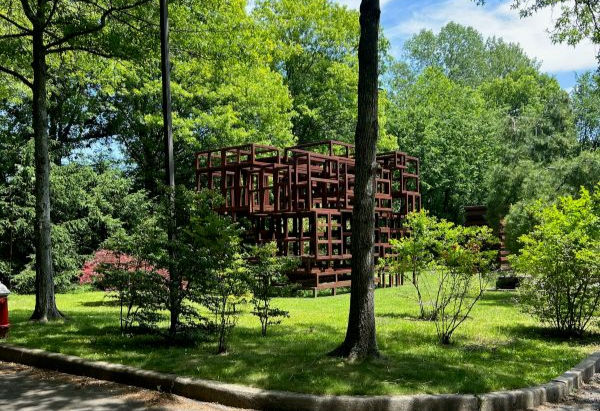
From a recent book about his sculpture, its general character is described here: “Scully layers elements made of steel, stone, bronze, and painted aluminum on top of each other, creating horizontal structures that expand upward.”
The simplicity of the description doesn’t prepare the viewer for the great variety of forms, shapes, and structures that Scully has produced and continues to produce in his other studio in Aix-en-Provence, France.
The geometric nature of Scully’s paintings now finds its way into his vision of sculpture, sculpture that is more than minimal and highly expressive, using rectangular forms to capture our attention. He builds and engineers these sculptures as stacks with grids that are either open or closed in format.
In all, there is a strong and dynamic architectonic quality to these works. Many are akin to the architecturally inspired sculpture of the British artist Anthony Caro and the Danish artist Per Kirkeby.
Depending on the materials chosen, the structures can look somewhat ancient or supermodern. In conversation about his sculpture, Scully remarked, “The personality of material becomes important.”
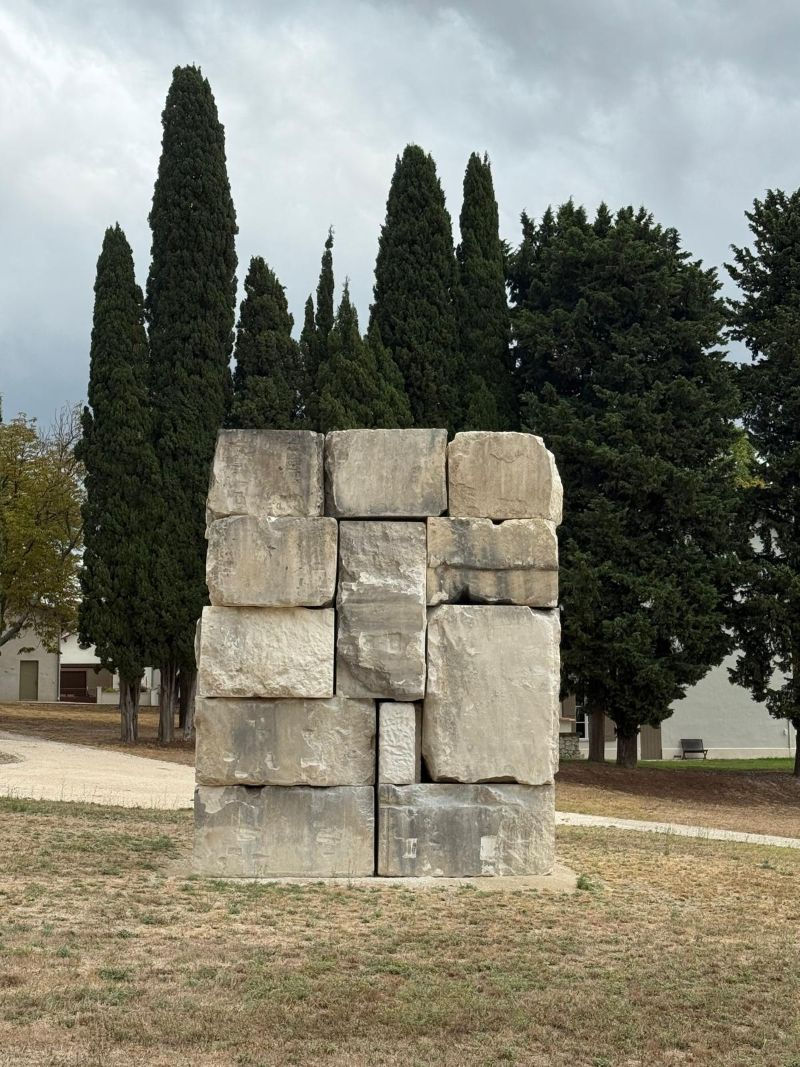
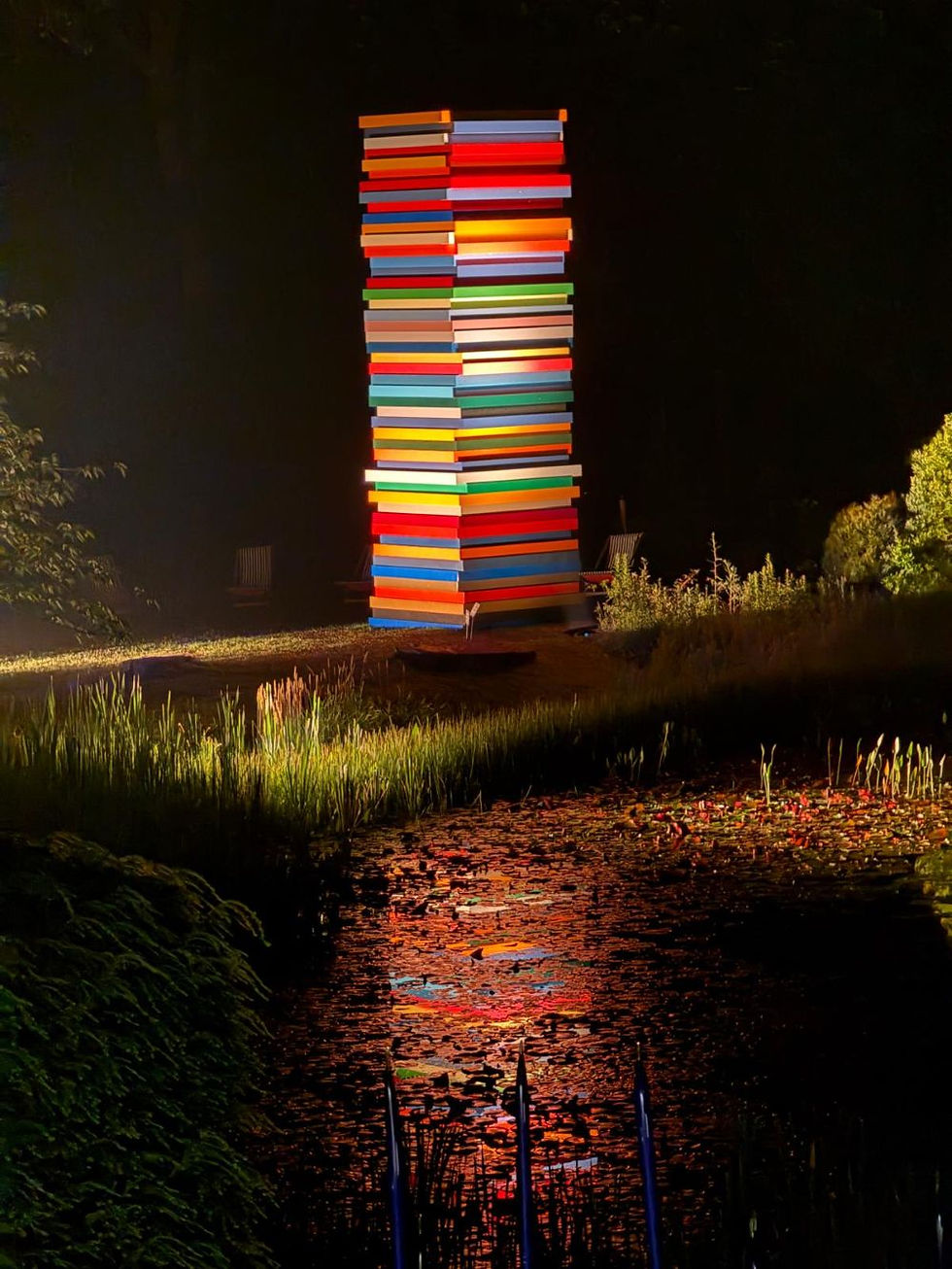
For example, this very recent stone work called Wall of Light Cubed Aix (2026) is a rough-textured limestone organized in a grid pattern, with the blocks placed one atop another and side by side. Then there is this 20-foot-tall, multicolor piece, 48,2024, built of aluminum and car paint.
They represent the varied approaches at hand, with material matched to composition. Scale, too, plays an important role in the character of each work.
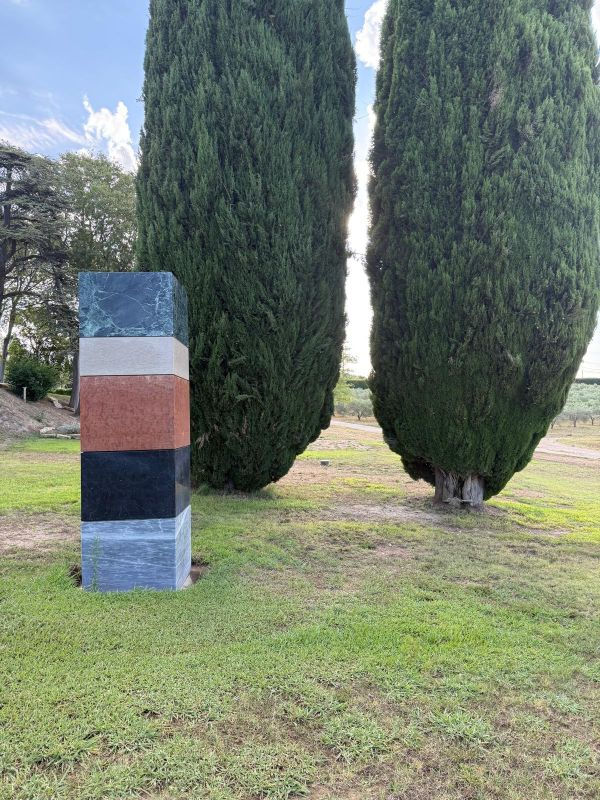
The sculptures range from monumental works like the grand piece Boxes of Air (2015 to 2021), built of Corten steel, which sits outside the studio in Tappan, New York, and stretches some fifty feet across, to more intimate works like this elegant vertical five-part marble piece in France entitled Little London Landline, made in 2023.
What is most striking about his body of work is both the range and diversity of shapes and materials. Each is a unique invention.
In a way, sculpture can be more experimental than painting, since painting relies mostly on two prime elements: paint and canvas. Sculpture, instead, is potentially more variable because of the material character of its form.
For Scully, it is a chance to experiment, investigate, and devise, whether he is working with stone or metal. The grid structure, which is the underpinning of his thoughts, whether in painting or sculpture, is modulated by and expanded with the materials he chooses, “their personality,” as he has remarked.
Each material has certain associations, so steel or metal can be thought of as modern, while stone suggests something more ancient. For Scully, visual ideas and concepts are translated into three-dimensional forms and always stacked.
The stacking method is used whether he is building with cubic shapes or flat elements. In a monograph on his sculpture, Scully states, “Sculpture is the step beyond painting. It is what you resort to when your obsession with things goes beyond an illusion of something on canvas.”
Throughout his career, Scully has explored the variations and possibilities of the grid. It is the structural basis for his compositions.
Color is the emotive property of his paintings. The same holds for his sculpture, with the structure being a grid format and color present through the material selected or used.
When painting, color sets the mood, expresses emotion, and charges our memories. In sculpture, it can be both the material and the scale.
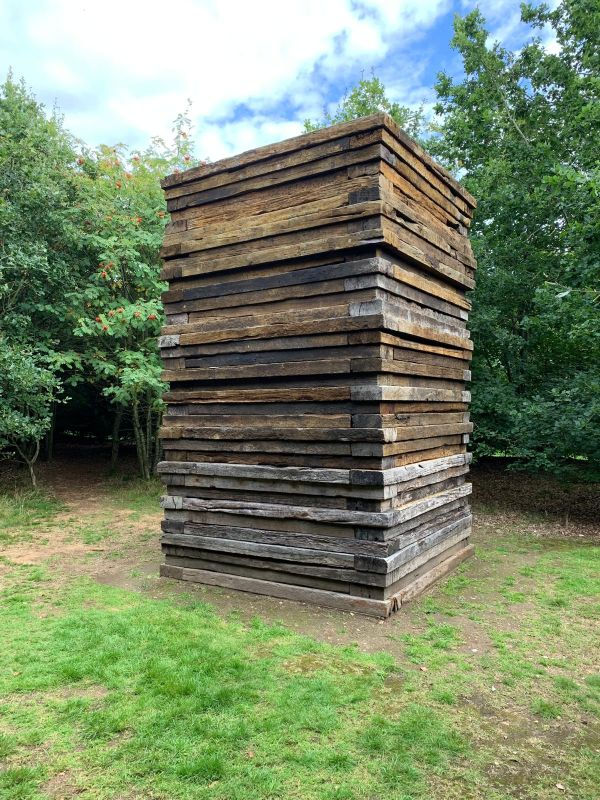
About Indoor Sleeper (2020), made of jarrah wood, an evergreen tree, Scully writes, “I love that wooden stack because it’s like an old person that worked all their life and is now resting in retirement.”
“Materials have associated qualities, and each of us relates to materials in different ways depending on our own personal stories, the same way we react to different colors that elicit different emotions and reactions in each of us.”
In a 2007 letter published in a recent catalogue, Scully explained, “Jackson Pollock and James Joyce were both non-negotiable” in their separate art.
Scully, too, reflects Frank Stella’s statement, “What you see is what you see.” In a Scully sculpture, there is clarity in the material and clarity in the composition, all non-negotiable.
Read more from Michael Klein
Michael Klein, Owner & Director at Michael Klein Arts, LLC
Michael Klein's expertise lies in his role as a private art dealer and freelance, independent curator for individuals, institutions, and arts organizations. Today, Michael Klein Arts works with a diverse group of artists, estates, galleries, and non-profit institutions, providing management, curatorial, and other consulting services. At the same time, the company serves institutional as well as private collectors, focusing on developing collections of emerging, mid-career, and established artists. The company also organizes traveling exhibitions both in the United States and abroad.