

Rethinking Recovery After a C-section and Why 'Just Walk' Isn't Enough
Stella Dimitrakakis is a Doctor of Physical Therapy, Board-Certified Orthopedic Specialist, and Certified Functional Manual Therapist specializing in orthopedic and women’s health, helping people move better and avoid unnecessary injections or surgery.

If someone had a total knee replacement and their entire recovery plan was "just walk," we'd question that immediately. We know they need structured rehabilitation, someone assessing their swelling, their range of motion, their scar tissue, their movement patterns.
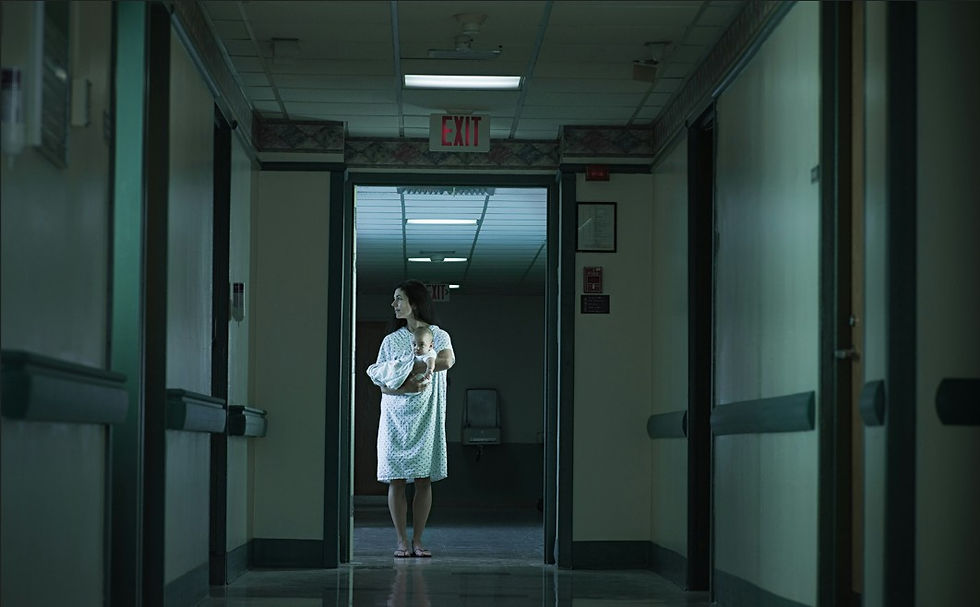
So why is that the standard advice given to women after a C-section? A C-section is major abdominal surgery. It involves cutting through skin, fascia, and muscle to deliver a baby, and yet the recovery plan for most women begins and ends with "take it easy" and "start walking when you feel ready." There is rarely a conversation about the scar itself, the muscles that were separated, or the pelvic floor that carried a pregnancy and now has to recalibrate. Women are sent home to heal from surgery and manage a newborn, with almost no guidance on how their bodies are supposed to come back together.
What actually happens during a C-section
During the procedure, an incision is made through multiple layers of skin, fascia, and abdominal muscle to reach the uterus. Once the baby is delivered, those layers are closed and left to heal on their own. Fascia does not simply reconnect the way it was before. Without movement and guided rehabilitation, it heals in whatever pattern is easiest, which often means scar adhesions, tissue that has lost its normal glide, and restrictions that pull on the surrounding structures.
This matters because fascia is continuous throughout the body. A restriction at the incision site does not necessarily stay contained to that area. It can alter how the abdominal wall functions, change the way load transfers through the pelvis, and contribute to problems that show up somewhere else entirely, such as low back pain, hip tightness, or a core that never quite feels like it "turned back on."
Why "just walk" falls short
Walking is a wonderful and important part of early recovery. It supports circulation, mood, and general mobility. But walking alone does not address the scar tissue itself, does not retrain the deep core and pelvic floor to work together again, and does not identify whether the abdominal muscles have separated, known as diastasis recti, or whether the pelvic floor is coordinating properly with breathing and movement.
Many women return to exercise, chase after toddlers, and resume everyday lifting months or years later, still compensating for a core system that was never fully rehabilitated. They may not connect their low back pain, their pelvic heaviness, or their "mom pooch" back to a surgery that happened years earlier, because no one ever told them the two were related.
A real-life example: Symptoms showing up a decade later
I was treating a 49-year-old patient for a general orthopedic evaluation for low back pain. As I do with every patient, I asked about her day-to-day life. She worked a desk job, spent long hours at a computer, and had an hour-long commute each way, all of which aggravated her back. She also mentioned that her pain had been steadily worsening over the past few years, right around the time she entered menopause.
That alone would have been enough to build a reasonable treatment plan. Her intake form noted that she'd had four C-sections, the kind of detail that's easy to glance past on a history form, especially in a general orthopedic evaluation for low back pain. But given my background in pelvic health and as a pregnancy and postpartum corrective exercise specialist, that line stood out to me, and I dug deeper. She'd never once had physical therapy or rehabilitation after any of those four surgeries. She'd just kept pushing through, every time.
I asked more questions and learned that she'd also been dealing with urinary urgency and frequency, symptoms she assumed were just a normal part of getting older or of having had four kids. They aren't.
When I examined her scar, it was significantly restricted, adhered down into the deeper layers well beyond the skin. When I assessed the mobility of her bladder and uterus, they felt like they were glued together, barely able to glide independently at all. As I worked through the rest of her abdomen, I found that her cecum, the pouch where the small and large intestines meet, on the lower right side of the abdomen, was restricted against her ilium, the pelvis, which was limiting her pelvic mobility and her ability to side bend through her lumbar spine, both of which were feeding directly into her low back pain.
Treatment involved myofascial release along with visceral mobilization, working directly with the restrictions around her bladder, uterus, and cecum, not just the muscles around her spine. In my opinion, the root cause of her low back pain wasn't her desk job or her commute. Those were aggravating factors, but the underlying driver was scar tissue and adhesions from surgeries that happened years earlier.
She was ten years postpartum from her last delivery, yet so much of what she was experiencing in her body now traced directly back to those four C-sections. That's really the point worth sitting with, it is never too late to get postpartum care, whether you are 8 weeks, 8 months, or 8 years out. Without proper guidance after a surgery like this, the body builds compensations. You stop moving efficiently, and eventually, that's when symptoms and breakdown show up, sometimes in a place that seems completely unrelated to where it all started.
What proper post-C-section rehabilitation actually looks like
A thorough recovery plan goes beyond walking and includes:
Scar tissue mobilization, gentle, hands-on work to restore mobility to the incision and the layers beneath it, ideally starting once the wound has fully closed and healed.
Diastasis recti assessment, checking whether the abdominal muscles have separated and, if so, guiding a progressive strengthening plan rather than generic ab exercises that can make the gap worse.
Pelvic floor rehabilitation, even without a vaginal delivery, the pelvic floor carried nine months of increasing load and needs to be assessed and retrained, not assumed to be fine because there was no vaginal birth.
Breath and pressure management, relearning how the diaphragm, deep abdominals, and pelvic floor coordinate together, which is often disrupted after abdominal surgery.
A graded return to activity, a structured progression back to lifting, exercise, and impact activities based on actual tissue readiness, not an arbitrary six-week mark on a calendar.
Signs it's worth getting checked out
Some signs that a C-section recovery may need more support than "just walking" include a visible or palpable doming or gap down the midline of the abdomen, ongoing numbness, tightness, or pulling around the scar, low back or hip pain that developed after delivery, a feeling of heaviness or pressure in the pelvis, or a core that simply doesn't feel connected during everyday movement. None of these are things you have to just live with, and none of them mean something is permanently wrong. They are signs that the tissue and the system around it need some attention.
The bigger picture
This is really the same principle behind so much of how I approach the body, the area that hurts, or the area that looks visibly changed, is not always the whole story. A C-section scar is an obvious, visible example of a fascial disruption, but the body doesn't isolate it there. It's connected to everything around it.
Recovering well after a C-section isn't about rushing back to your pre-pregnancy body. It's about giving the tissue and the system that carried a pregnancy and delivered a baby the same structured, thoughtful rehabilitation we would insist on for any other major surgery. Your body did something extraordinary. It deserves a recovery plan that matches that.
Read more from Stella Dimitrakakis
Stella Dimitrakakis, Founder & Physical Therapist
Stella Dimitrakakis, PT, DPT, OCS, CFMT, PCES, SFMA L1, is a Board-Certified Orthopedic Specialist and Certified Functional Manual Therapist™ and the Founder of Soma Vita Physio & Wellness. She specializes in orthopedic rehabilitation, pelvic health, and TMJ dysfunction, helping active adults recover from pain, rebuild strength after pregnancy, and optimize long-term resilience. Her holistic approach blends advanced manual therapy, movement optimization strategies, and nervous system integration to support sustainable performance at every stage of life. Stella’s work centers on empowering individuals to move confidently and future-proof their bodies for lifelong health.







