

Resilience, Regulation, and the Courage to Choose Differently – An Interview with Ashley Morken
Ashley Morken is an attorney, author, speaker, professional artist, life coach, and the Founder, Executive, and Creative Director of Healing Hearts Haven, a growing ecosystem built around emotional integration, learning, creativity, education, youth advocacy, and community.
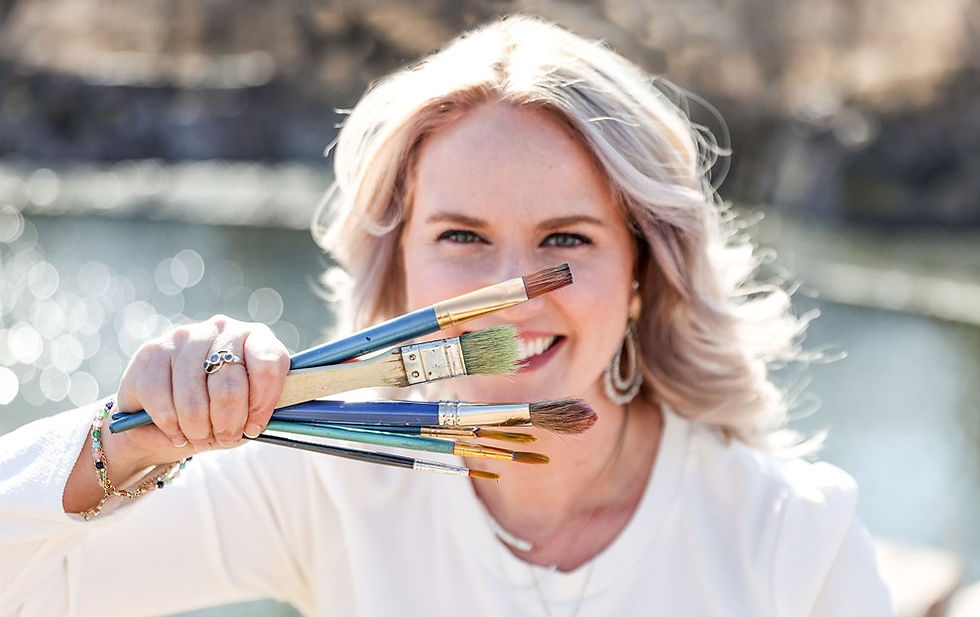
Ashley Morken, Founder, Creative & Executive Director
Her perspective was shaped not only by her own experiences with adversity but by years representing children and families in the juvenile justice system, where she witnessed a difficult reality. Communities often have systems for responding to a child’s behavior, but far fewer places designed to help that child discover who they could become beyond it. That unanswered need ultimately became the foundation for Healing Hearts Haven.
Her work challenges another increasingly relevant idea, that awareness alone creates transformation. Ashley believes understanding trauma, attachment, triggers, and unhealthy patterns is important, but lasting change requires learning to remain present through discomfort, regulate our own responses, practice accountability, reconnect with others, and choose differently when familiar patterns return. Rather than treating creativity as an extracurricular activity, she also sees art, writing, movement, and imagination as practical languages for accessing emotions that people cannot always think or talk their way through.
In this interview, Ashley explores what juvenile justice taught her about accountability without abandonment, why regulation and resilience matter in an increasingly disconnected world, and her vision for a future Healing Hearts Haven campus where young people can experience creativity, belonging, mentorship, opportunity, and the freedom to imagine lives larger than their circumstances. The centre of this philosophy guides both her work and her own becoming. You can’t change what happened, but you can choose what happens next.
Healing Hearts Haven brings together creativity, education, and emotional integration in a unique way, so what inspired you to build it as more than a traditional coaching or therapy practice?
Healing Hearts Haven began with a question I couldn’t answer as a public defender representing children in juvenile court. A judge once asked me, “If I don’t send this child to detention, where do I send him?” I had no answers. We have consequences, probation, counseling, and community service, but I watched children leave court and return to the same environments that helped shape the behavior we were punishing. There are programs but no locations that separate them from their reality to allow for opportunity and possibility.
We send them to counseling for an hour, then home to relationships filled with dysfunction, addiction, conflict, or instability. We send them to school and expect them to concentrate while navigating bullying, belonging, and identities built around being the “problem child.” Then we ask them to finish homework at night when some are already exhausted from simply surviving their day. When we don’t keep them in the community and at home on a diversion program, we send them to detention, and this just breeds a revolving door of problems.
I couldn't stop wondering, “Where do they get to discover who they are beyond what happened to them?” The answer became Healing Hearts Haven. I didn’t want to create another place that only identified what was wrong. I wanted to build an ecosystem where creativity, education, relationships, accountability, and opportunity help people experience something different, because awareness matters, but awareness without action can become another way of staying stuck.
Integration happens when we get the opportunity to practice a different way of living. I don’t just envision another program, I envision a new ecosystem and a campus where new futures can be not just imagined but lived. That remains our foundation, you can’t change what happened, but you can choose what happens next.
How did your years representing children and families in the juvenile justice system change the way you think about healing and accountability?
My years representing children and families in the juvenile justice system fundamentally changed how I understand accountability. I began to see that criminal behavior, particularly in young people, is often more than defiance, it can be a plea for help from someone who simply doesn’t have the tools to cope with what life has handed them. I was expected to bring judges creative alternatives as a defense lawyer, yet I could only offer the options our systems had created. We had diversion initiatives, but sometimes the “alternative” for a child who couldn’t safely return home was essentially a bare office, a room where they were kept isolated from meaningful connection or opportunity, and it was heartbreaking.
Sometimes detention actually offered more structure, classes, Dialectical Behavior Therapy (DBT), mental health support, routine, and adults paying attention. Yet detention also meant placing vulnerable kids alongside youth further entrenched in criminal behavior, where they could learn new ways to circumvent the very systems trying to help them, and it felt like an impossible choice. That experience taught me that accountability without opportunity is incomplete. Young people need consequences, but they also need tools, relationships, purpose, creativity, belonging, and somewhere safe to practice being different.
We cannot simply ask, “What consequence does this behavior deserve?” We also have to ask, “What does this child need so this behavior no longer feels necessary?”
You often say that insight alone rarely transforms lives, so what helps people turn awareness into lasting change?
Insight is incredibly valuable, and access to information has given young people language previous generations often didn’t have. Social media has helped teach people to recognize abuse, identify unhealthy patterns, name boundaries, and understand that suffering should not be normalized, and that matters, but information alone doesn’t necessarily create resilience. Sometimes constant exposure to therapeutic language can unintentionally teach us to become hypervigilant to discomfort, to interpret every trigger as danger, every difficult relationship as toxic, or every boundary as requiring distance, and real relationships are messier than that.
Lasting change happens when we learn to distinguish actual harm from the discomfort of vulnerability, accountability, disagreement, and growth. Living behind screens has created an inherent intolerance to vulnerability. A racing heart or the thought “this person might hurt me” isn’t always an instruction to leave. Sometimes it’s an opportunity to stay present, regulate, communicate, and give ourselves and another human being the chance to respond differently. When we interact primarily from behind screens, it becomes easier to categorize people than understand them. We can forget the humanity on the other side.
Healing Hearts Haven invites something different. Connection without abandoning boundaries, accountability without dehumanization, and vulnerability without tolerating abuse. We look at our own behavior as a potential catalyst for changing relational patterns rather than waiting for everyone else to make us comfortable first. Awareness helps us recognize danger. Integration also teaches us when it’s safe enough to stay, communicate, repair, and grow.
“We have to stop asking only, ‘What consequence does this behavior deserve?’ and start asking, ‘What does this child need so this behavior no longer feels necessary?’”
What do you think schools, families, and community organizations still misunderstand about trauma-informed support?
I think one of the biggest misunderstandings about trauma-informed support is that we can change behavior simply by removing the child who is displaying it. A child becomes disruptive, aggressive, withdrawn, or difficult, and our instinct is often separation: send them out of the classroom, suspend them, isolate them from peers, or warn other children, “Stay away from that kid, they’re trouble.” We may achieve temporary obedience, but we haven’t necessarily taught the child what to do differently, and worse, we can unintentionally turn behavior into identity.
Trauma-informed support should ask a different question, what is this behavior communicating, and what resource, relationship, or skill is missing underneath it? Accountability still matters. Children need boundaries and consequences, but consequences should become opportunities to teach regulation, communication, repair, responsibility, and healthier ways of coping, not simply mechanisms for exclusion.
I also think we underestimate what happens when we create cultures of compassion among peers. Instead of teaching children to categorize one another as “good” or “bad,” we can teach them that people struggle, people make mistakes, and people can learn different ways of responding. Imagine the difference between a community saying, “You are the problem, so we're removing you,” and saying, “This behavior isn't acceptable, but you still belong here. Let's find the support you need to choose differently.” I believe that is where trauma-informed practice becomes transformational. Accountability without abandonment, compassion without excusing harm, and community as part of the solution.
Why is nervous system regulation such an important starting point before people try to change their behaviors or relationships?
Nervous system regulation matters because it creates space between what we feel and what we choose to do with that feeling. Without that space, we can understand our patterns intellectually and still repeat them the moment a relationship activates our fear. Our reactions require one thing- believing our bodies never lie.
Attachment patterns are a good example. Someone with anxious attachment may experience unresolved conflict as an emergency. Their body says, “I need answers now. I need reassurance now. I need you to make this feeling stop.” The need for connection is human, but it isn’t another person’s responsibility to immediately answer every question or regulate every uncomfortable emotion for us. The deeper work is learning to soothe the part of ourselves that panics when reassurance isn’t immediately available. Regulation reminds us, I am no longer a powerless child dependent entirely upon someone else to create safety for me. I am a capable human being. I can tolerate uncertainty, calm my body, and ask for connection without demanding it. We realize for the first time that our bodies are wired to protect us from harms that no longer exist.
Something beautiful happens when we begin seeing ourselves as capable, we start seeing other people as capable, complicated humans too. We stop making them the antagonist in our dysregulation or holding them entirely responsible for our inability to settle ourselves. Instead, we recognize that everyone becomes dysregulated sometimes, every partner, every parent, every child, every leader, and every one of us. That understanding creates room for grace. When I can regulate myself, I have more capacity to remain present while someone else finds their footing. I can model steadiness rather than escalate, invite communication rather than demand resolution, and help create the conditions in which both of us can return to ourselves.
We absolutely need to teach children to recognize genuinely unsafe environments, where regulation is futile, but we also need to teach them that discomfort and danger are not synonymous. Real life will not always provide perfectly regulated people or comfortable circumstances. Regulation gives us something far more empowering than control over our environment. The confidence that even when the people around us are struggling, we are capable of finding our own steadiness, and perhaps offering enough grace to help them find theirs.
“Discomfort and danger are not synonymous, regulation gives us something more powerful than control over our environment, confidence in our ability to find our own steadiness.”
How can someone use creativity as a practical tool for emotional integration, even if they do not see themselves as creative?
I think creativity becomes most powerful when we stop treating it as something at which we have to excel. You don’t have to identify as an artist to benefit from making something. In fact, I’ve worked with people who had no artistic experience, and frankly, no desire to be creative, who discovered tremendous value simply by picking up a brush and allowing color to communicate something they couldn’t yet put into words.
Our thinking brain loves control. We want to understand the problem, name the pattern, find the solution, and execute healing correctly. Creativity interrupts that process. If I ask you to paint what anger feels like rather than explain why you’re angry, suddenly there isn’t necessarily a right answer. You might choose a color you didn’t expect, press harder into the canvas, cover something you painted five minutes earlier, or realize sadness is sitting underneath all that red, and now we have something to become curious about.
That’s emotional integration to me. Art isn't valuable because the finished product is beautiful, it's valuable because the process allows parts of ourselves that we often intellectualize, suppress, or control to have another language. Creativity can be painting, journaling, poetry, music, movement, gardening, collage, or simply experimenting with color. The goal isn't artistic achievement. The goal is loosening our grip on having to understand everything before we're willing to experience it. Sometimes the brush knows what we're feeling before our words do.
What is one simple practice you recommend to people who feel emotionally stuck but are unsure where to begin?
The first thing I recommend is incredibly simple, but surprisingly difficult. Get quiet long enough to notice yourself. Stop talking, stop explaining, and stop trying to figure out why you feel the way you do. Sit still for a moment and ask, “What is happening in my body right now?” Do you feel tightness in your chest or pressure in your stomach? Do you feel heavy, bloated, constricted, restless, energetic, fidgety, or like you need to escape? Where does the sensation live? What happens if, instead of immediately labeling it as anxiety, anger, Attention Deficit Hyperactivity Disorder (ADHD), stress, or “just how I am,” you become curious about it and ask, “What might my body be trying to tell me?”
We spend so much time explaining our patterns that we can inadvertently use the explanation to avoid experiencing them. The body gives us an opportunity to slow that process down. You don't have to fix the sensation. You don't even have to understand it immediately, just notice it without judgment and stay with it long enough to listen. I believe that's where emotional integration begins. Noticing before explaining, listening before reacting, and becoming curious before trying to make the discomfort disappear. Your body isn't necessarily giving you instructions. It's giving you information. Learning to hear that information without automatically obeying, dismissing, or excusing it creates the space where choice becomes possible.
Your guiding belief is, "You can't change what happened, but you can choose what happens next." How has that philosophy shaped both your work and your own healing journey?
You can’t change what happened, but you can choose what happens next has really become the thread that runs through both my own healing and everything I do professionally. I didn’t understand that I had a choice for most of my young adulthood. I thought I was simply living my life, when in reality I was reacting to it. I was carrying childhood abandonment wounds, generational patterns, anxiety, beliefs about success and worth, relationship dynamics, and all of these little programs I had collected along the way about what I needed to do to be loved, accepted, safe, or enough. I became very good at achieving, caretaking, performing, fixing, and surviving, but I wasn’t necessarily choosing any of it consciously.
My healing required me to go backward before I could move forward. I had to understand the little girl who learned that being alone was dangerous, that speaking up could have consequences, that taking care of other people might keep everyone safe, and that achievement could earn approval. I had to understand the woman who carried those beliefs into relationships, education, law, motherhood, marriage, and eventually into a life that looked successful from the outside but no longer felt aligned on the inside. Understanding our past is not the same thing as giving it permanent authority over our future, and that distinction became everything to me.
I can acknowledge that something happened to me without building my identity around being the person it happened to. I can have compassion for the version of myself who developed certain survival strategies while also holding the adult version of myself accountable for what I continue to do with them. I can understand why I became anxious without expecting everyone around me to accommodate my anxiety forever. I can understand why I abandoned myself in relationships without continuing to blame the people in those relationships for every time I chose not to speak. I can understand what was modeled for me without being sentenced to repeat it. I can understand, and I also noticed that is where choice enters the story, and sometimes that choice is incredibly unglamorous.
Choosing might be sitting still instead of sending the text, saying what you actually need instead of expecting someone to know, setting a boundary and tolerating the fallout, apologizing without defending yourself, leaving a relationship you desperately wanted to become something it simply was not, going back to school when everyone thinks you are crazy, forgiving someone without first receiving the apology you imagined, or allowing someone to misunderstand you without spending the next six hours building a closing argument for your innocence. Sometimes choosing what happens next is simply refusing to abandon yourself in the next five minutes. Those tiny choices changed my life.
They eventually gave me the courage to leave relationships and identities that no longer fit, change careers, question my own biases, rebuild relationships differently, allow myself to love in ways I never anticipated, and create work that feels much more aligned with who I actually am. None of those decisions erased what came before them. They grew from it.
That is also why my work is not centered around “fixing” people. I don’t believe healing is a finish line where we finally become perfectly regulated, completely untriggered human beings who float peacefully through life while drinking herbal tea and responding beautifully to every difficult person we encounter. I certainly have not reached that level of enlightenment. I believe the work is integration. It is learning to notice when the old programming shows up and creating enough space between the trigger and the reaction to ask, What do I want to choose now? That is what I want people who work with me to discover. I want them to understand their story deeply, because their story matters. I want them to understand their nervous system, attachment wounds, family dynamics, beliefs, fears, and patterns, but then I want to help them move beyond simply explaining themselves through those things.
I hear clients say, “I wish I had known this sooner.” Sometimes they are seventy years old and convinced they are too far gone to experience something new. Sometimes they believe they are too damaged, too programmed, or simply destined to remain who they have always been, and I challenge that, because healing is not about changing what happened or pretending it didn’t shape you. It is about recognizing that what shaped you does not have to control what you choose next. Sometimes that choice is enormous. Sometimes it is simply not sending the text, saying what you actually need, setting a boundary, apologizing without defending yourself, or noticing the old story and deciding not to follow it this time. That is integration to me.
The past deserves to be witnessed, understood, and held with compassion, but it does not get the deciding vote on the rest of your life. Whether you are thirty, fifty, or seventy, there is still a next, and as long as there is a next, there is still an opportunity to choose. What you choose- avoidance and fear or vulnerability and bravery dictates whether you shift anything worthwhile in the time you have left.
As you work toward your vision for a Healing Hearts Haven campus, what impact do you hope it will have on future generations?
What I hope the Healing Hearts Haven campus gives future generations, more than anything, is a place to believe their lives are possible. I imagine a child walking onto the campus who may not have access to art supplies, music lessons, technology, mentors, entrepreneurship opportunities, or even adults who take their dreams seriously. Instead of seeing what they lack, I want us to ask, “What do you imagine for yourself, and how can this community help you explore it?” I want children to wander into an art studio, garden, music room, workshop, classroom, or nature trail and discover something that makes them think, “Maybe I’m good at this. Maybe this could be part of who I become.”
Opportunity changes the way we see ourselves. Not every child will come from a family capable of nurturing every dream, and not every school or community has unlimited resources. Another person’s limitations do not have to become the boundaries of a child’s future. That is the culture I want the Haven to create: your dreams matter here, your creativity matters, your ideas are worth exploring, and you belong before you have proven anything. Ultimately, I want young people to discover that community isn't supposed to build their lives for them. It can give them the tools, relationships, encouragement, and opportunities to begin building for themselves.
My message to every child who eventually walks through those doors is simple:
“I believe in you if you can find even the smallest place inside yourself willing to believe too. Bring me your dream. However strange, ambitious, creative, or impossible it sounds. I will take it seriously, and we'll start asking what it would take to make it possible.”
Read more from Ashley Morken


