Miroslav Boyanov – Building Success Through Strategy and Integrity
When Miroslav Boyanov left Bulgaria nearly three decades ago, he carried with him more than ambition. He brought a mindset shaped by sports, mountains, and perseverance. “Growing up, I was always active–soccer, swimming, mountaineering,” he says. “Those experiences taught me how to stay disciplined and adapt when things got tough.”
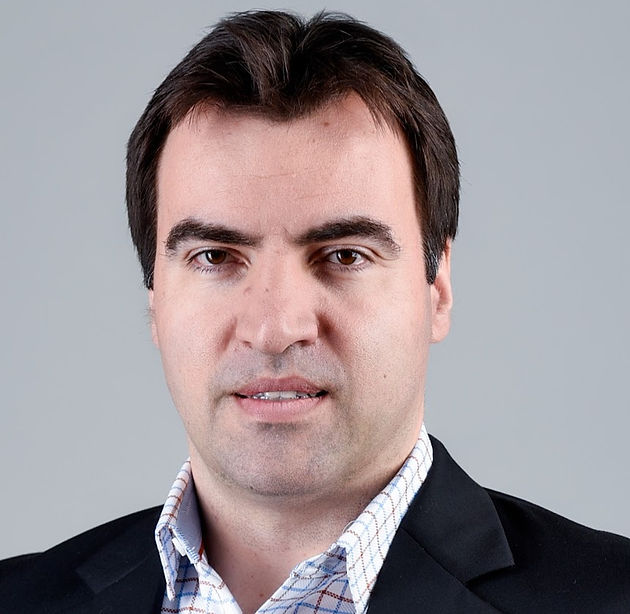
That resilience became a foundation for his career. After moving to the U.S., Boyanov earned his bachelor’s and master’s degrees from Drexel University, followed by an MBA from Duke University and, years later, advanced management training at The Wharton School. “I still believe in being a student,” he says. “The world changes constantly, and there’s always more to learn.”
His education, combined with a global mindset, helped him build a career that connects finance, operations, and leadership in one of the world’s most complex industries–healthcare.
Turning challenges into opportunity
Miroslav Boyanov began his career at PwC in Philadelphia, working in the Middle Market Advisory Practice. It was a fast-paced environment that gave him a deep understanding of financial systems and the power of strategic thinking. But it wasn’t long before he was drawn to healthcare–a sector he saw as both demanding and meaningful.
He joined Essent Healthcare, where he served as Director of Financial Analysis and later as Hospital CFO. His early success came from stepping into roles where others saw problems. “I’ve always worked with turnaround or challenging situations,” he says. “Navigating complexity wasn’t just part of the job–it became my specialty.”
At Essent, he learned that numbers only tell part of the story. The real work was in understanding people and building trust during difficult transitions. “You can have the best financial model in the world,” Boyanov explains, “but if people don’t believe in the mission, nothing gets done.”
Leading through growth and crisis
Boyanov’s next major move came when he joined IASIS Healthcare as Senior Director of Development. There, he managed mergers and acquisitions–work that required both technical expertise and emotional intelligence. “Every deal comes down to people,” he says. “You’re not just merging systems–you’re merging cultures.”
When IASIS was acquired, Boyanov transitioned to Steward Healthcare, serving first as VP of Development and later as International CFO. The work took him across Europe and the Middle East, where he led financial and operational transitions in new markets.
Those years were full of lessons in leadership and resilience. “I’ve had to step in as a caretaker or ‘firefighter’ more than once,” he says. “When you realize that senior leaders won’t always do what’s right, you have to. It’s about protecting the organization and the people it serves.”
Even in turbulent times, Boyanov focused on creating clarity. “Resilience, courage, integrity, and inclusion–that’s what drives real results,” he says.
Bringing big ideas to life
Boyanov’s approach to leadership is simple but powerful: focus on what matters now, but stay flexible for what’s next. “I focus on what must be done today,” he explains. “I have long-term goals, but I leave space for change. The world shifts too fast to predict everything.”
This balance between focus and adaptability has allowed him to bring big ideas to life–whether it’s guiding a healthcare merger, restructuring a hospital system, or launching consulting projects that help organizations stabilize and grow.
At Boyanov Consult, his advisory firm, he now works with clients across the US, Europe and the Middle East, offering insights grounded in experience rather than theory. His role often involves stepping in during transitional periods–helping companies refine their operations, rebuild trust, or prepare for expansion.
“Success isn’t about control,” he says. “It’s about understanding what you can influence and having the courage to act on it.”
Lessons in leadership and lifelong learning
Boyanov’s path has been defined by his commitment to learning–both from success and failure. Despite his credentials, he remains a student at heart. “I always doubt myself,” he admits. “It keeps me alert and prevents complacency.”
That humility, paired with discipline, is part of what makes him effective. He encourages others to pursue growth not for prestige, but for perspective. “Degrees, titles, and awards are fine,” he says, “but they don’t guarantee wisdom. What matters is what you learn from experience and how you apply it.”
For him, leadership isn’t about commanding authority–it’s about building teams and trust. “When people feel included, they take ownership. And that’s when organizations start to move in the right direction.”
Redefining success
Today, Boyanov defines success in simple terms: progress with purpose. “I look at the outcome,” he says, “but how you got there matters just as much.”
He believes in blending personal and professional life rather than separating them. “When going to work doesn’t feel like a chore, you’re in the right place,” he says. “I’ve never been able to flip the switch at five o’clock–and honestly, I don’t want to. Some tension keeps me motivated.”
Whether in a boardroom or on a mountain trail, Boyanov’s outlook is consistent–stay grounded, stay curious, and never stop improving. “Success,” he says, “isn’t about avoiding challenges. It’s about embracing them, learning from them, and turning them into something better.”