

Midwest Ragdolls – When Expertise Becomes an Idea
A veterinarian usually meets an animal after it already belongs to someone. By that point, much of its earliest story has already been written. Its genetics, first weeks of life, early environment, and some of its first health decisions all came before the veterinarian entered the picture. Dr. Jennifer Creed has spent her career on both sides of that timeline.
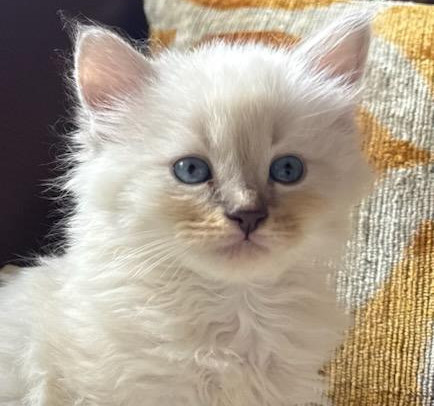
As a practicing small-animal veterinarian, she has built professional experience caring for animals. Through Midwest Ragdolls, the cattery she founded in Elburn, Illinois, in 1993, she has also spent more than three decades thinking about what happens before a kitten ever reaches its new home.
That makes Midwest Ragdolls more than an extension of Creed’s veterinary career. It shows what can happen when professional expertise becomes the starting point for a new idea.
“I am a practicing experienced small animal veterinarian,” Creed says. At Midwest Ragdolls, that experience is applied from the beginning of a kitten’s life.
What happens when professional expertise inspires a business?
People often start businesses because they spot an opportunity. In other cases, the idea grows naturally from knowledge they've spent years developing.
Midwest Ragdolls fits more closely with the latter.
Creed did not enter the world of animals through breeding alone. Veterinary medicine gave her a professional foundation in animal health. When she established Midwest Ragdolls, she could apply that knowledge to decisions made long before a routine veterinary appointment with a new owner.
The result was a breeding program where health considerations could begin with the parent cats and continue through a kitten’s earliest weeks.
That distinction is important because expertise can change the questions a business owner asks. Instead of starting only with what customers want, someone with technical knowledge may also consider what should happen behind the scenes.
For Creed, those two perspectives have existed side by side for decades.
How veterinary knowledge becomes a working process
Creed’s career influence becomes clearer through the practices used at Midwest Ragdolls.
The cattery reports testing parent cats for heart and kidney issues as well as viral diseases. Kittens receive FeLV and FIV testing and a fecal examination, and Midwest Ragdolls provides a three-year health guarantee.
These individual steps are not the entire story. From a career perspective, what's more interesting is how specialized knowledge can become a repeatable process.
A veterinarian understands that an animal’s health cannot be reduced to one examination or one test. Likewise, screening does not guarantee that an animal will never develop a health problem. Instead, information gathered at different stages can help provide a clearer picture and support more informed decisions.
Midwest Ragdolls has incorporated that kind of thinking into how it operates.
Why experience can change the way an idea develops
Starting something new does not always mean starting from zero.
Someone who builds a venture within an area they already understand can bring years of accumulated knowledge to decisions that might otherwise require trial and error. That doesn't remove uncertainty, but it can shape how problems are approached.
Creed’s experience offers a practical example. Midwest Ragdolls is not separate from her professional life in the sense that she suddenly moved into an unrelated industry. Instead, it gave her another way to work with animals while drawing on skills she already possessed.
Over time, the idea also developed beyond veterinary considerations.
Creed wanted to raise “low shedding, friendly intentionally bred purebred Ragdoll kittens.” That meant thinking about the environment in which kittens were raised as well as their physical health.
Her family became part of that process. The kittens are raised around Creed’s children and dogs, rather than by a large staff in a separate operation.
“My kittens are raised by my family and I and are used to being around kids and dogs,” she says.
How can a small idea develop over decades?
People often describe entrepreneurship through moments of rapid change: a launch, a breakthrough, an expansion, or a sudden period of growth. Midwest Ragdolls has followed a much longer timeline.
The cattery began in 1993 and remains based in Elburn today. The most noticeable change is its reach. Creed now places kittens with families across the United States, although the Midwest remains the primary market.
“I sell kittens all over the USA but primarily in the Midwest,” she says.
That evolution did not require Midwest Ragdolls to become a large organization. No employees work there, and Creed’s children continue to help with the kittens.
The result is less a story about rapid expansion than one about an idea becoming established through repetition. The same work repeats over years, experience accumulates, processes become familiar, and a local operation gradually reaches people farther away.
What Midwest Ragdolls shows about building from what you know
One of the most useful career lessons in the Midwest Ragdolls story has little to do with cats specifically.
A new venture does not always require abandoning an existing career or reinventing yourself. Sometimes the stronger idea comes from looking at expertise you already have and asking where else it could be useful.
For Creed, veterinary medicine provided knowledge about animal health. Midwest Ragdolls created another setting in which that knowledge could be applied, beginning with breeding cats and continuing through the first weeks of a kitten’s life.
More than three decades later, the cattery is still operating from Elburn while reaching families throughout the country. Its development has been gradual rather than dramatic, and its structure remains unusually small.
That is what makes the Midwest Ragdolls story interesting from a career perspective. The idea did not require Creed to leave one professional identity behind to create another. Instead, she built something alongside her existing expertise and allowed the two areas of her work to inform each other over time.






