

Lee Lorenzen and the Long Road to Clustered Water – Scientist Driven by Curiosity & Persistence
Lee Lorenzen spent decades asking questions that mainstream science hadn't thought to answer. What began as a young researcher's quiet frustration grew into a lifelong pursuit – one that a personal crisis would ultimately transform into a breakthrough technology.
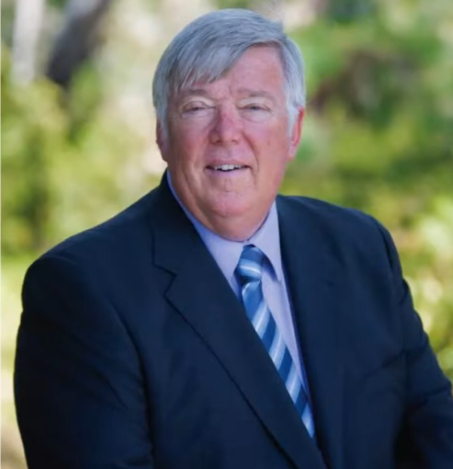
Some careers begin with a clear plan. Others begin with questions that refuse to go away.
For Lee Lorenzen, the path that led to clustered water technology started with a simple frustration during his early research years. As a young scientist studying biology and pharmacology, he began noticing something that did not sit right with him.
“I remember saying to myself over and over,” Lorenzen recalls, “something is missing with this model.”
That question would eventually shape the direction of his entire career.
Today, Lorenzen is the founder and CEO of Cluster Solutions, a company he started in 1989 to research and develop clustered water technology. His work sits at the intersection of biology, chemistry, and hydration science. But the journey toward that work began decades earlier.
Growing up curious about science
Lee Lorenzen grew up in Northern California as one of eight children. Like many scientists, his interest in the natural world started early. He enjoyed being outdoors and asking questions about how things worked.
He later attended the University of California, Berkeley, where he earned a Bachelor of Arts. After Berkeley, he continued graduate studies in biology at California State University, Fullerton, and pursued advanced work under physician and researcher Hoang Van Duc, M.D.
Those years built the scientific foundation that would guide the rest of his career.
But Lorenzen was not only interested in theory. He wanted to see how science worked in real-world situations.
Early work in biology and pharmacology
In 1974, Lorenzen began working as a Graduate Instructor in Biology at Chapman College in Orange, California.
Later that same year, he joined the University of California, Irvine as a Research Associate in the Department of Pharmacology.
The work placed him inside a traditional research environment. He was involved in studies related to medications and biological systems.
But the experience also raised new questions.
“As I looked at the research models we were using,” Lorenzen says, “I started to wonder whether we were overlooking something important.”
That curiosity stayed with him.
From 1976 to 1989, Lorenzen worked in biomedical consulting. During those years he studied a wide range of biological and health-related systems. The work helped him understand both scientific research and practical applications.
But the most important turning point in his career came from a deeply personal event.
How a personal crisis sparked new research
In 1976, Lorenzen married Stephanie Smith. Less than a decade later, she began experiencing a series of severe health challenges.
Her illness became a major turning point in Lorenzen’s life.
“When my wife became sick,” he says, “it forced me to start looking for answers that went beyond what I had already studied.”
He began exploring new areas of research. One topic that caught his attention was the role water plays inside living cells.
While reading scientific literature, he came across the work of Nobel Prize – winning scientist Albert Szent-Györgyi, who had written about the structure of cellular water.
“That was a moment when things started to connect,” Lorenzen says.
He began studying the concept of water clusters – small groups of water molecules that behave differently from larger clusters commonly found in ordinary water.
The search for natural water clusters
Lorenzen’s research eventually took him beyond the laboratory.
He studied reports about natural springs around the world where people claimed unusual health benefits from the water.
One well-known example was the spring at Lourdes, France.
According to Lorenzen, he noticed geological similarities between several springs known for their reputation.
“As I continued researching,” he explains, “I began to see patterns in the water chemistry and the environment where those springs were located.”
The goal became clear: find a way to reproduce similar water structures in a controlled way.
Founding cluster solutions in 1989
By the late 1980s, Lorenzen had developed ideas about stabilizing water clusters through a controlled process.
In 1989, he founded Cluster Solutions to focus on research and product development based on those ideas.
Over the years, Lorenzen received several patents related to the technology, including U.S. Patent 5,711,950 and U.S. Patent 6,033,678.
The patents cover methods related to producing and stabilizing clustered water structures.
“Patents are important because they protect the process,” Lorenzen says. “But they also document the work that went into developing it.”
Continuing research and industry recognition
Lorenzen has remained closely involved in research throughout his career. He regularly works with physicians, scientists, and collaborators who study hydration and cellular biology.
His work has also received recognition in the natural products community. In 2011, Lorenzen was recognized by the Microsoft Alumni Foundation for research related to AIDS and diabetes.
Despite the attention, Lorenzen says the real focus has always been the work itself.
“Research is not a one-time discovery,” he explains. “It is a process of constant testing and refinement.”
A career built on persistence
Today, Lorenzen continues to lead Cluster Solutions while staying directly involved in research and development.
He credits perseverance and family support for helping him stay committed to his work over the decades.
“My wife’s illness was a huge challenge,” he says. “But without that experience, this technology probably would never have been developed.”
Outside the lab, Lorenzen enjoys spending time with his grandchildren and hiking in nature. Those quiet moments help him step away from the scientific questions that have defined much of his career.
Looking back, Lorenzen sees his work as part of a long process of asking questions and following the answers.
“In science,” he says, “you keep learning. The work is never really finished.”


