

From Shedding to Stepping Forward – Leadership Lessons from the Year of the Snake and the Year of the Horse
Updated: Jan 17
Danielle McKinon, Founder of Eat Sleep Ride, a rural-based charity in Scotland, and a certified Equine Leadership Coach. Part of the global TeachingHorse network, Danielle applies the Diamond Model of Shared Leadership to help individuals and teams lead with confidence through uncertainty.

This year is the year of the snake. Not as a symbol of loss or failure, but of shedding what no longer fits. For a long time, I believed leadership meant pushing forward, through exhaustion, through illness, through the quiet signals that something wasn’t sustainable. Slowing down felt like letting go of momentum, even when everything in my body was asking for a pause. I told myself this was resilience. I told myself this was what commitment looked like.

The horses taught me something different. They taught me to connect with the body before the head, to regulate before reasoning. To notice energy before explanation. As I’ve evolved, I’ve spent less time being unwell, not because pressure disappeared, but because I learned to work with it differently. Not harder. Wiser. This is where the real work begins.
The snake: What had to be shed
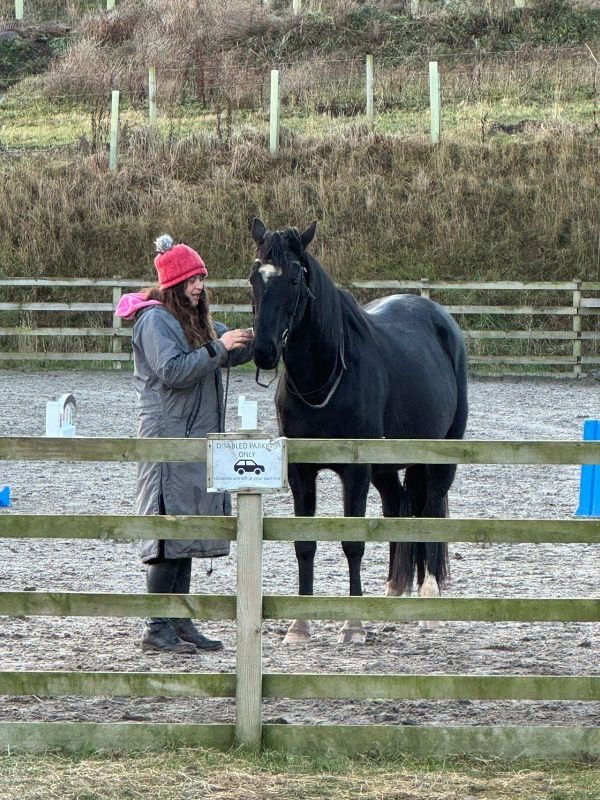
Over eight years of building a business, and four years of waiting for adult ADHD medication, I did everything I was told good leadership looked like. I trained relentlessly. I traveled. I qualified in NLP, became certified in equine-facilitated coaching, and transformed a reclaimed landfill site into a functioning, purpose-led space. I founded Herd Dynamics. I made it work.
But it came at a cost.
What had to be shed wasn’t ambition, it was over-functioning. It was performing resilience instead of practicing sustainability. It was leadership models that reward burnout and systems that don’t support neurodivergent leaders to thrive.
I had to stop doing some very specific things, carrying everything myself, staying in my head when my body was asking for rest, and saying yes to work or structures that looked successful but quietly depleted me. I stopped turning my home into a workstation and made it a place of rest again. I stopped doing admin in the middle of the yard and created space to be fully present with the horses. I stopped trying to lead by endurance.
Shedding wasn’t dramatic. It was practical. It was choosing health over heroics. It was learning that stepping back is sometimes the most responsible form of leadership.
I’m still standing. But I’m standing differently.
The horse: What leadership actually looks like

Horses don’t respond to performance. They respond to presence.
One of the clearest lessons they’ve given me came during a difficult moment at work. I was navigating a challenge with an employee, we were friendly, and I cared about her, but I also knew the role wasn’t working and that a change was needed. Intellectually, I understood this. Emotionally and physically, I hadn’t embodied it yet.
I kept circling the conversation instead of having it.
I took the issue to the horses.
There’s a simple exercise we use called a leadership walk. You choose a direction and invite the horses to move with you. That day, no matter how many times I tried, the horses wouldn’t come. I kept walking the same path, repeating the same approach, and nothing shifted.
Standing there, it became obvious, I was doing exactly the same thing in my leadership. I was moving forward without fully accepting the truth of the conversation I needed to have. I wanted harmony, but I was avoiding clarity.
The moment I allowed myself to feel the change that was required, not rehearse it, not justify it, but accept it, my body shifted. My pace changed. My energy changed. And only then did the horses follow.
They weren’t resisting me. They were reflecting me.
That experience taught me something fundamental, leadership doesn’t begin in words. It begins in the body. Until direction is embodied, it can’t be shared.
Horses also taught me that boundaries aren’t control, they are safety. When humans become people-pleasing or client-led rather than grounded, horses adapt instantly. Confusion creeps in when leadership doesn’t come from in front, not physically, but energetically.
Leadership, through horses, is relational. It’s clarity without force. Responsibility without domination. Regulation before direction.
Grounding this in real work
This way of leading is not theoretical for me. It’s lived.
At Eat Sleep Ride, I hold responsibility for people, animals, land, safety, and systems, all at once. It’s not a polished environment. It’s real. Decisions have consequences, not just outcomes. You feel them in the ground, in the herd, in the team.
As I slowed down, other things became possible. I began delegating properly, not as a last resort, but as an act of trust. I started recognizing the strengths in my team instead of compensating for everything myself. Leadership became something we shared, not something I carried alone.

Herd Dynamics emerged not as a brand, but as a container, a way to hold this work with integrity. It’s grounded in the belief that relationships take time to build, that systems matter, and that leadership is something you practice, not perform.
Cold water swimming became a way to regulate rather than punish my body. Personal development became aligned with the work, not separate from it. And perhaps most importantly, I began to see that meaningful leadership isn’t about constant motion, it’s about stepping back far enough to see the bigger picture.
I have always stepped into leadership. But now, the horses are with me.
.
Leadership through awareness, not control
I saw this same lesson reflected recently while working with a young person stepping into her first leadership roles on site. She was practicing a simple pole exercise, focused on guiding the horse through a turn. But as she concentrated harder on the movement itself, she stopped sensing the wider environment. Her body stiffened, her hands lost feel, and she couldn’t adapt her pace or direction.
The horse responded by doing what she couldn’t, pivoting, adjusting, compensating.
It was a powerful moment. Not because she had done something wrong, but because it revealed how easily leadership narrows under pressure. When attention collapses into control, awareness disappears. Horses make this visible immediately. For our young people, this becomes a language they can relate to, especially when working with clients on site. Leadership isn’t about executing a task perfectly, it’s about staying present enough to respond as things change.
Adaptability isn’t a technique. It’s a state of awareness.
Stepping forward, not pivoting
This isn’t a pivot. It’s a progression.
The Year of the Horse asks for a different kind of leadership, one rooted in presence, rhythm, and shared responsibility. It invites us to rethink what strength looks like, who leadership is for, and how we build systems that don’t require people to burn out in order to belong.
I’m stepping into leadership that honors pace. That values the body as much as the mind. That understands power as something relational, not extracted.
This isn’t about doing less. It’s about doing what actually lasts.
If this way of thinking about leadership resonates, I invite you to experience it rather than analyze it. Leadership days at Eat Sleep Ride and through Herd Dynamics offer space to explore embodied, relational leadership working with horses, land, and presence to understand what actually sustains us in responsibility.
Sometimes the most meaningful shift isn’t learning something new, it’s remembering how to listen.
Read more from Danielle McKinnon
Danielle McKinnon, Equine Leadership Facilitator/ Social Entrepreneur
Danielle McKinnon is the founder of Eat Sleep Ride | Rural-Based Charity in Scotland, a rural charity using horses, nature, and coaching to support disadvantaged and neurodiverse young people. She is a qualified equine-facilitated learning practitioner, coach, and licensed facilitator of shared leadership, working locally and globally to build brave spaces for change. Her work is rooted in lived experience, community care, and the wisdom of the herd.
To explore Danielle's leadership programmes, visit the Leadership at Eat Sleep Ride page at Herd Dynamics | Equine Leadership and Personal Development these programs support Eat Sleep Ride.


