

Leadership Lessons from the World's Boardrooms – An Interview with Dr. Hussein Rifai
Over more than four decades, Dr Hussein Rifai has led, advised and invested in businesses across more than 85 countries. As an executive, chairman, investor and strategic adviser, he has guided organisations through growth, acquisitions, restructurings and international expansion, earning a reputation for combining commercial discipline with long-term thinking.
In this exclusive Brainz Magazine interview, Hussein shares his insights on leadership, corporate governance, artificial intelligence and why embracing uncertainty is one of the greatest competitive advantages in business today.
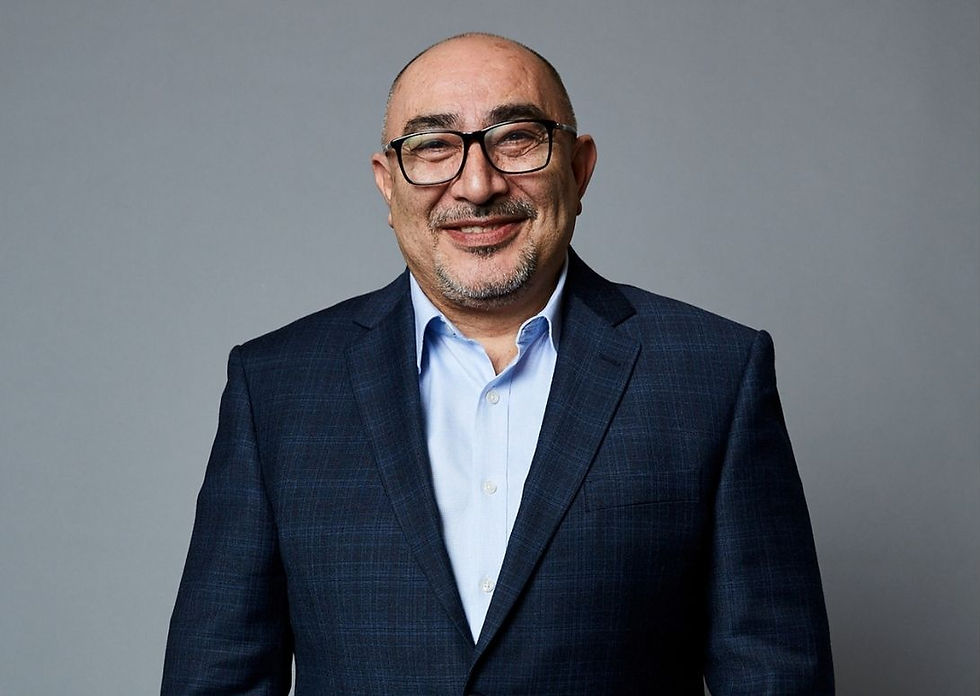
Dr. Hussein H. Rifai, Thought Leader and Chairman
After leading businesses across 85 countries, what has stayed constant in your approach to leadership?
The countries, industries and cultures were all different, but people weren't. Everywhere I worked, people wanted to be respected, trusted and part of something worthwhile.
I've always believed that leadership starts with listening. Too many leaders think they have to have all the answers. I don't. My job is to ask the right questions, bring good people together and help them make better decisions.
At the end of the day, businesses don't create value. People do.
You have worked as an executive, investor, advisor and chairman. How has seeing business from each of those perspectives changed the way you make strategic decisions?
Each role teaches you something different.
As an executive, you learn how hard it is to execute a strategy. As an investor, you become disciplined about risk and returns. As an adviser, you see opportunities that management can sometimes miss because what you learn from one client often applies well in another. As chairman, your job is to think beyond today and make sure the company is heading in the right direction.
Having worked in all four roles means I never look at a decision from only one angle. As part of the decision making process, I always have to ask if it is good for management, shareholders, customers and the long-term future of the business. If one of those doesn't stack up, the decision usually needs more work.
What separates an effective board from one that simply fulfils its governance responsibilities on paper?
A good board doesn't just attend meetings and approve papers.
Its job is to challenge management, ask difficult questions and make sure the company is thinking beyond the next set of results.
The best boards are made up of people who are prepared to disagree respectfully. Healthy debate leads to better decisions. A board where everyone agrees all the time usually isn't doing its job properly.
Good governance is important, but governance alone has never built a successful company, it is only a hygiene factor.
How should business leaders balance the opportunities of AI with the responsibility to create long-term value?
AI is one of the biggest business opportunities we've seen since the last wave of technology, the smart phone.
Technology improves decisions but doesn’t replace judgement. Businesses that simply automate everything without thinking about their customers, employees or culture will eventually create new problems.
The companies that will succeed will be the ones that use AI to make people more productive, improve customer experience and help management make better decisions. Human judgement will become more valuable, not less.
What global leadership trend do you believe executives are still underestimating?
Trust. We're living in a world where customers, employees and investors know more about companies than ever before.
People don't just buy products anymore. They buy into companies they trust. Whether it's ethical supply chains, responsible use of AI or corporate behaviour, trust has become a commercial advantage. Businesses that earn it will perform better over the long term than businesses that simply chase short-term profits.
When founders begin preparing for investment or international expansion, where do they most often lose strategic clarity?
I've seen too many founders become consumed with raising capital instead of continuing to build a better business.
There's nothing wrong with raising money. Every growing business needs capital at some point. The problem is when raising capital becomes the strategy. It isn't.
Strategy comes first. Capital follows. If you get that the wrong way around, the money disappears quickly and you're back in the market looking for the next funding round.
I always ask founders three simple questions. Why do customers buy from you? What do you do better than your competitors? Will this decision leave the business in a stronger position five years from now?
If you can't answer those questions with confidence, don't expand yet. Build a stronger business first. Growth should be the result of a good strategy, not the reason for having one.
What practical habit has helped you lead through uncertainty and complex business environments throughout your career?
One habit that has stayed with me throughout my career is never believing that I've finished learning. The world changes too quickly for that. Markets change, technology changes, customer expectations change, and if you stop learning, you quickly fall behind.
That's one of the reasons I completed my PhD at 65. It wasn't about adding another qualification. It was about challenging my own thinking, learning new ideas and reminding myself that no matter how much experience you have, there is always more to learn.
I make a point of reading widely, listening to people with different views and staying curious. Experience is valuable, but experience without continuous learning can become outdated. The leaders who continue to grow are the ones who never stop improving themselves.
In The Chaos Theorem, you describe uncertainty as a catalyst for growth. What experiences convinced you to see it that way?
When I look back on my life, almost every major opportunity came from a period of uncertainty.
Moving countries, changing careers, rebuilding after setbacks and leading companies through difficult times were never comfortable experiences. At the time they felt risky.
But every one of those experiences forced me to learn something new, adapt and become a better leader.
Life doesn't grow much when everything is comfortable. Most real growth happens when you're pushed outside your comfort zone
If every leader adopted one principle to build stronger businesses over the next decade, what would you hope it would be?
Think long term.
Too many businesses make decisions to improve the next quarter instead of building the next decade.
The companies that will still be successful ten or twenty years from now will be the ones that invest in their people, build trust with customers, innovate continuously and create real value.
Profits matter. Every business needs to make money. But lasting profits come from creating value first. When leaders understand that, everybody benefits, shareholders, employees, customers and the wider community.
Read more from Dr. Hussein H. Rifai


