

Joshua Bird – Building a Second Career From Military Discipline
Joshua Bird grew up in East Tennessee after spending his earliest years in the Smoky Mountains. He played baseball and football, worked on his grandfather's cattle farm, and developed an appreciation for hard work and responsibility at an early age.
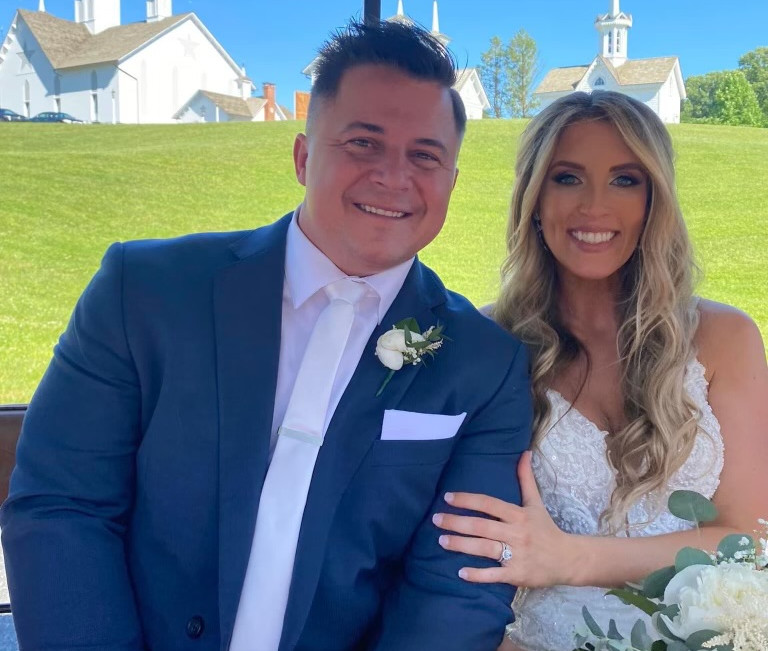
His athletic and academic accomplishments eventually led him to the United States Air Force Academy, where he was recruited to play football. He entered the Academy in 2004 and graduated in 2009 with a Bachelor of Science in Management. His time there gave him more than a degree. It introduced him to an environment where preparation, teamwork, accountability, and attention to detail were expected every day.
Those lessons would become especially important as he moved into aviation.
Learning to fly and lead
After graduating from the Air Force Academy, Bird began his military aviation career as a pilot. He went on to fly the KC-10, eventually becoming an Aircraft Commander and Instructor Pilot. The progression required more than becoming technically proficient in an aircraft. As an instructor, he also had to help other pilots develop the knowledge, judgment, and confidence needed to operate safely.
Bird was twice recognized as a Distinguished Graduate, placing in the top 10 percent of his class during the KC-10 Initial Qualification and Aircraft Commander Course. His aviation experience continued to expand when he became a U-2 Mission Pilot.
Flying different aircraft and taking on increasingly demanding responsibilities reinforced a lesson that Bird continues to carry with him: experience should never become an excuse to stop learning. In aviation, preparation matters, but so does the willingness to listen, accept feedback, and recognize that there is always another skill to develop.
Bringing an aviation mindset to engineering
Bird's professional path eventually expanded beyond aviation when he moved into manufacturing and engineering with 3M. His work has included production and manufacturing supervision as well as plant engineering, giving him the opportunity to apply his technical and leadership experience in a completely different environment.
There are obvious differences between flying an aircraft and managing the challenges of a manufacturing facility, but Bird sees important similarities as well. Both require preparation, careful decision-making, communication, and a willingness to take responsibility when something needs to be addressed.
In plant engineering, his responsibilities have included equipment reliability, maintenance planning, capital projects, and operational problem-solving. These responsibilities require a practical approach. Problems do not always arrive with simple solutions, and technical knowledge is only one part of getting the right result.
For Bird, the transition has reinforced the value of remaining adaptable. The specific tools and challenges may change from one career to another, but the principles of preparation, accountability, teamwork, and continuous improvement remain useful.
Continuing to grow through aviation
Even while building his engineering career, aviation has remained an important part of Bird's life. He holds an Airline Transport Pilot certificate and has accumulated more than 2,600 hours of flight experience. His long-term goal is to continue developing his aviation career with the aspiration of becoming a legacy airline pilot.
That goal reflects something that has been consistent throughout his professional life. Bird does not view experience as a finish line. Instead, he sees it as a foundation for whatever comes next.
His approach to personal growth is similarly structured. He starts with a larger objective, breaks it into manageable steps, and evaluates whether his daily actions are actually moving him toward the goal. At the same time, he recognizes that plans sometimes need to change. Flexibility, in his view, is part of staying committed to the bigger objective.
A broader definition of success
Bird's interests outside of work also provide another side of his personality. He enjoys fitness, golf, traveling, home improvement projects, and spending time outdoors. He is also an avid Tennessee and Air Force sports fan and values time with his wife, family, and friends.
Service has remained another important part of his life. His experiences have included serving as a Survival Instructor for Scouting America, coordinating family and readiness support efforts, participating in a Squadron Centennial event, and volunteering for Prisoner of War Mission Day.
His Christian faith is also central to how he approaches life. Bird has described success as something larger than professional accomplishments. Being a good husband, maintaining his health, staying true to his values, being dependable to others, and continuing to grow are all part of how he measures whether he is moving in the right direction.
Looking ahead
Bird's career has taken him through several very different environments, from the Air Force Academy to military aviation and eventually to engineering and manufacturing. Rather than viewing those experiences as separate chapters, he sees them as opportunities to learn and build on what came before.
The transition from military aviation to engineering gave him a chance to apply familiar principles in a new setting. His continued involvement in aviation has allowed him to maintain a connection to a field that remains important to him.
As he looks toward the future, Bird remains focused on learning, improving, and preparing for the next opportunity. His ultimate aviation goal is to become a legacy airline pilot, but the broader objective is consistent with the approach he has taken throughout his career: continue developing his skills, remain accountable, and make the most of the opportunities ahead.






