I Make Life Decisions From My Deathbed
Written by Donna Wilding, Life & Business Coach
Donna Wilding is a former corporate advertising executive turned life and business coach who helps female entrepreneurs build strategic, soul-led businesses. She works with the innate intelligence of their ideas, alongside her signature past-life regression experience and heart-forward coaching techniques.

What if contemplating death could help you make more meaningful choices, embrace new possibilities, and live more fully? Through personal loss, a near-death experience, and an evolving relationship with mortality, this article explores how remembering that life is finite can bring clarity, courage, and a renewed appreciation for what truly matters.
How contemplating death can help you live more fully
I make quite a few decisions by consulting a woman who doesn't technically exist yet, the version of me at the end of my life.
She's become a rather trusted advisor, although I suspect she'd be amused by some of the things I bring to her for consideration.
The opinions I'm worried about. The opportunities I'm considering. The things I tell myself I don't have time for, even though they're often the very things that make my life feel worth living.
From her vantage point, much of what occupies my mind today becomes rather insignificant. She has little patience for the elaborate arguments I can construct in favour of staying comfortable, and an uncanny ability to remind me of what matters.
I suppose you could say I've developed a friendship with death. I don't experience her as the Grim Reaper, lurking somewhere in the shadows with a scythe. I think of her as a sister friend, someone whose presence reminds me that my time here is precious and that I have a say in how I spend it.
Although this might sound like an unusual relationship to cultivate, I can't imagine living without her counsel. In this season of autumn, when the leaves tell us that death is beautiful, I've been thinking about this relationship a little more than usual. Across cultures and traditions, this is a time for honouring the dead, remembering our ancestors, and acknowledging the mysterious relationship between life and death.
When death becomes personal
My father died when I was 25. Until then, death had been something I understood intellectually, as most of us do. We know everyone dies. We know our parents won't live forever. We know our own time is limited, although we're remarkably good at conducting our lives as though we've been granted some sort of exemption.
Then someone you love dies, and all that theoretical knowledge becomes terribly personal. My father's death shocked me into considering my own mortality. I became fascinated with how people across cultures and throughout history have approached the inevitable. I wondered how they care for their dead, what they believe happens after death, the rituals they create, and the ways they maintain relationships with those who are no longer physically here.
Some cultures have elaborate ceremonies for preparing the body. Others create spaces in their homes to honour their ancestors. There are traditions of singing, dancing, grieving publicly, sitting vigil, and speaking to the dead as though the relationship continues in another form.
I was intrigued by the sheer variety of ways humans have made meaning of something none of us can entirely explain. I began to wonder what might change if we gave death a more meaningful place in our lives instead of treating her as an unwelcome visitor we hope never knocks on the door.
Preparing for birth, preparing for death
Years later, when I became pregnant with my first child, my relationship with death took another unexpected turn. As I prepared to welcome my daughter into the world, I also prepared for the possibility that one or both of us might not survive her birth, even though it was a healthy pregnancy. That might sound shocking to some or morbid to others. But after experiencing the shock of losing my father, I wanted to approach the threshold of childbirth consciously ready for the possibilities.
My husband and I talked about what would happen if I died. How he would raise our baby. What we would want if we lost her. We made plans and had conversations that most expectant parents avoid.
I understand why. It’s unbearable to imagine the loss of a child. But for me, acknowledging that possibility was part of preparing to welcome her. I wanted to make room for the reality that life is arriving and that the outcome is never entirely within our control. I had no idea how personally I would come to experience that threshold.
My near-death experience: The women who sang to me
After my daughter was born at home, I experienced something I can only describe as a near-death experience. I wasn't attached to machines, and I have no medical evidence that I was clinically dying. My midwives were present and monitoring me, but I was moving in and out of consciousness.
They struggled to find my pulse and were asking me to respond. I began to hear women singing. They were singing in a language I didn't recognize. I remember feeling extraordinarily calm. Relaxed. At peace in a way that is difficult to convey because the experience didn't seem to belong to the ordinary world of thoughts, worries, or decisions. Then I became aware of a choice.
I could remain where I was, in that profound sense of peace. Or I could hold my baby. I don't know how to explain where I was, who the women were, or what was happening beyond my ordinary awareness. I've spent enough time exploring consciousness to know that extraordinary experiences invite many possible interpretations. But I remember the choice.
I wanted to hold my daughter, and when I made that decision, I opened my eyes. What an extraordinary contrast between those two experiences: the shock of losing my father when I was 25 and finding myself, years later, in a state where death seemed to hold no terror at all.
I wouldn't claim that either experience gave me definitive answers about what happens when we die. But they changed my relationship with the question.
How contemplating death helps me make life decisions
These days, my friendship with death is considerably less dramatic. Most of our conversations happen while I'm very much alive, usually when I'm making decisions about how I want to spend my time.
I find her perspective particularly useful because I can get caught up in the same ridiculous things as everyone else.
I can worry about what someone thinks of me. I can overcomplicate a decision, get distracted by things that feel urgent, or convince myself that something I deeply want should wait until the circumstances are more convenient. But when I imagine myself at the end of my life, looking back over the years I've been given, my priorities have a way of rearranging themselves.
Will I wish I'd spent more time worrying about how I was perceived?
Will I be grateful that I postponed something meaningful because I couldn't guarantee it would work out?
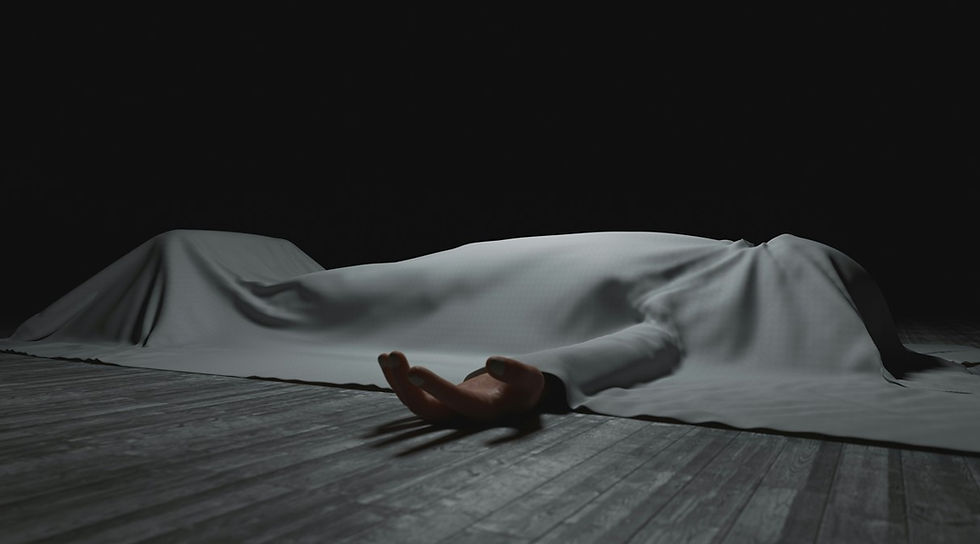
Will the version of me lying in that bed be pleased with how diligently I attended to everyone else's expectations?
Somehow, I doubt it. I suspect she'll be far more interested in whether I loved generously, allowed myself to be changed by life, made room for wonder, and had the courage to pursue the things that called to me.
I imagine she'll have some opinions about the amount of time I spent looking at my phone. Remembering that we're going to die creates the freedom to live fully. Of course, contemplating death doesn't make every decision obvious. We still have responsibilities, people who depend on us, and consequences to consider. I don't think mortality gives us permission to abandon all common sense and run naked through the nearest field of wildflowers.
Although, depending on the field, I wouldn't rule it out. What it does offer is perspective, and perspective is an extraordinary thing when you've become so accustomed to your life that you've forgotten you're allowed to question how you're living it.
I like to imagine that one day, if I'm fortunate enough to grow old, I'll finally meet the woman I've been consulting all these years. I'd love for her to have very little advice left to give me.
A little invitation
One of the things I love most about my work as a life and business coach is helping people see where they've become so accustomed to their lives that they've forgotten how much possibility is still available to them.
Sometimes that means questioning the business they've built, the decisions they've been postponing, or the version of themselves they've been trying so hard to maintain. Sometimes it means getting brave enough to admit what they really want.
If you're ready to explore what's possible for your life and work, I'd love to have a conversation about working together.
Read more from Donna Wilding
Donna Wilding, Life & Business Coach
Donna Wilding is a life and business coach and former corporate advertising executive who walked away from conventional success to build a more honest way of working and living. She supports women in creating businesses that are both profitable and deeply aligned, combining strategic clarity with past life regression and energetic work. At the core of her approach is the belief that every idea has its own guiding intelligence, and that business becomes easier when you learn to work with it. With over a decade of experience in transformational practices, Donna’s work bridges the worlds of strategy and soul.