

How to Become a TEDx Speaker
Diondra Filicetti is a Learning and Development professional, best-selling author, and two-time TEDx speaker. She specializes in team engagement, leadership effectiveness, and communication, helping organizations create motivated, high-performing teams.

You just finished ranting to your friends about a topic that you’re passionate about. You take a deep breath and then finish with, “Thank you for coming to my TED talk.” But have you ever thought about actually doing one?
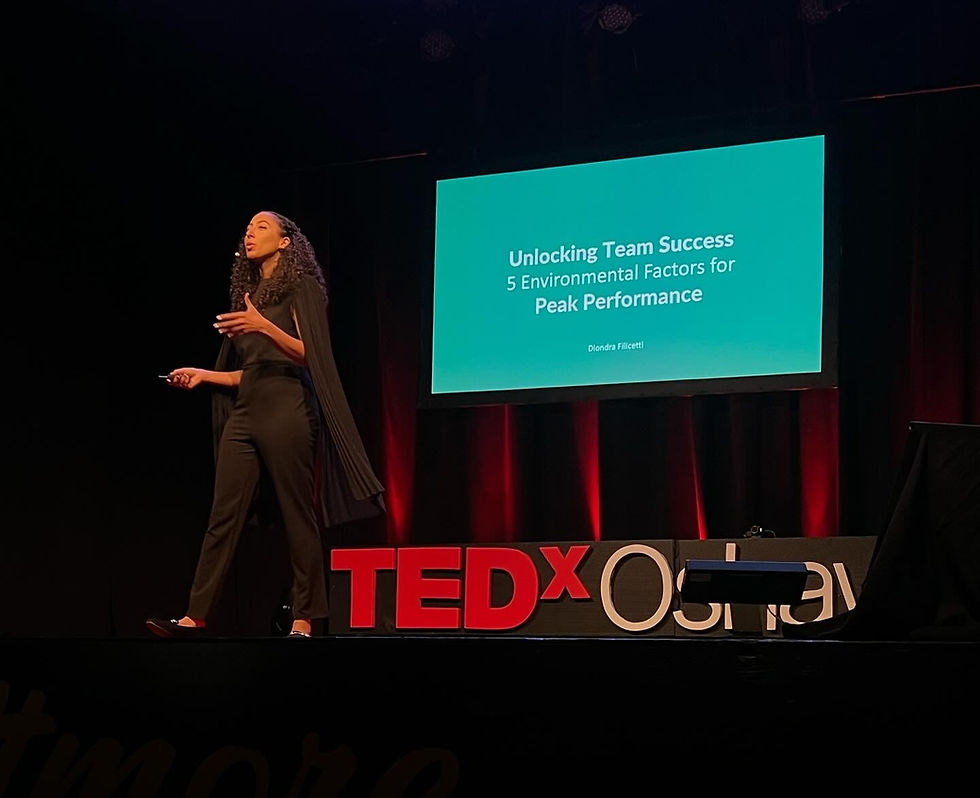
TED and TEDx talks are known worldwide for being concise, idea-packed talks that offer a fresh perspective on just about anything. Being a TED or TEDx speaker not only enhances your bio but also carries real prestige in business, education, and career circles.
So maybe it is time to get on that stage. The good news: the process is far less arduous than most people assume. In this guide, I'll walk you through where to begin and everything you need to know, starting with a question I get all the time: what's the difference between a TED talk and a TEDx talk?
What’s the difference between TED and TEDx?
TED Talks are put on by TED, a global nonprofit dedicated to spreading ideas. It all began in 1984, when Richard Saul Wurman brought together three fields, technology, entertainment, and design (that's where the name TED comes from), for one conference. That first event included demos of the compact disc, the ebook, and cutting-edge 3D graphics. Today, TED conferences are large events run directly by TED on a global scale. Learn more about TED's history.
TEDx events are named after their location (think TEDxToronto or TEDxStanfordUniversity) and, unlike TED itself, they're independently organized by local teams under an official license from TED. They're usually smaller in scale, and TED does not directly organize things like speaker selection or ticket sales for individual TEDx events. Instead, organizers use the TEDx platform to spark local engagement around “ideas worth spreading.” Learn more about how TEDx differs from TED.
My experience with TEDx
I remember when a TEDx talk was just an image on my vision board. At the time, I had no clue how to actually get on the coveted TEDx stage, but I was determined to figure it out!

Now, after doing it twice, I'm here to make that path a little easier for you by sharing the steps to becoming a TEDx speaker and how to give yourself the best possible shot at getting your application accepted.
P.S. If you’re interested in the backstory, check this out: How I Did 2 TEDx Talks in 2 Days.
I will say, my two TEDx experiences were quite different from one another. However, this gave me some insight into what different organizers might be looking for and the different ways they might run their events. That said, here’s where you can start your TEDx journey:
How to become a TEDx speaker
Find TEDx events near you
Start by finding TEDx events near you with upcoming dates. TED's website has a full directory of registered TEDx events, complete with an interactive map, which looks like this:

You can filter by location, year, and month. Some organizations plan more than a year out, so it's worth casting a wide net and creating a large list of TEDx events that you plan to apply to!

Finding the events is the easy part. The harder part is figuring out application deadlines, how to apply, and who to contact on the organizing committee. This can vary between events. Check each event's official website and public social media channels to see whether they accept speaker applications and how they want applications submitted. Be prepared to put in some legwork, and sync your calendar with submission deadlines and application links the moment you find them.
Submit your application
Every TEDx organization runs its application process a little differently. Some want a detailed outline of your talk, while others ask for a video submission. Whatever the format, be meticulous. This application is the organizing committee's first impression of you, and competition can be fierce. So, treat your application like it matters, because it does.
Apply early
Don't wait until the deadline is staring you down. TEDx applications can open months in advance, and applying early gives you plenty of time to make sure your application is complete and address any issues before the deadline. In my experience, early applicants may also have more time to go back and forth with organizers, refine their pitch if needed, or address any questions before the lineup gets locked in.
Applying early also works in your favour logistically. If you don't hear back from one event committee, you'll have lots of time to apply to another TEDx event in that same season rather than missing your window and having to wait until the following year. So, once you find an event that fits, get your application in as soon as you're ready.
Tips for a successful application
Be on theme
Each TEDx event will typically have a theme. For instance, “Ripple Effects” was the theme for one of mine, but it could really be anything. When organizers curate the speaker lineup, they're looking for talks that fit that theme. For example, a talk on nanoscience doesn't exactly fit a theme of "Communication," so you may need to adjust your angle for a stronger connection. If possible, include an explanation with key points on how your talk will speak to the event’s theme.
Prepare a pitch
Draft a summary of your idea (ideally between 300 and 800 words) and explain why you are the best person to speak on it. Remember that organizers go through dozens and dozens of applications, all with the goal of delivering an excellent audience experience. So, highlight what the audience will take away from your talk and include any interesting elements that can help you stand out. Plus, this is a great opportunity to drive home how your talk fits the event’s theme.
Submit a video sample
A video sample really brings your application to life! Some organizations don't require this, but if the application allows additional materials, I'd recommend submitting one anyway. Aim for a short clip (1 to 2 minutes), either delivering a short sample section of your talk or speaking directly about what your talk will cover.
This is especially valuable if you have speaking experience or strong articulation skills. It shows organizers that you're meant for the stage, and it gives them a better sense of your delivery style. Even an unpolished clip filmed on your phone can work, as long as your energy and clarity come through. Remember, it’s more about your presence than the production value at this stage in the process.
I'd also recommend sending links to any other speaking footage you have if the application allows it. Think of these like the experience section of your resume; they show that you have the expertise that makes you fit for the job!
I hope to be seeing your TEDx talk
Perhaps this all seems overly simple, but it really is about getting the basics right. That image on my vision board only turned into the TEDx stage because I decided to break down the process and give it my best shot.
Now you have the roadmap: find the right events, understand their theme, craft a pitch that shows your "aha moment," and back it up with a video that lets organizers see (and feel) your presence on stage.
So, if you've got a talk brewing inside you (the one your friends keep hearing about), it’s time to find your local TEDx event, start your application, and give yourself the shot you deserve! Won’t it be nice to say, “Thank you for coming to my TED talk,” for real? Good luck!
Curious how my TEDx talks went? Check them out below: Unlocking team success: 5 crucial environmental factors | Diondra Filicetti | TEDxOshawa and How to develop engaged and motivated teams | Diondra Filicetti | TEDxEtobicoke.
Read more from Diondra Filicetti
Diondra Filicetti, Team Engagement & Communication Expert
Diondra Filicetti is a distinguished Learning and Development professional, best-selling author, and two-time TEDx speaker. As the founder of Driven By Co., she helps organizations enhance performance through engaging workshops, leadership programs, and communication training. Her book Engagement Economics explores how employee engagement drives profitability and success. With expertise in adult learning and instructional design, Diondra has empowered thousands of professionals to lead with purpose, connect effectively, and inspire growth.


