How Napa Valley Museum is Reinventing the Cultural Experience
Mike Falkow is the CEO of Meritus Media, a PR and digital marketing agency based in Los Angeles. He is also known for his work as a creative director at Falkow Creative and Rogue Magazine. He's the author of the novel Desert Storm, released in 2025, and the host of the ProActive Podcast.

With its new Eames & Eames exhibition, Napa Valley Museum is demonstrating why in-person cultural experiences still matter and how art, design, history, and food are helping redefine the Wine Country experience. In an age when we can explore the world's greatest museums from our phones, view iconic works of art in high resolution, and access centuries of history with a few clicks, an important question emerges. Why do we still need to visit museums in person? The answer may be found in an unexpected place: California's Napa Valley.
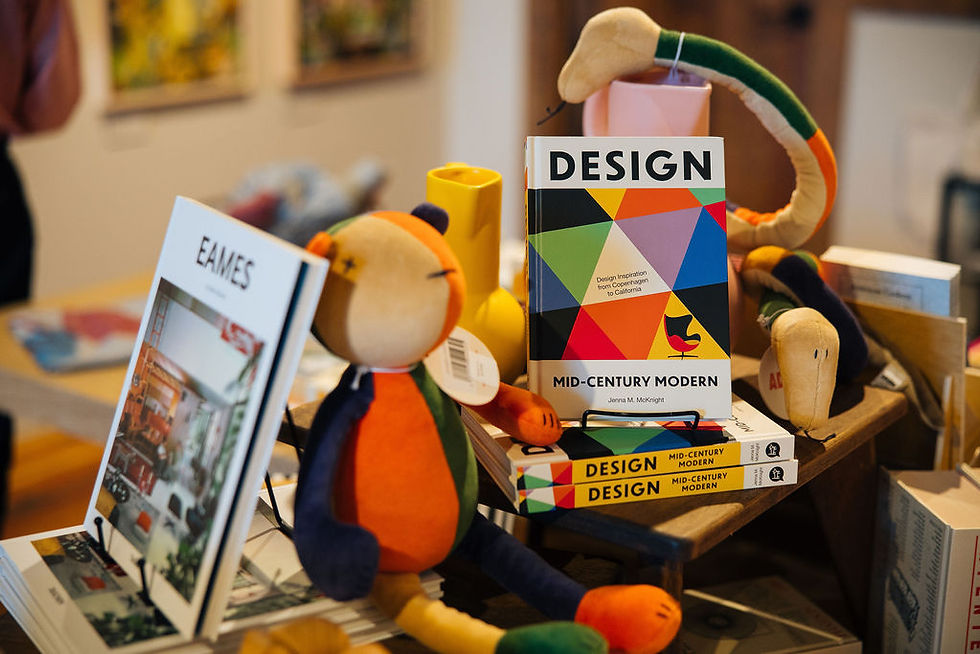
Best known for its vineyards, fine dining, and luxury hospitality, Napa is increasingly becoming a destination for something more. At the Napa Valley Museum of Art & Culture, known as The MAC, a new exhibition celebrating legendary designers Charles and Ray Eames is illustrating how museums can bridge the worlds of art, design, history, and everyday life.
More importantly, it suggests that the future of museums may depend not on competing with digital technology, but on offering experiences that screens simply cannot reproduce.
When design becomes living history
Most people have encountered the work of Charles and Ray Eames, even if they don't recognize their names. Their furniture has appeared in homes, offices, films, and countless photographs. The iconic Eames Lounge Chair and Ottoman, introduced in 1956, remains one of the most recognizable pieces of modern furniture ever created.
But the Eameses were far more than furniture designers. Their work crossed boundaries between architecture, photography, filmmaking, graphic design, education, and art. They approached design with an almost childlike curiosity, continually experimenting with materials, ideas, and ways to improve the human experience.
That philosophy is at the heart of "Eames & Eames | Meet the Couple Who Defined Modern Design," which opened at The MAC in October 2026.
Created in collaboration with the Eames Institute of Infinite Curiosity and curated by Llisa Demetrios, the Institute's co-founder and chief curator, the exhibition explores the creative partnership that helped shape modern design.
Through furniture, toys, paintings, graphics, personal belongings, and other objects, visitors discover not just what the Eameses created, but how they thought.
Rather than treating these objects as isolated historical artifacts, the exhibition offers a broader perspective on the creative process, revealing how experimentation, collaboration, and problem-solving can produce designs that remain relevant generations later.
It's a compelling reminder that design history isn't simply about what people made in the past. It's about how those ideas continue to influence the way we live today.
Why the physical museum still matters
The internet has made art and culture more accessible than ever before. Virtual tours, digital collections, and educational videos have opened museum doors to people who may never have the opportunity to travel.
These innovations are valuable, but they don't necessarily replace the physical experience. Consider the difference between viewing a photograph of an Eames Lounge Chair and standing in front of the actual object.
On a screen, we see its shape and color. In person, we can better appreciate its proportions, materials, construction, and relationship to the space around it. We begin to understand why a particular curve, angle, or material choice matters.
At The MAC, the opportunity to encounter Eames furniture alongside toys, paintings, graphics, and personal objects offers a fuller understanding of the couple's creative world. Seeing these pieces together reveals connections between seemingly different disciplines and illustrates how ideas developed through experimentation.
This kind of engagement invites visitors to look beyond an object's familiar appearance and consider the imagination and problem-solving behind its creation.
There is also something meaningful about the shared experience of visiting a museum. Unlike scrolling through an endless stream of images, a gallery encourages visitors to spend time with individual objects, ask questions, and discuss what they see.
A museum creates an environment where curiosity can develop without the constant interruption of notifications, algorithms, and competing digital content. That may be increasingly valuable.
A 2026 study published in Curator: The Museum Journal examined 363 adults visiting three art museums in Seattle. Researchers found that after spending an hour in the galleries, participants reported feeling more inspired and less nervous and irritable.
The study doesn't suggest museums are a substitute for mental healthcare, but it reinforces the idea that spending time with art can offer benefits beyond entertainment and education.
In other words, the value of a museum isn't measured only by what visitors learn. It's also reflected in how the experience makes them think, feel, and connect.
Rethinking what a regional museum can be
For Napa Valley Museum, the Eames exhibition represents something larger than a single cultural event. Founded more than five decades ago with a mission centered on preserving and interpreting regional history, the institution has gradually expanded its programming to encompass a much broader range of artistic and cultural subjects.
That evolution accelerated in 2025 with the opening of The MAC in St. Helena, complementing the museum's established Yountville location.
Together, the two locations represent different but connected parts of the institution's mission. Napa Valley Museum Yountville continues to emphasize the region's history, cultural heritage, permanent collection, and educational programming. The MAC provides a larger platform for exhibitions examining influential artists, creative movements, and ideas with national and international significance.
Under the leadership of Executive Director Laura Rafaty, this expansion reflects a wider shift in how regional museums can position themselves.
Rather than limiting their identity to local history or competing with major metropolitan institutions, regional museums have an opportunity to become cultural destinations in their own right.
The Eames exhibition is a useful example. Its subject is internationally recognized, yet its presentation in St. Helena makes a significant design history experience accessible to Northern California residents and Wine Country visitors.
The museum is not abandoning its historical roots. It is expanding the conversation about what history means and how it can be experienced.
After all, the objects we use every day, from furniture and household products to architecture and visual media, are part of our cultural history too.
Napa Valley is becoming more than a wine destination
Napa Valley's global reputation is built on wine, but its appeal has never been limited to what is poured into a glass.
The region has long attracted visitors interested in architecture, culinary innovation, natural beauty, and the arts. What is changing is the opportunity to bring these experiences together in ways that make cultural exploration a central part of a visit rather than an afterthought.
The MAC's location in St. Helena is particularly well suited to that approach. Adjacent to the museum is Under-Study, a culinary marketplace and counter-service café developed by the Michelin-starred team behind PRESS Restaurant.
The two spaces share architectural features, including expansive glass windows and a glass-walled teaching kitchen, creating a physical connection between the visual and culinary arts.
Visitors can spend the morning exploring the principles of modern design before enjoying a meal or coffee next door. From there, they can discover St. Helena's shops, architecture, and surrounding Wine Country attractions.
For Bay Area residents, this creates another compelling reason to make Napa a day trip destination. For visitors already traveling to the region, it provides an opportunity to experience something beyond traditional wine tourism.
For the museum, it demonstrates how cultural institutions can become part of a larger destination experience, connecting art with food, hospitality, local businesses, and the surrounding community.
The future of museums is human
Perhaps the most interesting aspect of the Eames exhibition is how closely its subject reflects the questions museums themselves face today.
Charles and Ray Eames believed that design should respond to human needs. Their work was driven by curiosity, collaboration, experimentation, and the conviction that thoughtful design could improve everyday life.
Those same principles offer a useful framework for the future of museums. A successful museum experience should do more than display important objects. It should encourage curiosity, invite discovery, create opportunities for connection, and help visitors see familiar things differently.
Technology will undoubtedly remain part of that evolution. Digital collections can expand access, interactive platforms can enhance education, and social media can introduce new audiences to art and culture.
But the physical museum offers something that cannot be entirely digitized: the opportunity to encounter ideas and objects in a shared, tangible environment.
Napa Valley Museum's "Eames & Eames" exhibition demonstrates how a regional institution can connect those ideas, using a design retrospective to explore history, creativity, and the enduring importance of the human experience.
In a world where so much of life happens behind a screen, perhaps one of the most innovative things a museum can offer is a reason to put the phone down, look around, and rediscover the pleasure of being curious.
"Eames & Eames | Meet the Couple Who Defined Modern Design" is on view at Napa Valley Museum of Art & Culture (The MAC) in St. Helena through April 2027.
Photo courtesy of Eames Institute. Learn more here.
Follow me on Instagram, LinkedIn, and visit my website for more info!
Read more from Mike Falkow
Mike Falkow, Strategist, Creative Director, and Writer
Mike Falkow is the CEO of Meritus Media, a PR and digital marketing agency in Los Angeles. He helps founders and brands turn expertise into coverage, thought leadership, and measurable growth. Previously a creative director at Falkow Creative and Rogue Magazine, he is the author of the 2025 novel Desert Storm and the host of the ProActive Podcast.